


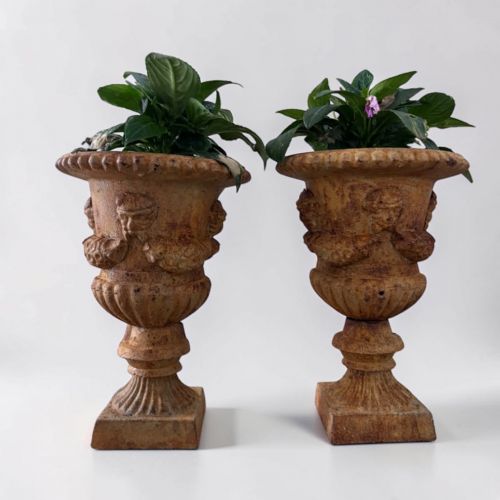

Outdoor Cast Iron Urns
Outdoor cast iron urns are garden vessels that bring classical form and enduring weight to terraces and lawns.
What outdoor cast iron urns are
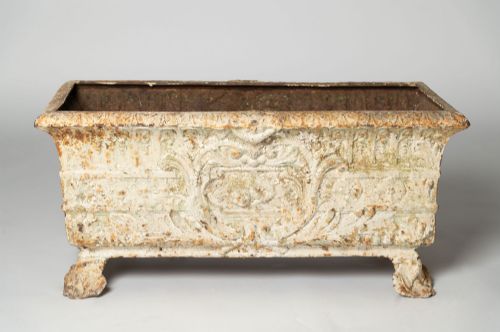
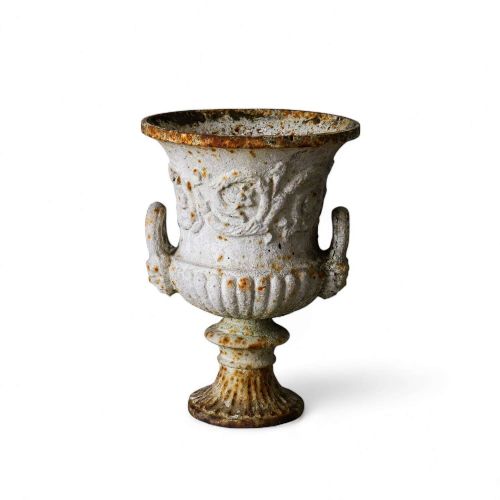
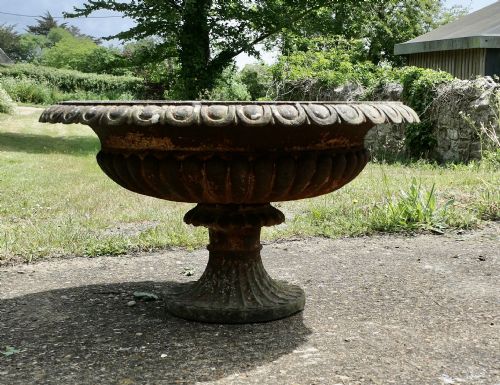
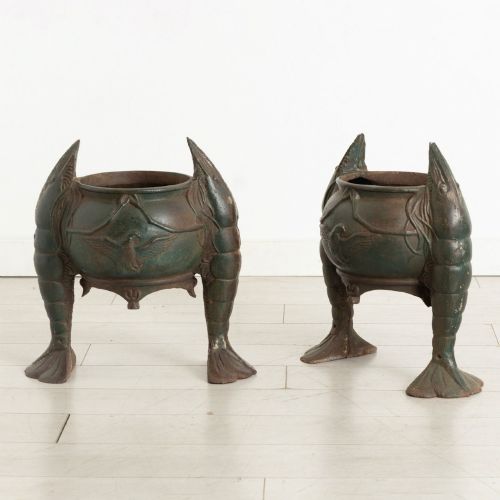
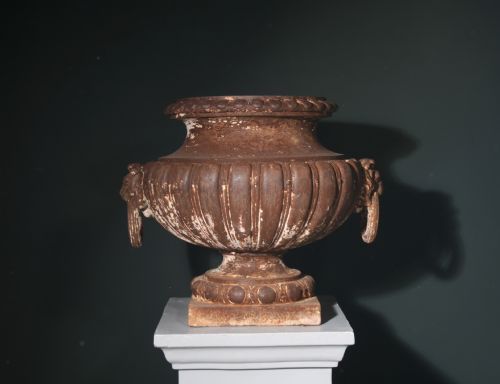
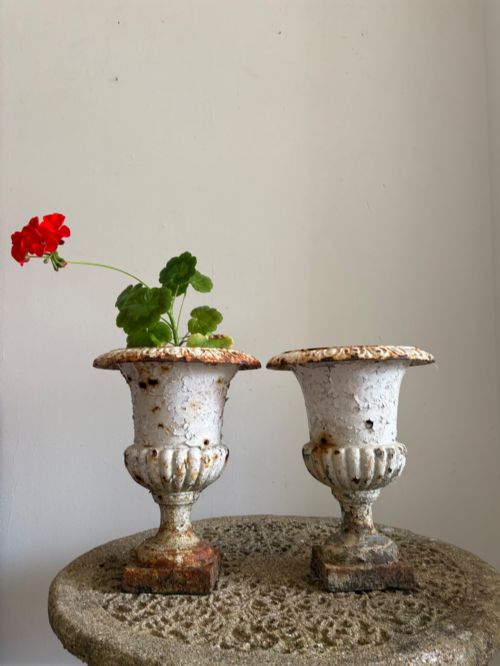
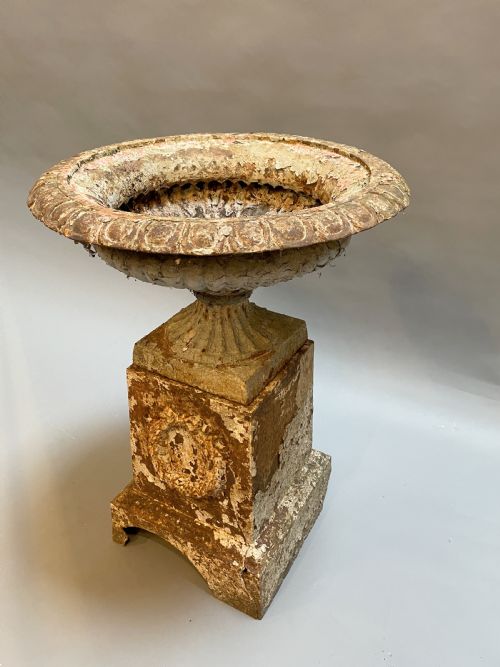
Outdoor cast iron urns are robust garden vessels designed to sit prominently on terraces, lawns, and formal pathways. These pieces bring architectural presence and classical form to outdoor spaces through their heavy, substantial construction.
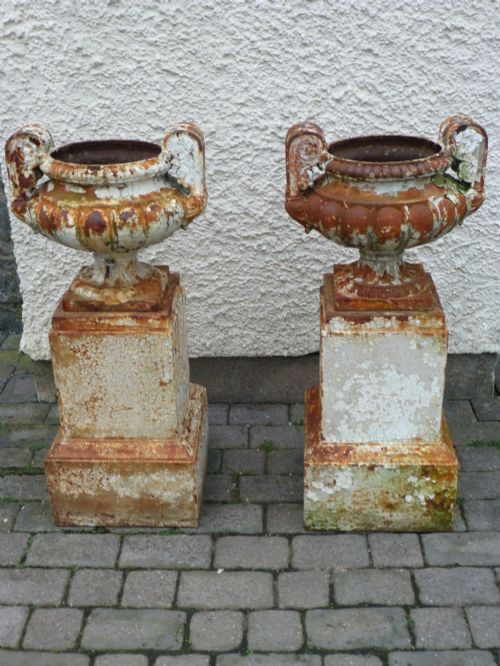
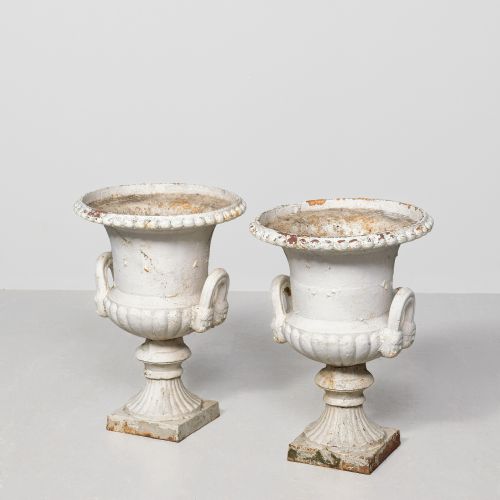
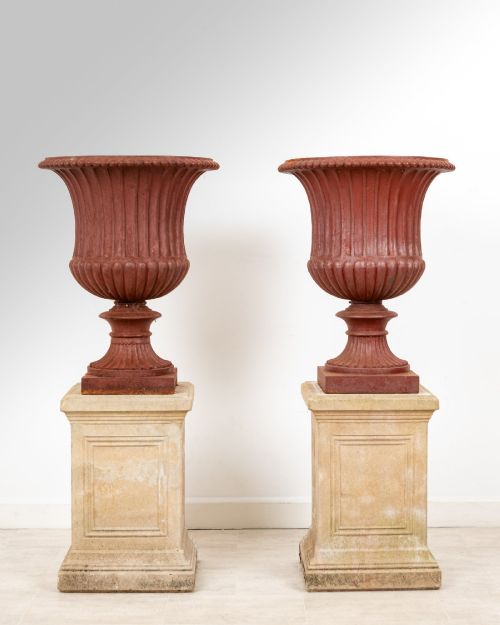
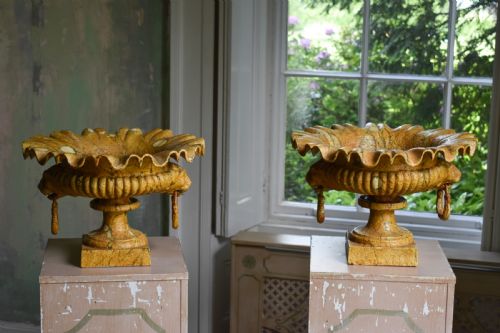
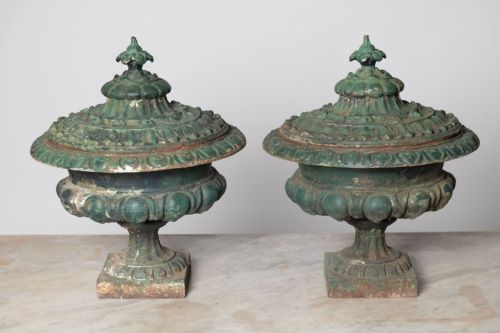
The versions met on this page span several distinct periods including the Regency, Georgian, and Edwardian eras, alongside French nineteenth-century examples and twentieth-century pieces from nineteen-twenty. Most listings present matching pairs complete with their original plinths or stands, designed to anchor a garden scheme.
Garden urns serve as focal points in landscape design, often positioned at the end of paths or flanking entrances. Their traditional forms draw on classical antiquity, reinterpreted by nineteenth and twentieth-century foundries for domestic grounds.
How outdoor cast iron urns were made
These urns are produced from cast iron, poured into moulds to create heavy, rigid vessels with crisp decorative details. The metal provides exceptional strength and durability, allowing the pieces to withstand permanent outdoor placement.
Many examples retain traces of paint applied to the iron surface, serving both to decorate the exterior and to protect the metal from weathering. Foundry work from periods such as the Regency and Edwardian eras utilised specialised sand-casting techniques to achieve complex classical reliefs and smooth rims.
Retail Price Guide 2026
Typical UK retail prices for outdoor cast iron urns, calculated from the Sellingantiques database of over a million retail prices indexed since 2003. This retail price guide relies exclusively on Sellingantiques data; no external sources or auction records are used, so the figures do not describe the wider market.
What varies in quality
The distinction between standard production and exceptional quality rests in the crispness of the cast iron detailing and the presence of matching architectural plinths. Pieces originating from notable foundries, such as the Falkirk Carron foundry, display superior sharpness in their classical motifs and superior proportions.
Quality also resides in the integrity of the original pairing and the survival of the corresponding stands. Urns that retain their original supporting plinths maintain a unified historical design scheme that elevates the entire composition.
Falkirk Carron foundry
The Outdoor Cast Iron Urns Glossary
- Cast iron
- An iron-carbon alloy poured into moulds to form rigid objects. This material provides the heavy, weather-resistant body characteristic of garden urns.
- Plinth
- A heavy rectangular or square base supporting a statue, vase, or urn. These architectural elements elevate the vessel above ground level.
- Regency
- A British stylistic period spanning the early nineteenth century. Designs from this era draw heavily on classical Greek and Roman motifs.
- Edwardian
- A stylistic period covering the early years of the twentieth century. Pieces from this time often adapt earlier classical forms for suburban gardens.
- Foundry
- A factory that produces metal castings. Historic ironworks utilised specialised moulds to create decorative gardenware.
Frequently Asked Questions
Where should outdoor cast iron urns be placed?
These urns suit prominent outdoor positions such as terrace corners, formal lawns, and flanking main garden entrances. Their heavy construction ensures stability on stone or paved surfaces without additional anchoring.
Positioning them on their original plinths lifts the vessels into the line of sight, creating a distinct architectural focal point within the surrounding landscape.
How do I care for cast iron urns?
Cast iron garden vessels require minimal maintenance due to the inherent durability of the metal. Periodic inspection helps monitor the condition of any painted surface protecting the iron from moisture.
Keeping drainage holes clear prevents water from accumulating and freezing inside the vessel during colder months, which protects the structural integrity of the casting.
Are these urns sold individually or in pairs?
The selection here consists predominantly of matched pairs designed to create symmetrical arrangements in a garden setting. Each pair shares identical casting characteristics and proportions.
Many examples include their original matching stands or plinths, preserving the complete architectural composition intended by the maker.
How do I identify a Regency urn?
Regency pieces reflect the classical revival style popular during the early nineteenth century, featuring restrained lines and authentic antiquity-inspired motifs. Foundry marks or attribution to makers such as the Falkirk Carron foundry help confirm the period.
The combination of crisp iron detailing and traditional proportions distinguishes these early nineteenth-century examples from later twentieth-century interpretations.