






Fluted Garden Urn Pair
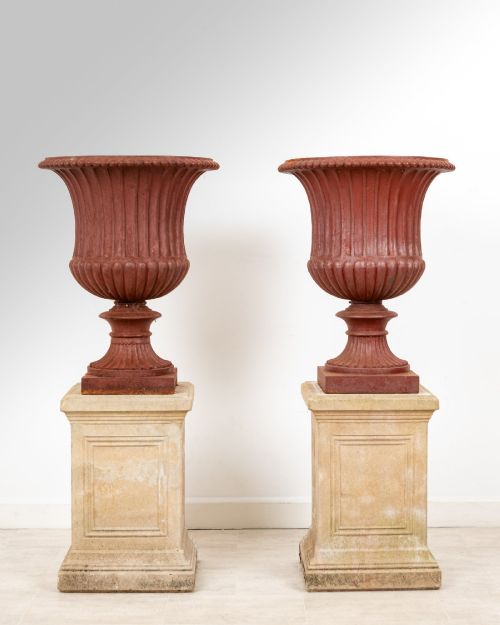
These heavy cast iron and stone fluted garden urn pair groupings anchor a terrace or lawn with classical lines.
Fluted Garden Urn Pair
A fluted garden urn pair brings classical symmetry to outdoor spaces, drawing on forms from Georgian, Victorian, and Regency periods. Buyers seeking a fluted garden urn pair will find pieces cast in iron, stone, and reconstituted stone, often raised on matching plinths or pedestals.
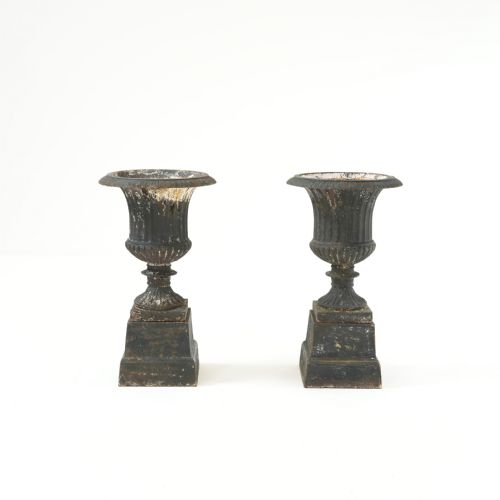
The most common versions met on this page are cast iron campana urns dating from the nineteenth century, alongside later twentieth-century interpretations. These vessels function simultaneously as sculptural focal points and as substantial garden planters for seasonal flora.
Materials and construction methods
Metal vessels take shape through heavy metal casting, producing robust cast iron bodies capable of withstanding centuries of outdoor exposure. Iron surfaces frequently show layers of historical paint or natural weathering accrued over decades.
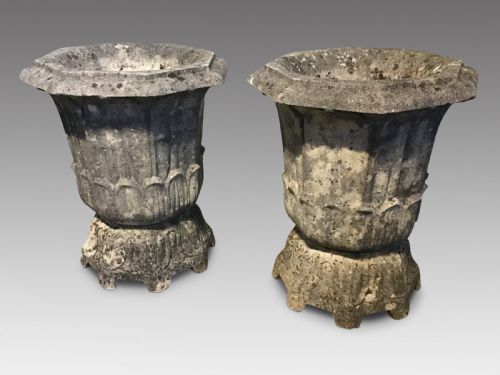
Stone and marble examples rely on traditional banker masonry and turning techniques to achieve smooth bowls and crisp fluting. Reconstituted stone utilises aggregate mixtures pressed into moulds to replicate the weight and texture of quarried stone.
Fluted Garden Urn Pair Retail Price Guide 2026
Typical asking prices for fluted garden urn pair among the pieces listed under this phrase on Sellingantiques today, from the lower quarter to the upper quarter. They describe what is for sale here now, not the wider market.
Several iron urns have absorbed so many coats of historical paint they now wear a thick, tactile history like tree bark.
Distinctions in quality and finish
Quality rests in the crispness of the casting detail and the depth of the fluting cut into the bowl, where sharper definition signals superior pattern work. The integration of original matching plinths elevates a pair, as composite groupings lack the harmony of pieces cast together.
Material choice dictates longevity and presence, with solid white marble and heavy nineteenth-century iron demonstrating greater substance than lighter mid-twentieth-century cast stone alternatives.
The Fluted Garden Urn Pair Glossary
- Campana urn
- A bell-shaped vessel with a flared rim and tapering body, widely utilised in classical garden design. This form originates from ancient metal and pottery prototypes.
- Fluting
- Vertical parallel grooves carved or cast into the exterior surface of an urn. This decorative technique creates rhythm and emphasises the verticality of the vessel.
- Plinth
- A heavy rectangular or square base that elevates an urn above ground level. Plinths improve the proportions and visual impact of garden ornaments.
- Tazza
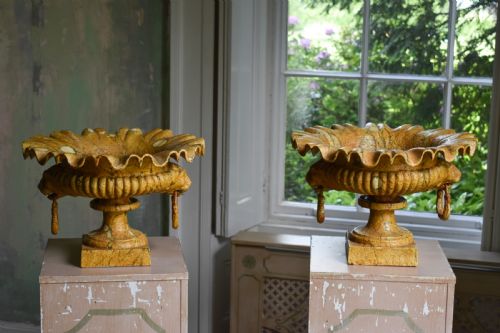
- A shallow cup or bowl on a pedestal, often used for Italian marble garden vessels. These forms emphasise width over the deep cavity of a standard urn.
- Reconstituted stone
- A durable material made from crushed stone bound with cement and cast in moulds. It offers the appearance of natural stone at a different weight.
Fluted Garden Urn Pair: Frequently Asked Questions
How do I care for cast iron urns?
Cast iron garden pieces require periodic inspection for surface rust, which can be treated with wire brushing and protective paint layers.
Ensuring drainage holes remain clear prevents water accumulation and subsequent freeze damage during winter months.
Can these urns stay outside all winter?
Most heavy iron and stone vessels tolerate frost well, provided moisture does not pool inside the planting bowl.
Elevating the base slightly off the ground on bricks prevents water absorption from saturated soil.
What is the difference between campana and tazza urns?
Campana urns feature deep, bell-shaped bowls suited for substantial root systems and cascading foliage.
Tazza urns present a shallower, wider profile that highlights the decorative rim and sculptural material rather than planting depth.
How do I tell nineteenth-century iron from later pieces?
Earlier nineteenth-century examples typically display thicker metal casting, heavier overall weight, and multiple layers of accumulated paint.
Twentieth-century iterations often show cleaner interior mould seams and lighter wall thickness.