



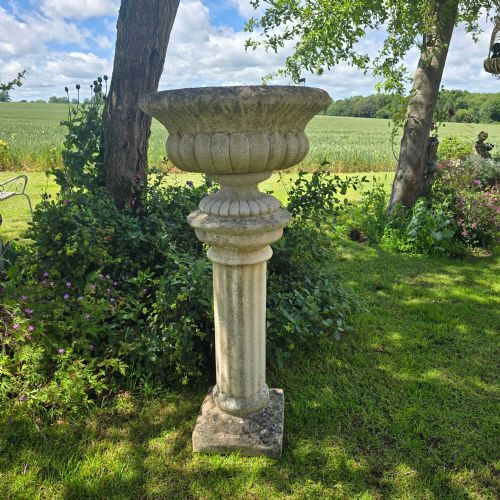
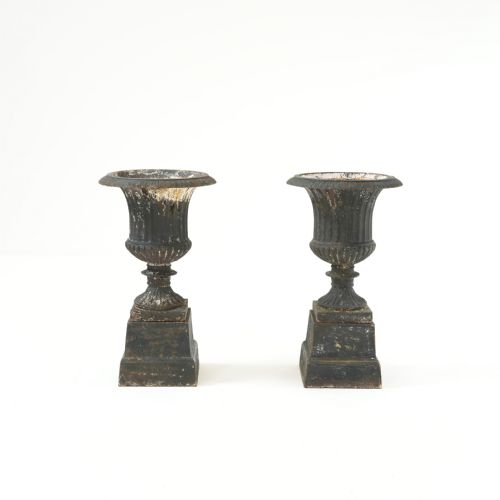


Vintage Urns on Plinths
These vintage urns on plinths combine classical forms with durable outdoor materials, creating architectural focal points for gardens and terraces.
Vintage Urns on Plinths
When you search for vintage urns on plinths, you encounter a distinct category of garden ornament that unites vessels with supportive bases. These arrangements establish verticality and formal presence in a landscape setting.
The selections available here range from nineteenth-century examples to pieces from the nineteen-thirties. Neoclassical and Victorian revival styles dominate the forms, frequently appearing as paired items designed for symmetrical placement.
Most entries combine garden urns and planters with architectural pedestals and columns. Buyers commonly find cast iron campana shapes alongside stone, terracotta, and reconstituted stone variants.
Materials and construction
Foundries produced many of the metal pieces using durable cast iron, often shaped into traditional campana silhouettes that withstood heavy garden use. Other examples utilise cast stone, reconstituted stone, and stoneware moulded into formal architectural proportions.
Some items incorporate carved wood, including rustic oak pedestal stands and specialised pieces featuring secret compartments. Marble columns and stoneware plinths provide alternative textures through polished surfaces and natural weathering.
Vintage Urns on Plinths Retail Price Guide 2026
Typical asking prices for vintage urns on plinths among the pieces listed under this phrase on Sellingantiques today, from the lower quarter to the upper quarter. They describe what is for sale here now, not the wider market.
Listings feature periods spanning from the Georgian era through to the nineteen-thirties, with nineteenth-century examples particularly prevalent.
Distinctions in quality
Quality rests upon the crispness of the casting and the integrity of the material, whether metal or stone. Finer examples display deeply defined decorative motifs and substantial weight that ensure stability outdoors.
The character of the surface finish also influences the standing of a piece. Original paint, rich patination from natural weathering, and precise proportions distinguish superior items from simpler utility forms.
Dunfermline Clay Company·Andrew Handyside
The Vintage Urns on Plinths Glossary
- Campana urn
- A bell-shaped garden vessel with an everted rim and a footed base, typically cast in iron or stone. This classic shape derives from antique pottery and metalwork.
- Plinth
- A heavy rectangular or square base supporting a column, statue, or urn. It elevates the vessel above ground level.
- Gadrooned
- Decorated with a series of convex rounded curves or flutes moulding the lower bowl of an urn. This ornamental detail is common in classical revival pieces.
- Reconstituted stone
- A manufactured material composed of aggregate and cement, moulded to imitate natural stone. It provides a durable alternative for garden architecture.
- Pedestal
- An upright architectural support designed to elevate a plant stand or urn. These structures range from fluted columns to solid masonry blocks.
Vintage Urns on Plinths: Frequently Asked Questions
How do I secure an urn to its plinth?
Most heavy cast iron and stone pieces remain stable under their own considerable weight, relying on gravity rather than mechanical fixings. Placing them on a level foundation prevents shifting.
For taller combinations or exposed windy sites, a spot of appropriate exterior adhesive or mortar provides additional security between the base and the vessel.
Can these metal urns stay outside all winter?
Cast iron garden ornaments tolerate cold weather well, provided they are structurally sound and free from trapped water that might freeze and expand. Raising them slightly off damp soil helps prevent corrosion.
Stoneware and terracotta items require closer attention during hard frosts to avoid cracking. Many owners tip vessels sideways or move them under cover if severe weather threatens.
How do I date a cast iron urn?
Nineteenth-century and early twentieth-century pieces often display distinct casting seams, surface textures, and foundry marks that indicate their period of production. Stylistic details like classical revival motifs offer further chronological clues.
Heavier rust patination and multiple layers of accumulated outdoor paint also point to greater age. Comparing the proportions against known Victorian and Edwardian design catalogues clarifies the timeline.
What is the best way to clean weathered stone?
Gentle washing with water and a soft brush removes loose dirt without damaging the historical patination or the underlying material. Harsh chemical cleaners can strip away desirable lichens and age marks.
Allowing the piece to dry naturally preserves the weathered character that collectors value. Avoid pressure washers, which can erode soft stone and fragile cast surfaces.