

French Ormolu Table
A French ormolu table brings gleaming gilt bronze mounts and figured hardwoods together in pieces designed to command the centre of a room.
French Ormolu Table
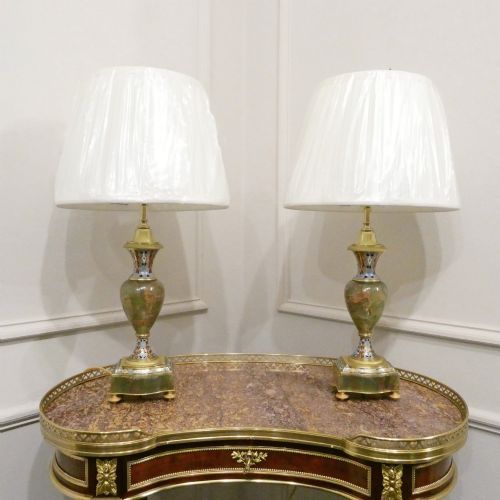
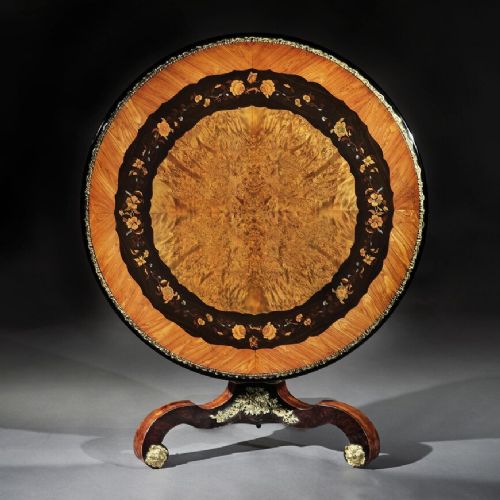
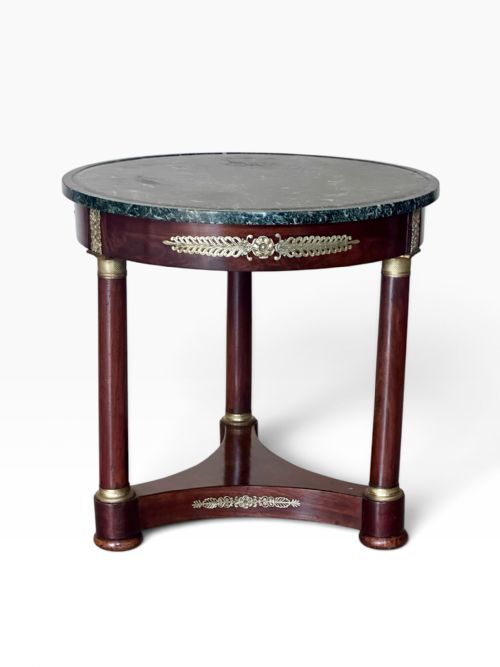
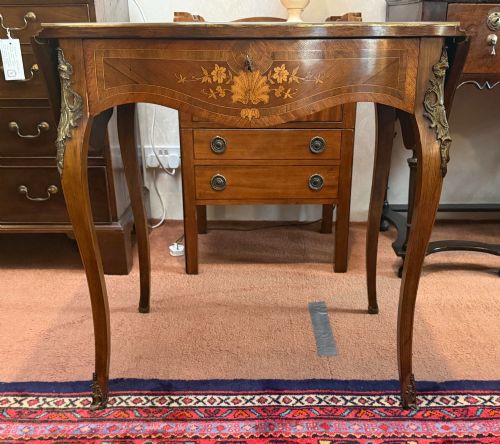
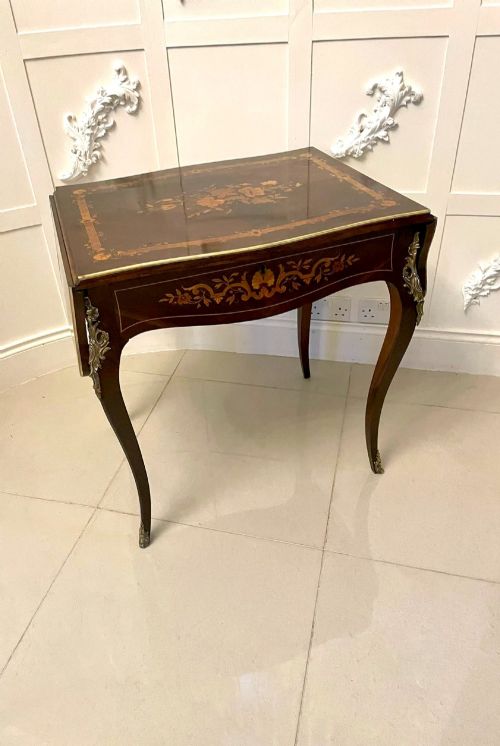
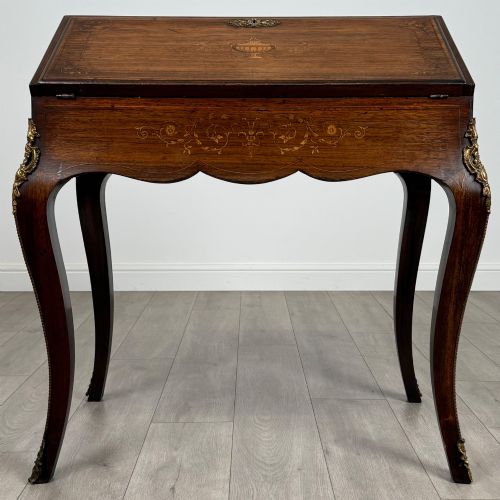
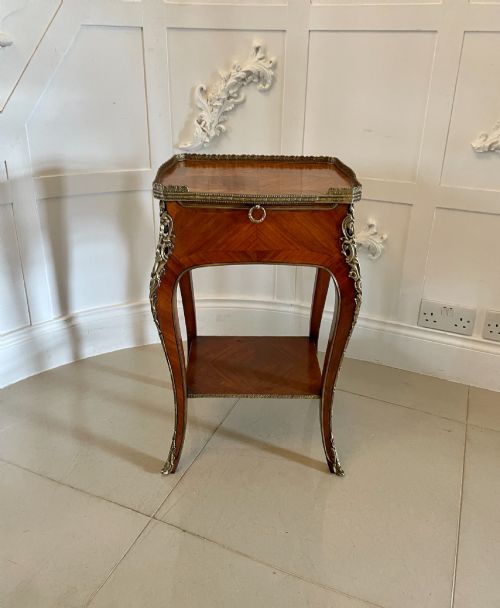
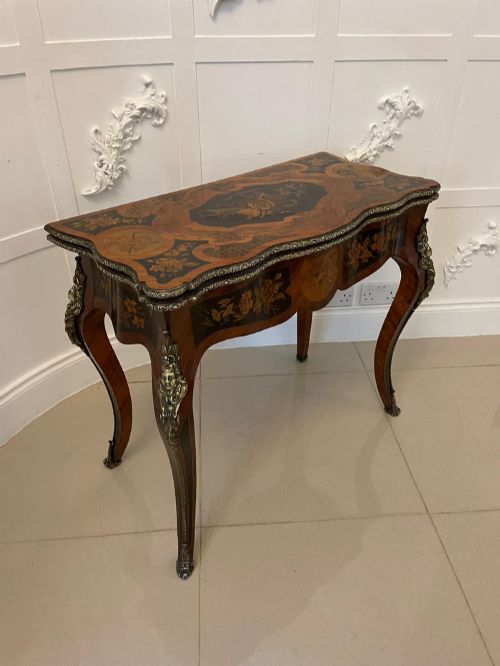
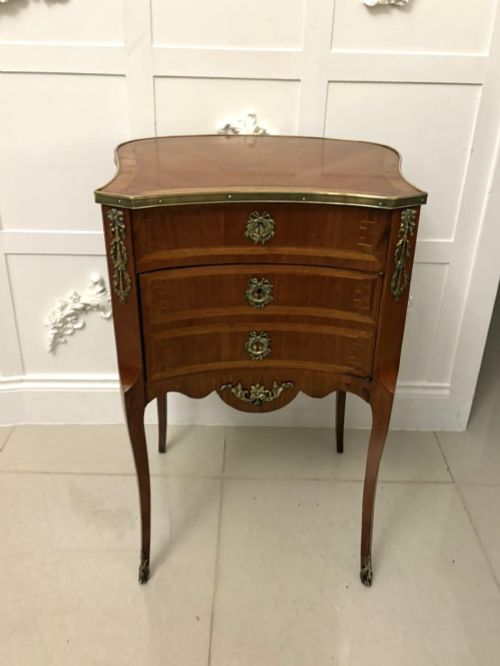
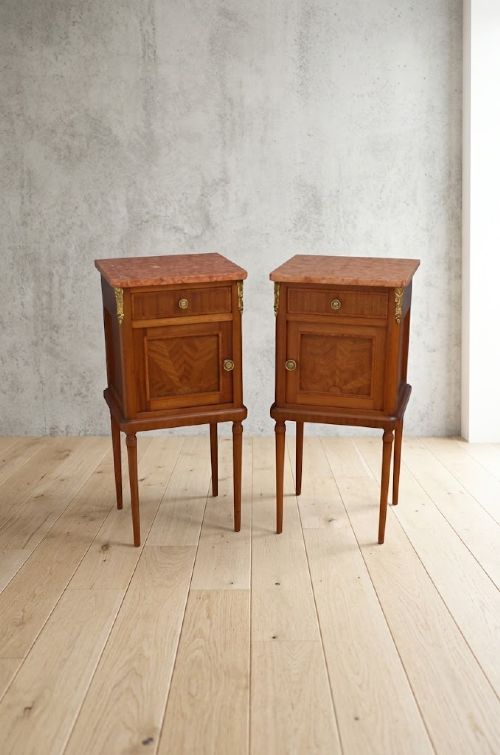
When searching for a French ormolu table, buyers encounter freestanding centre tables, writing desks, and smaller lamp or occasional tables predominantly dating from the nineteenth century and the Victorian period.
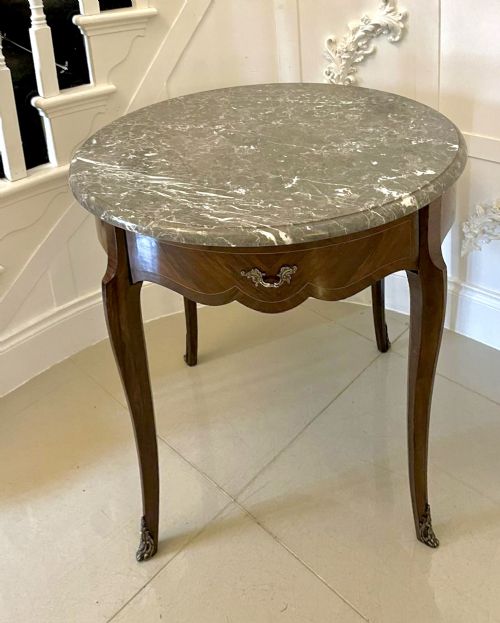
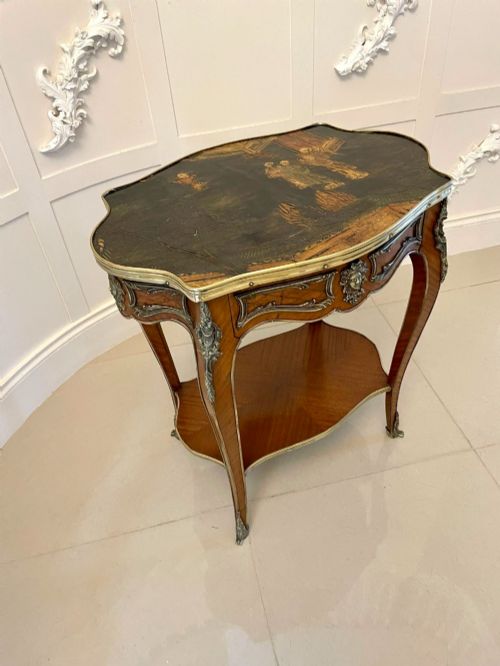
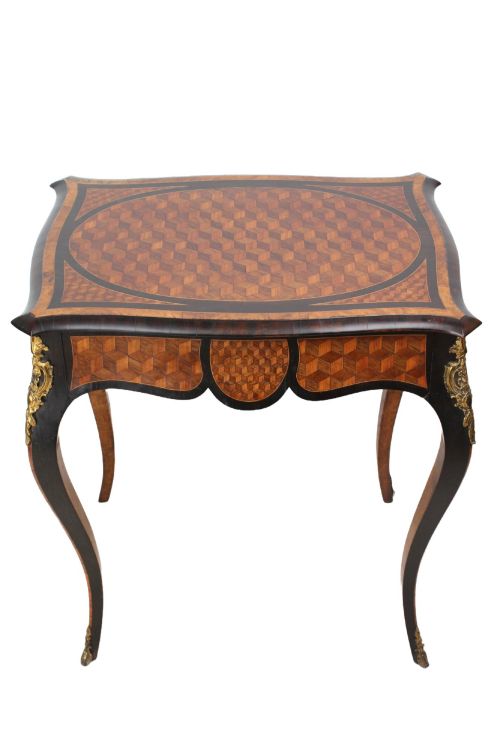
The prevailing styles draw heavily on the Louis XV and Louis XVI revivals, showcasing serpentine outlines, cabriole legs, or symmetrical neoclassical proportions.
Most examples combine timber frameworks with cast gilt bronze mounts, frequently appearing in forms intended to be viewed from all sides within a grand interior.
Materials and Construction
Maker workshops built the carcases using dense timbers such as kingwood, walnut, mahogany, and rosewood, often enhanced by intricate marquetry or geometric parquetry inlay.
The signature ormolu elements consist of cast bronze that was hand-chased and finished in gold gilding, then fixed to the corners, apron mounts, and sabots of the furniture.
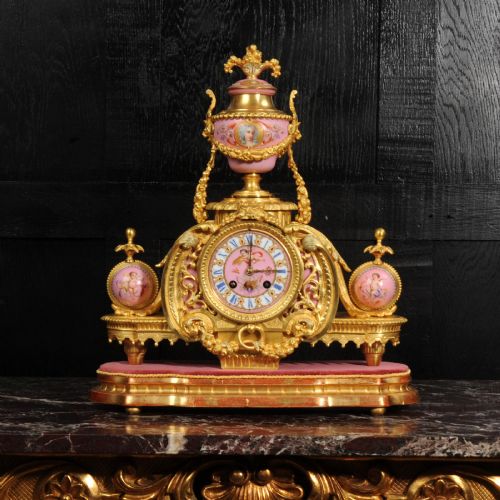
Many surfaces incorporate additional decorative mediums including marble tops, porcelain plaques, or painted lacquer panels to complete the composition.
Recorded styles span the Louis XV and Louis XVI revivals alongside French Empire and Victorian interpretations.
Evaluating Execution
The crispness of the bronze casting and the depth of the subsequent hand-chasing separate standard mounts from those produced by premier maker workshops.
Cabinetwork quality reveals itself in the precision of the timber veneers, the tightness of the marquetry joins, and the substantial weight of the underlying carcase.
Tables featuring integrated mechanisms or fully finished backs designed for freestanding placement generally represent a more accomplished standard of production.
Edward Holmes Baldock·Achille Brocot·Henry Marc·Japy Freres·Maison Millet·Francois Linke·Edwards and Roberts·Joseph Emmanuel Zwiener·JAS Shoolbred
The French Ormolu Table Glossary
- Ormolu
- Gilt bronze mounts applied to furniture and decorative objects. The technique involves coating cast bronze in a gold amalgam before firing.
- Marquetry
- Decorative veneer patterns formed from pieces of various coloured woods. Craftsmen arrange these veneers to create floral or pictorial scenes across the tabletop.
- Parquetry
- Geometric wood inlay patterns such as cubes or lozenges. This technique creates structured, repeating surface designs across bureau flats and side tables.
- Cabriole leg
- An outward-curving furniture leg inspired by animal limbs. It typically swells at the knee and tapers down to a scrolled or pad foot.
- Bureau plat
- A flat-topped freestanding writing desk. These pieces usually feature leather writing surfaces framed by elaborate ormolu mounts and multiple drawers.
French Ormolu Table: Frequently Asked Questions
Where should I place a French ormolu table?
These pieces function best as freestanding centre tables in principal reception rooms where their detailed backs and mounts remain visible from all angles.
Smaller lamp and side variations suit hallways or drawing rooms, providing a surface for lighting while introducing period character.
How do I identify a Louis XV revival table?
Louis XV revival pieces are distinguished by asymmetric curves, fluid floral marquetry, and sinuous cabriole legs that lack straight lines.
Ormolu mounts on these examples tend to trace the naturalistic contours of the aprons and corners with asymmetrical leaf and scroll motifs.
What maintenance do marble and ormolu require?
Marble tops benefit from regular dusting with a dry cloth and immediate blotting of liquid spills to prevent staining the porous stone.
Ormolu mounts should be cleaned gently without abrasive metal polishes to preserve the integrity of the original mercury or chemical gilding.
How can I distinguish a bureau plat from a centre table?
A bureau plat is specifically designed for writing, typically incorporating one or more drawers integrated into the frieze beneath a leather-lined top.
Standard centre tables omit the writing surface and drawers, focusing entirely on display and decorative presence within the room.