



Kingwood Accent Table
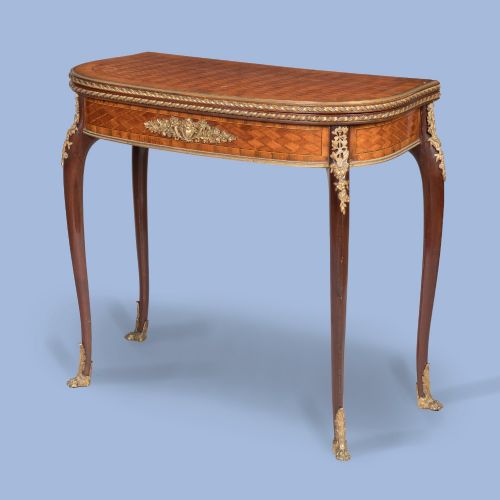
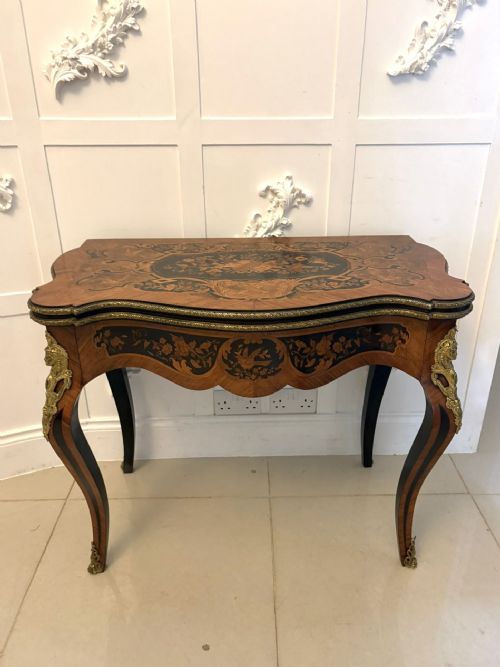
A kingwood accent table brings warmth and intricate grain patterns to a room, offering a functional surface shaped by French revival design.
Kingwood Accent Table
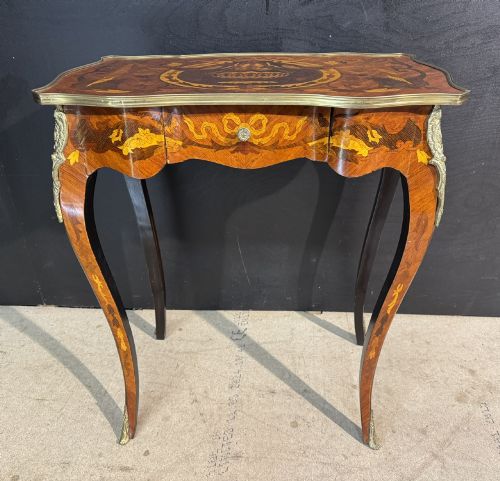
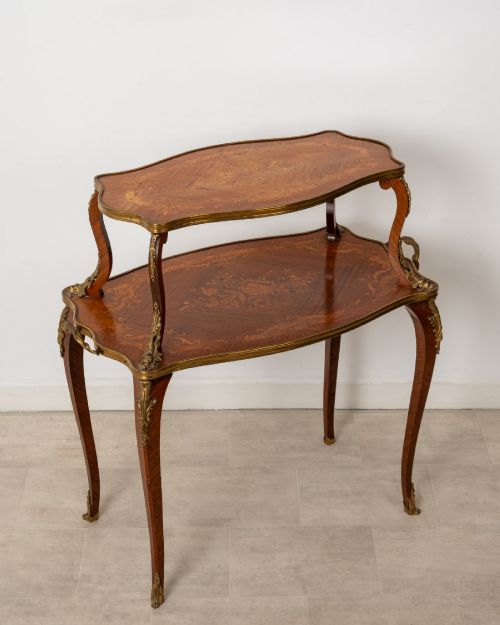
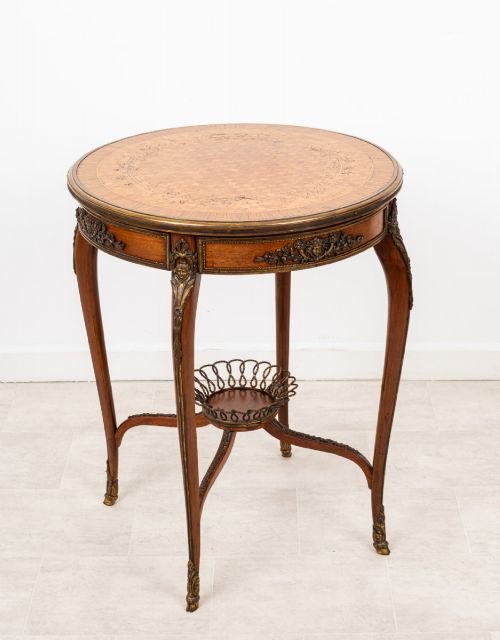
A kingwood accent table encompasses diverse occasional forms such as side tables, card tables, commodes, centre tables, Pembroke tables, and writing tables. These pieces emerge predominantly from the nineteenth century, reflecting Victorian tastes and French revival movements.
Most examples found on this page follow Louis XV and Louis XVI styles, showcasing elaborate marquetry and parquetry patterns. Makers and workshops from Paris and Britain utilised rich veneers to create decorative items intended for refined interiors.
Materials and construction
Cabinet makers constructed these tables using dense kingwood veneers laid over secondary timbers, often incorporating intricate floral or geometric marquetry. Ormolu, gilt bronze, and brass mounts were cast and chased to highlight the structural contours and protect vulnerable edges.
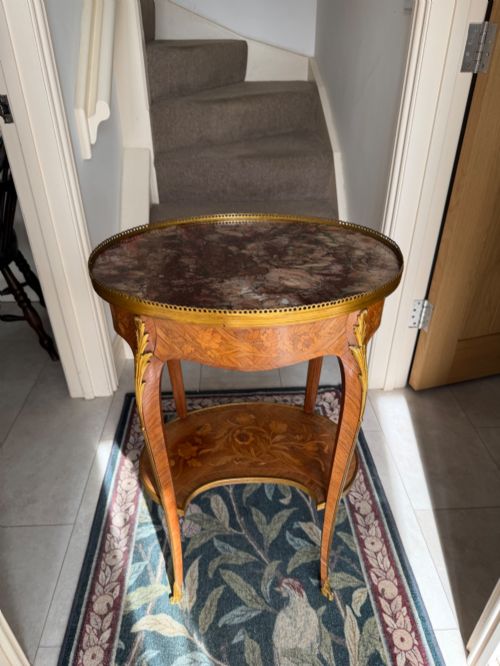
Many surfaces feature inset marble tops, leather panels, or porcelain plaques held within veneered frames. This combination of figured wood and metal ornamentation required precise joinery and metalworking skills typical of high-end nineteenth-century workshops.
Kingwood Accent Table Retail Price Guide 2026
Typical asking prices for kingwood accent table among the pieces listed under this phrase on Sellingantiques today, from the lower quarter to the upper quarter. They describe what is for sale here now, not the wider market.
Listings feature nineteenth-century pieces primarily in Louis XV and Louis XVI styles, incorporating marble tops, ormolu mounts, and intricate marquetry.
Judging quality in design and execution
Quality rests upon the crispness of the gilt bronze or ormolu mounts and the precision of the underlying parquetry or marquetry. Superior examples display hand-chised detailing in the metalwork and seamless veneer matching across complex curved surfaces like kidney-shaped tops.
The reputation of the workshop, whether attributed to master makers or produced within recognised stylistic traditions, dictates the standing of a piece. Better tables maintain structural integrity in their veneer work and balanced proportions without excessive restoration.
Joseph Emmanuel Zwiener·Francois Linke·Millet·Collingson and Lock
The Kingwood Accent Table Glossary
- Kingwood
- A dense, heavily figured Brazilian timber featuring dark violet and brown tones with striking grain patterns, widely used for high-end veneering during the eighteenth and nineteenth centuries.
- Ormolu
- Gilt bronze ornamentation applied to furniture, cast and finished by hand to provide metallic highlights against timber surfaces.
- Marquetry
- The art of applying decorative veneer pieces to a structure to form intricate pictorial or geometric designs.
- Gueridon
- A small French occasional table or stand, frequently circular and supported by a central pillar or slender legs.
- Vernis Martin
- A simulated Japanese lacquer technique developed in eighteenth-century France and emulated on later revival furniture.
Kingwood Accent Table: Frequently Asked Questions
What is a kingwood accent table used for?
These tables function as decorative surfaces for lamps, ornaments, or writing, designed to accent a drawing room or boudoir.
Historically, specific forms served card games, tea service, or bedside utility, adapting to the social rituals of the nineteenth century.
How do I identify a French revival style?
French revival pieces incorporate curved cabriole legs, asymmetrical floral marquetry, and prominent ormolu mounts echoing eighteenth-century court aesthetics.
They rely on rich kingwood veneers and gilt bronze details rather than solid structural timbers.
Where were these tables made?
The majority originate from Parisian workshops that specialised in luxury revival furniture for international exhibitions and elite clientele.
Some examples also stem from British makers influenced by French cabinet-making techniques during the Victorian era.
How do I care for marble top tables?
Marble surfaces require gentle cleaning with mild, non-acidic soap and water to protect the polished stone from staining.
Keep the surrounding kingwood veneer conditioned and away from direct heat sources to prevent timber splitting.