





Georgian Veneered Side Table
A georgian veneered side table brings timber figure and practical surface together, offering warmth and historical presence to an interior.
Georgian Veneered Side Table
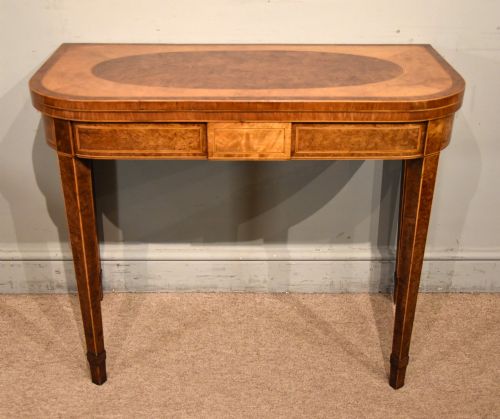
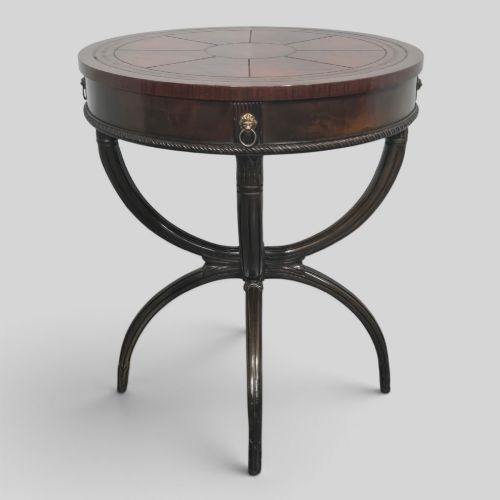
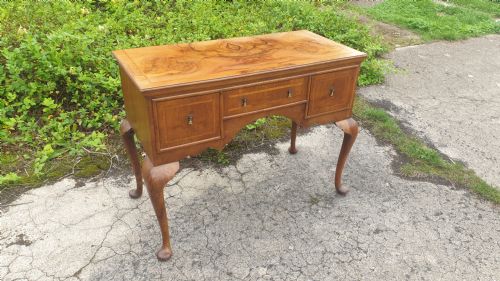
When searching for a georgian veneered side table, a buyer encounters pieces designed for domestic utility and display across several centuries, including revival interpretations. The selection leans towards forms such as occasional tables, lowboys, card tables, and pembroke tables constructed in compact proportions.
The materials span mahogany, walnut, and yew, often enriched by intricate veneer work such as oyster olive, burr walnut, and satinwood banding. Construction dates range from the seventeenth century through to later revivals in the twentieth century.
Origins represented in the evidence include English and Irish workshops, showing a variety of regional timber choices and decorative inlays like specimen wood and holly.
How they were made
Cabinetmakers applied thin decorative veneers of figured timbers like burr walnut, burr yew, and kingwood over secondary framing woods. This technique allowed workshops to display dramatic grain patterns that solid timber could not achieve.
Inlays of holly, oyster olive, and specimen woods added geometric contrast, while brass hardware secured drawers and hinged tops on tables designed for multifunctional rooms.
Georgian Veneered Side Table Retail Price Guide 2026
Typical asking prices for georgian veneered side table among the pieces listed under this phrase on Sellingantiques today, from the lower quarter to the upper quarter. They describe what is for sale here now, not the wider market.
Current listings feature materials including mahogany, walnut, satinwood, burr yew, and pollard oak across periods from the seventeenth century to the twentieth.
What varies in quality
The visual success of a piece depends on the choice of timber figure and the symmetry of the veneer arrangement, such as quarter-veneered tops and featherbanding. Superior examples display careful grain alignment across drawers and borders.
Fine craftsmanship shows in the crispness of inlaid banding and the harmonious integration of secondary woods, distinguishing master workshops from standard production.
The Georgian Veneered Side Table Glossary
- Veneer
- A thin layer of figured wood applied to a structural timber base. This technique highlights decorative grain patterns.
- Featherbanding
- Narrow strips of wood laid in a herringbone pattern around the edge of a table top. It creates a subtle decorative border.
- Lowboy
- A small table with one or more rows of drawers, commonly used as a dressing or side table. It sits on relatively tall legs.
- Pembroke table
- A drop-leaf table with hinged flaps on either side. It provides an adaptable surface for small spaces.
- Oyster piece
- Cross-cutting small branches to produce circular or oval wooden discs. The technique yields concentric growth ring patterns.
Georgian Veneered Side Table: Frequently Asked Questions
How do I care for a veneered table?
Keep wooden surfaces away from direct heat sources and strong sunlight to prevent the timber and adhesive from drying out. Dust regularly with a dry cloth and avoid harsh chemical polishes.
Apply a microcrystalline wax occasionally to protect the finish and maintain the natural sheen of the wood without building up a heavy residue.
What is the difference between a side table and a lowboy?
A side table serves general display and surface needs in a room, featuring a simple frame with or without drawers. A lowboy specifically incorporates one or more rows of drawers beneath the top surface.
Historically, lowboys functioned as personal grooming desks or compact serving tables, standing distinct from taller chests and simpler occasional tables.
How can I tell older veneer work from later revivals?
Older cabinetmaking relies on hand-cut thicker veneers and natural adhesives, often revealing subtle irregularities under close inspection. Revival pieces from later periods may show more uniform machine-cut thicknesses.
Examine the secondary woods used for drawer linings and internal framing, as timber selection shifts significantly between seventeenth-century work and twentieth-century revivals.
Where were these tables placed historically?
These tables stood against hallway walls, beside seating areas, or in bedchambers for holding small personal items, lighting, or writing materials. Drop-leaf and card tables moved around rooms as required.
Their modest footprints made them adaptable for multiple domestic uses, functioning as decorative display surfaces or practical work areas.