
19th Century Kingwood Table
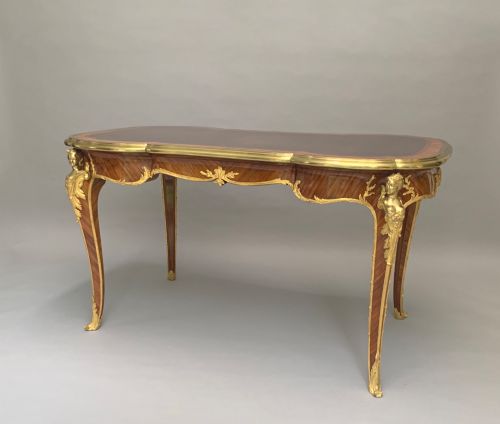
Choosing a 19th century kingwood table brings richly figured veneers and gilt metal mounts into a room, following French revival tastes.
19th Century Kingwood Table
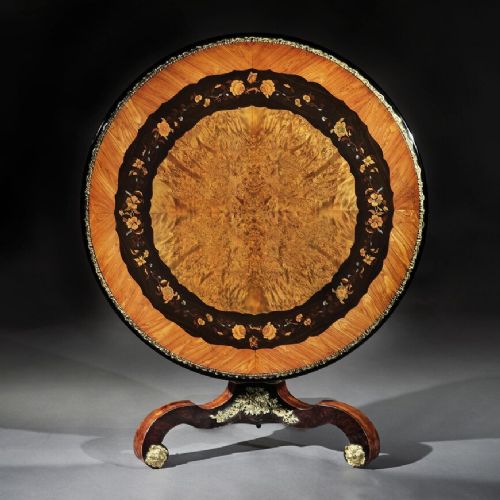
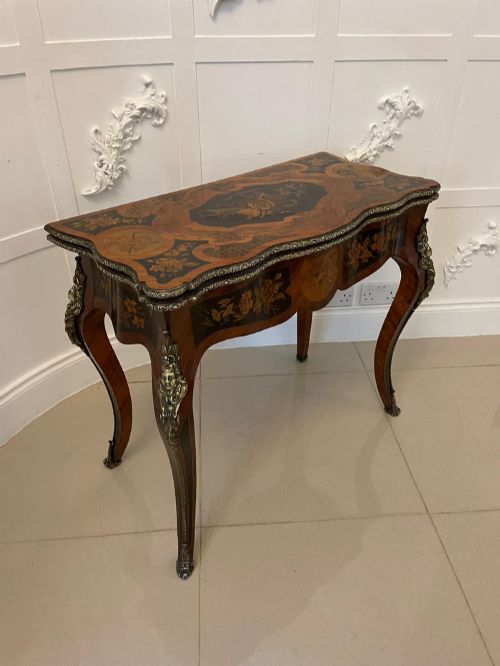
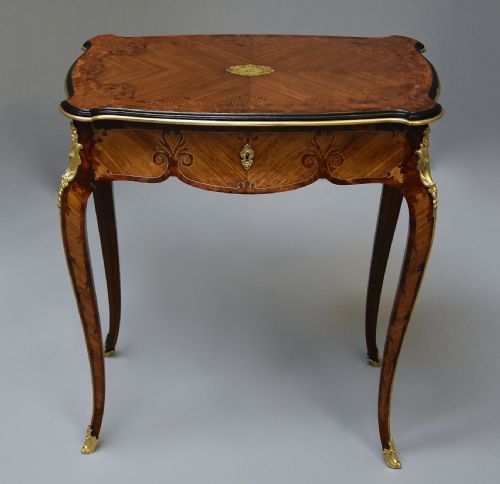
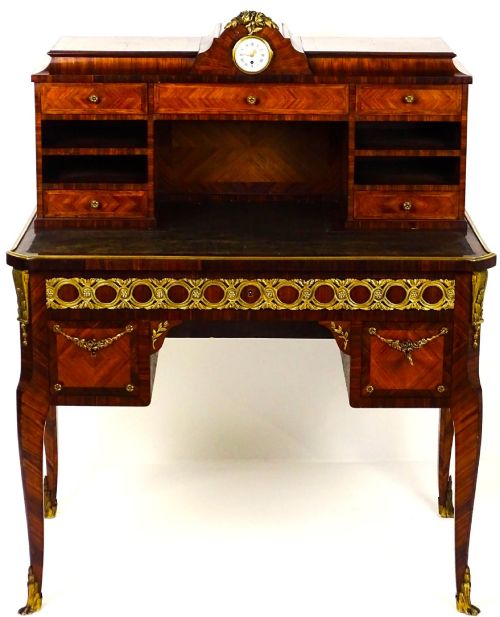
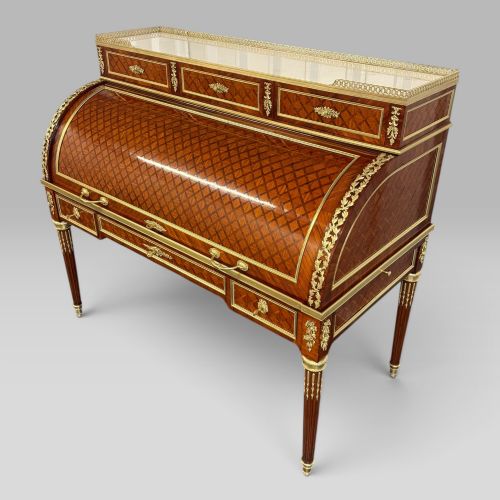
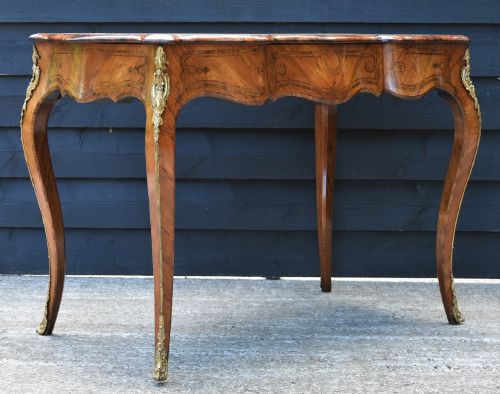
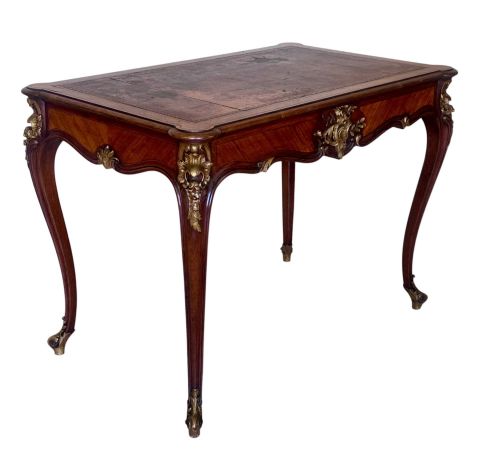
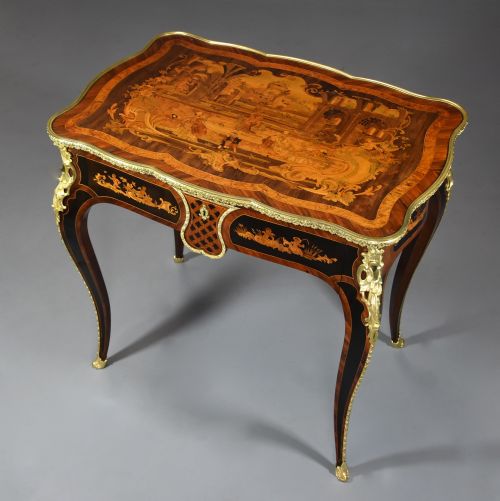
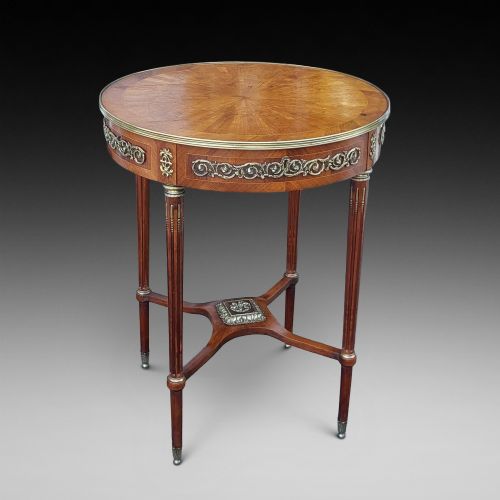
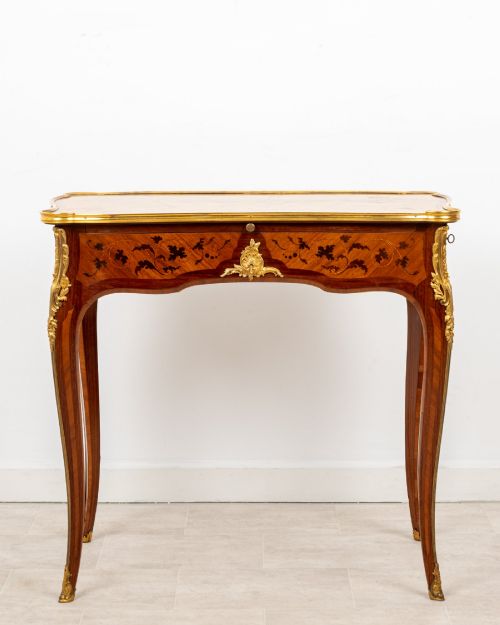
A 19th century kingwood table spans varied forms shaped by French cabinetmakers, predominantly appearing as centre tables, writing desks, and occasional pieces. Makers adopted Louis XV and Louis XVI revival styles, incorporating serpentine outlines, marquetry, and parquetry.
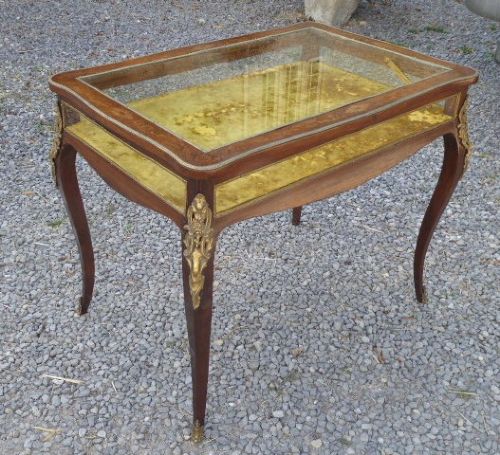
Buyers encounter freestanding tables designed for salons and libraries, alongside specialised forms such as card tables, bijouterie vitrines, and writing desks. These pieces reflect mid-to-late nineteenth-century European production, particularly Parisian workshops.
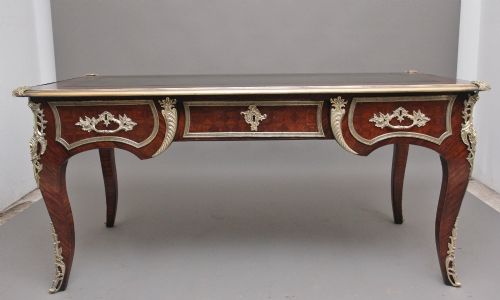
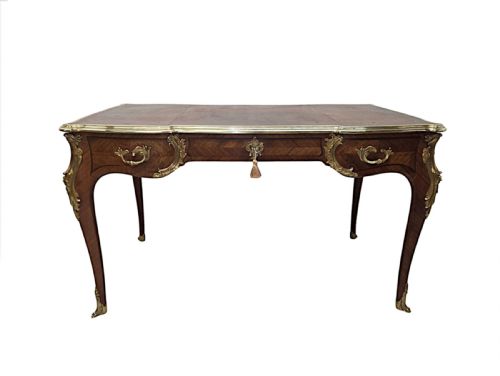
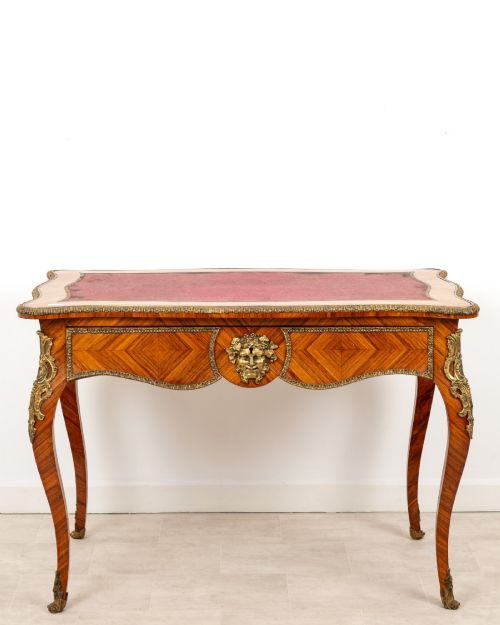
The selection ranges from simple occasional stands to monumental desks and bureau plats bearing distinct signatures or mounts. Surviving examples demonstrate the enduring popularity of walnut, rosewood, and kingwood veneers combined with elaborate gilt bronze.
Materials and Construction
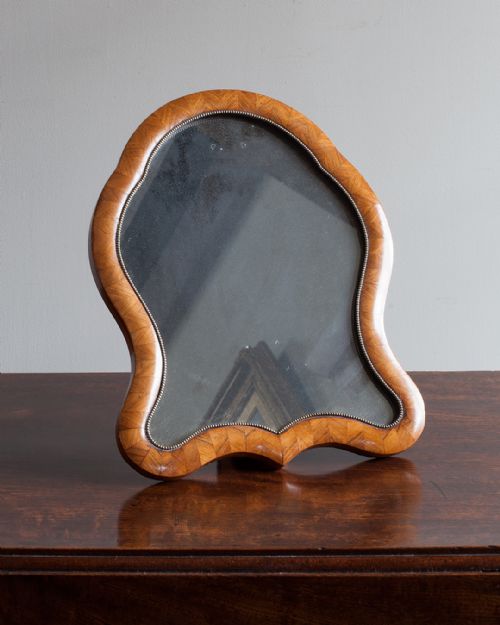
Workshops laid prized timbers such as kingwood, tulipwood, and rosewood over solid foundational woods like oak or mahogany, creating intricate geometric parquetry and floral marquetry patterns. Veneers were sawn rather than sliced, yielding a depth of grain that survived decades of polishing.
Gilt bronze and ormolu mounts were cast, chased, and fire-gilt before being fitted to corners, feet, and friezes with precise brass screws. Marble tops, leather writing inserts, and hand-painted Vernis Martin panels were integrated into the structural frames.
Mechanisms for extending tables, raising writing surfaces, or supporting folding card tops relied on concealed brass hinges and timber runners. Joinery employed traditional dovetails and mortise-and-tenon joints, ensuring stability beneath decorative veneers.
Some tables hide clever mechanisms beneath their veneers, ready to reveal secret compartments or card surfaces at a touch.
Markers of Distinction
Quality rests upon the crispness of the ormolu chasing and the complexity of the wood grain arrangement across the surfaces. Workshops known for excellence employed heavier cast mounts and meticulous veneer matching.
Signed pieces and documented stamps from established makers distinguish standard production from masterwork output. The articulation of bronze mounts and the integrity of the underlying joinery dictate the standing of each piece.
Edward Holmes Baldock·Francois Linke·Paul Sormani·CH. Jeanselme and Co·Durand·E. Kahn·Millet·Soubrier·P Chorier·J Duval
The 19th Century Kingwood Table Glossary
- Kingwood
- A dense South American and Brazilian timber featuring dark violet-brown grain with pale golden stripes. It was sliced into thin veneers for marquetry furniture.
- Ormolu
- Gilt bronze mounts cast and chased by metalworkers to adorn furniture corners and handles. The technique involves applying a gold-mercury amalgam and firing.
- Marquetry
- The art of forming decorative patterns using thin veneers of different coloured woods. Artisans cut pieces together to fit flush within a prepared surface.
- Bureau Plat
- A freestanding writing table fitted with drawers across the frieze. These desks typically feature leather inserts and finished backs for central placement.
- Parquetry
- Geometric wood inlay forming repeating patterns such as cubes or chequers. It creates a structured contrast to floral marquetry.
19th Century Kingwood Table: Frequently Asked Questions
How do I care for kingwood veneer?
Kingwood furniture requires stable indoor humidity and protection from direct sunlight to prevent timber drying and veneer lifting. Regular dusting with a dry cloth maintains the polished finish.
Avoid liquid cleaners and silicone polishes, using traditional paste wax sparingly when the wood appears dry.
What distinguishes Louis XV style?
Louis XV revival pieces are defined by asymmetric curves, serpentine lines, and floral marquetry. Cabriole legs ending in gilt bronze sabots are typical.
This aesthetic rejected rigid symmetry in favour of organic forms derived from eighteenth-century French design.
Were these tables used for dining?
Occasional tables and centre tables were intended for display, card games, or holding lamps rather than formal dining. Card tables concealed folding surfaces lined with baize for games.
Bijouterie tables displayed collections of small decorative objects beneath glazed glass tops.