



French Ormolu Mounted Vases
French ormolu mounted vases combine cast bronze mounts with porcelain, marble or glass bodies to bring interior elegance from the eighteenth and nineteenth centuries.
French Ormolu Mounted Vases
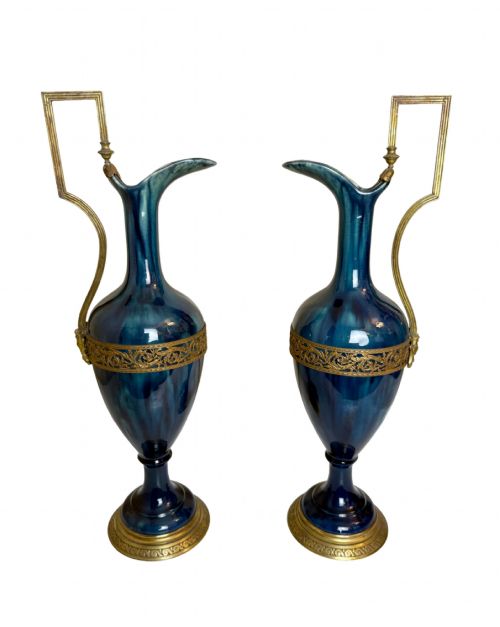
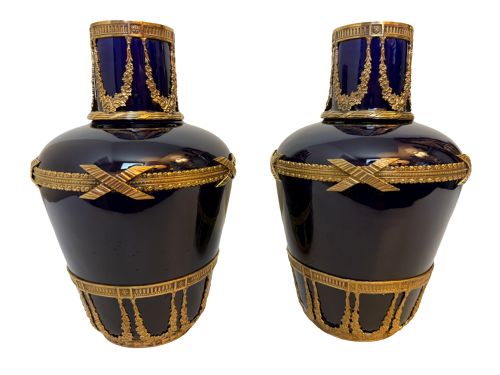
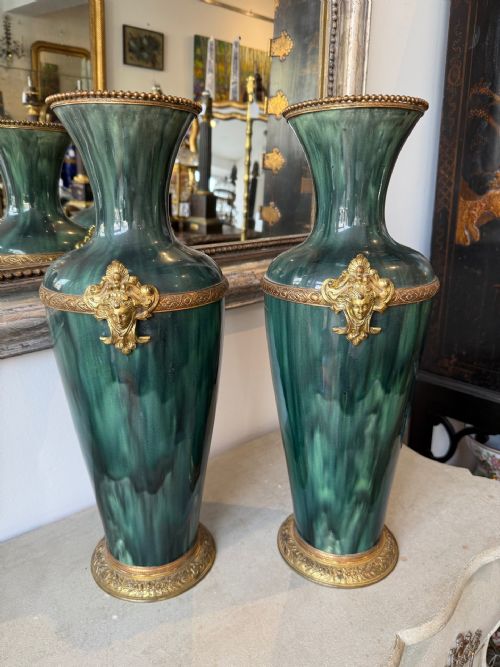
French ormolu mounted vases unite glazed porcelain, natural stone and crystal with finely finished gilt bronze mounts. These decorative objects emerge principally from nineteenth-century workshops inspired by earlier monarchical periods.
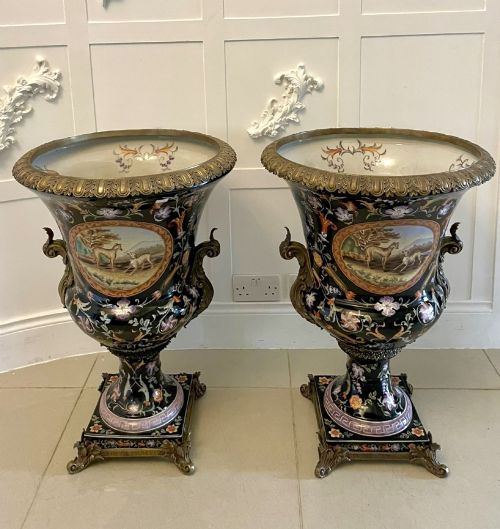
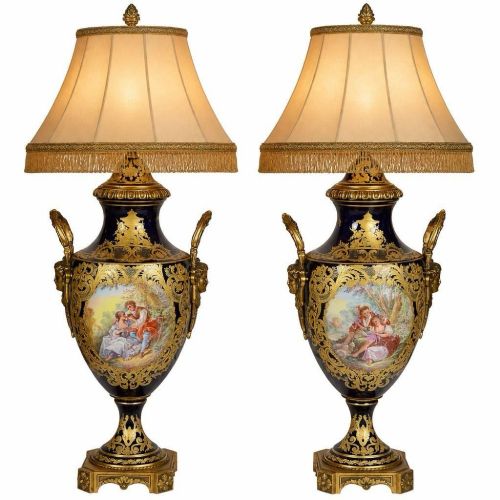
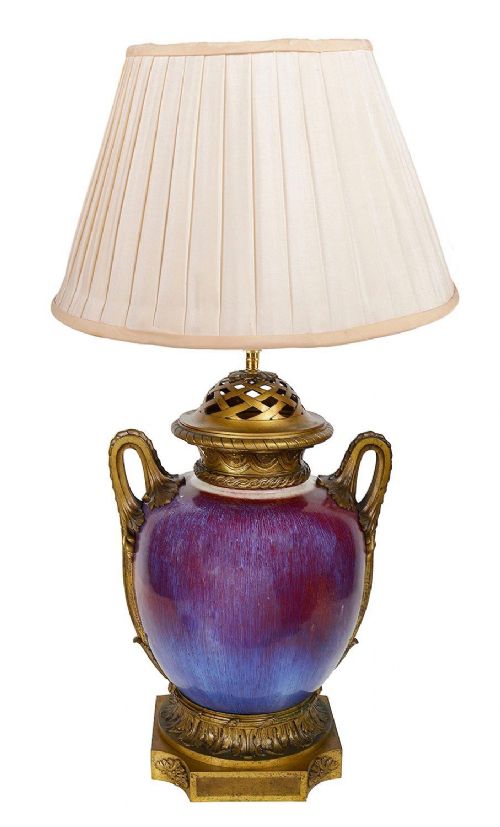
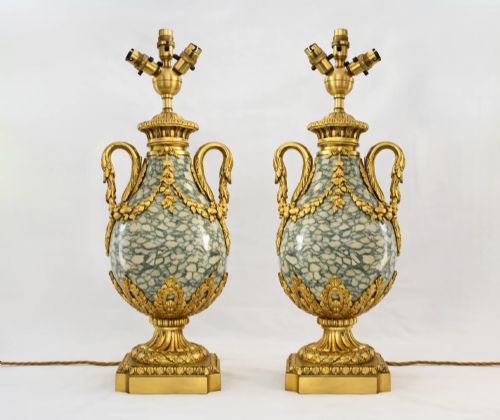
The inventory on this page consists largely of pairs designed for mantelpieces or side tables, taking the form of lidded urns, cassolettes with reversible lids, and vessels adapted later into table lamps.
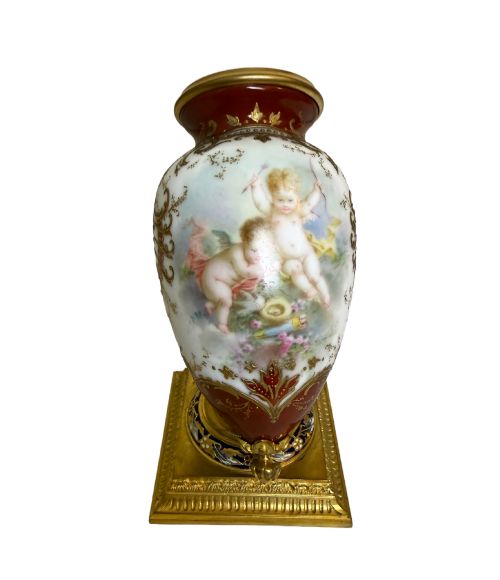
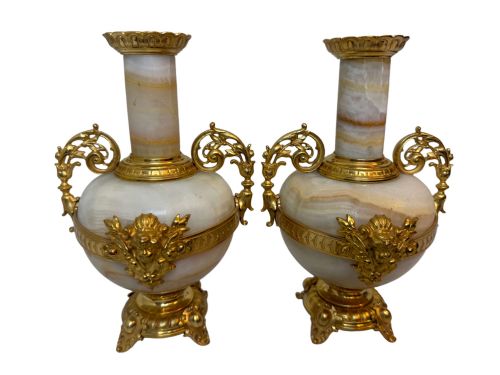
Porcelain bodies painted in the Sevres manner dominate the selection, alongside white and coloured marbles such as rouge and alabastro fiorito, secured by classical cast metal trims.
How they were made
Craftsmen built these pieces by combining bodies turned from marble, onyx or cast from porcelain with separately cast bronze elements. Molten metal poured into moulds created handles, collars and bases, which were subsequently chased by hand to sharpen the ornament.
The characteristic golden surface of ormolu results from mercury gilding, a process where an amalgam of gold and mercury was applied to the bronze and heated until the mercury vaporised. Alternatively, electroplating appears on later nineteenth-century examples.
Mounts were mechanically secured to the ceramic or stone bodies using threaded rods, nuts and pins, allowing dissimilar materials to join firmly without adhesives.
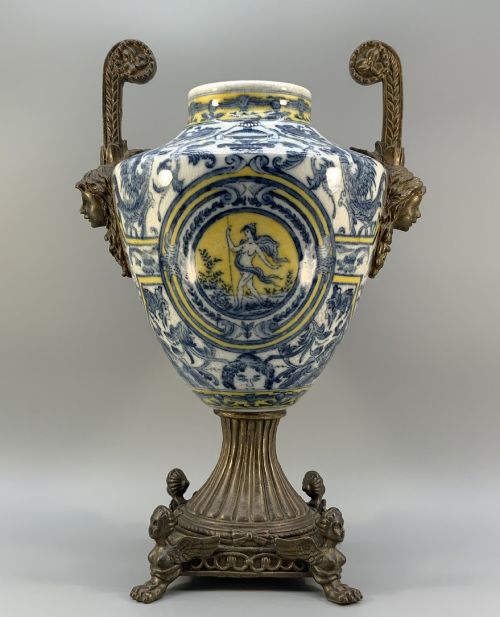
Materials span porcelain, gilt bronze, marble, onyx, crystal and cloisonne enamel configured as lidded urns, garnitures and cassolettes.
What varies in quality
Quality rests primarily in the crispness of the bronze chasing and the depth of the gilding. Superior mounts display sharply defined acanthus leaves and ribbons with crisp undercutting, whereas inferior examples appear soft and flat from worn moulds.
The selection of the body material also dictates overall merit. Hand-painted porcelain panels featuring detailed figures or finely figured marble varieties command greater regard than plain glazed surfaces.
Proportion remains vital, where the visual weight of the bronze mounts balances the mass of the central stone or ceramic vessel without dominating it.
The French Ormolu Mounted Vases Glossary
- Ormolu
- Gilt bronze decoration created by applying a gold and mercury mixture to cast bronze. This finish produces a warm, matte golden sheen characteristic of French decorative arts.
- Cassolette
- A decorative vase featuring a reversible lid with a solid side and an incense burner side. These vessels function as dual-purpose ornamental pieces on nineteenth-century mantelpieces.
- Sevres style
- A design manner imitating the soft-paste porcelain produced by the royal French factory. Pieces often feature bleu celeste grounds and hand-painted putti within gilded cartouches.
- Cassolette urn
- A covered vessel shaped like an antique amphora or classical urn designed to hold potpourri or dry flowers. The mounts typically frame the shoulders and foot.
- Rouge marble
- A deep red natural stone with white and grey veining frequently quarried in France. It provides a heavy, colourful base for neoclassical bronze mounts.
French Ormolu Mounted Vases: Frequently Asked Questions
How do I clean ormolu mounts safely?
Dust bronze mounts gently with a soft dry brush to remove particles without disturbing the gilt surface. Avoid harsh metal polishes which strip away historic gold layers.
Wash porcelain or marble bodies using a damp cloth only when necessary, keeping moisture away from the metal joins and painted reserves.
Can I use these vases for fresh flowers?
Most antique pieces contain historic interiors that are unsuited for direct contact with water and soil. Liners are generally required if moisture is introduced.
Many examples function best when displayed dry as sculptural decorative objects or utilised as lamp bases rather than utilitarian vessels.
How can I tell Louis XVI style from Empire style?
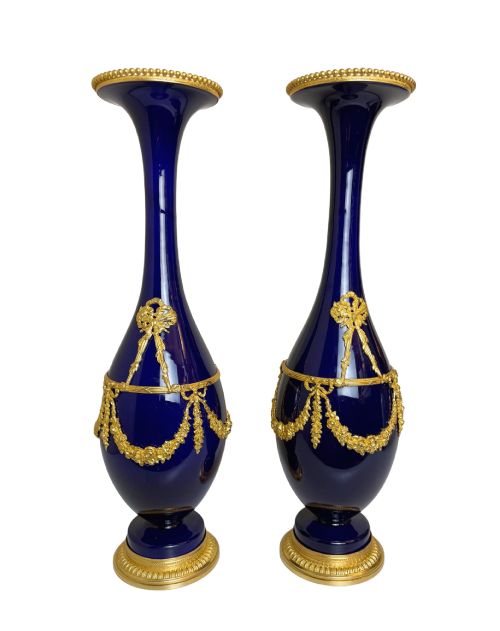
Louis XVI style mounts display restrained neoclassical restraint, featuring ribbons, swags, pearls and delicate acanthus foliage. The overall geometry remains light and symmetrical.
Empire style pieces emphasise heavier Roman military motifs, sphinxes, heavy paw feet and bold classical amphora shapes reflecting Napoleonic taste.
Why are many vases drilled or fitted as lamps?
Mid-century and twentieth-century interior preferences frequently led owners to convert decorative objects into functional lighting. Wiring runs through central channels created by altering the internal structure.
This adaptation preserves the decorative exterior of the Sevres porcelain or marble body while providing modern illumination.