
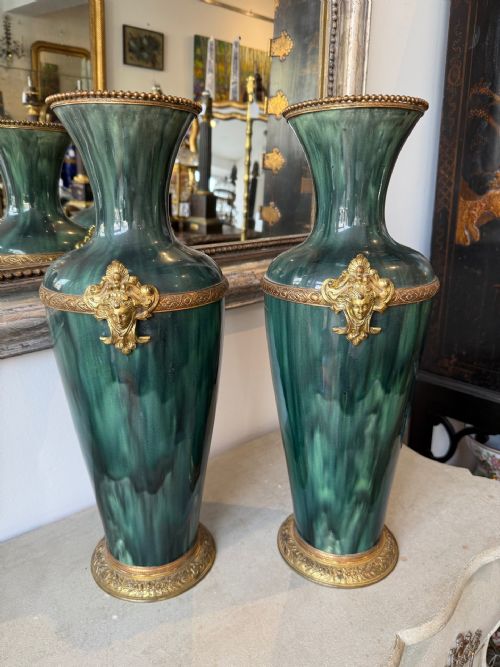


French Porcelain Mantel Urns
French porcelain mantel urns combine hand-painted ceramics with gilt bronze mounts to anchor nineteenth-century interior displays.
French Porcelain Mantel Urns
French porcelain mantel urns encompass decorative vases, lidded vessels, and clock garniture sets produced across the nineteenth century.
Makers shaped these pieces within French Rococo Revival, Louis XVI Style, and Empire aesthetics, often pairing ceramic bodies with ormolu mounts.
Buyers commonly encounter pairs of urns alongside central mantel clocks originating from periods like the 1860s and 1880s.
How they were made
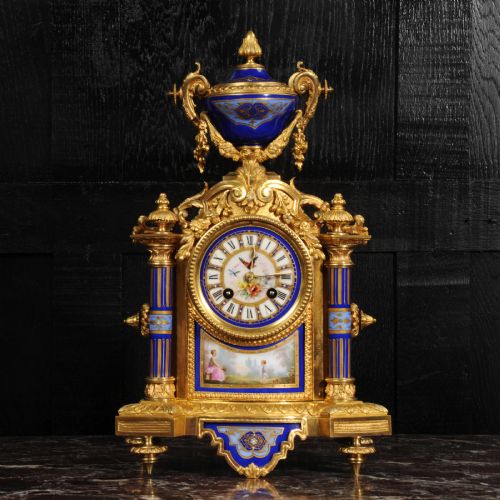
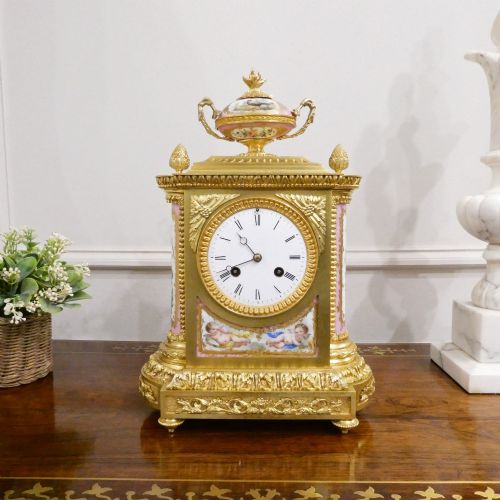
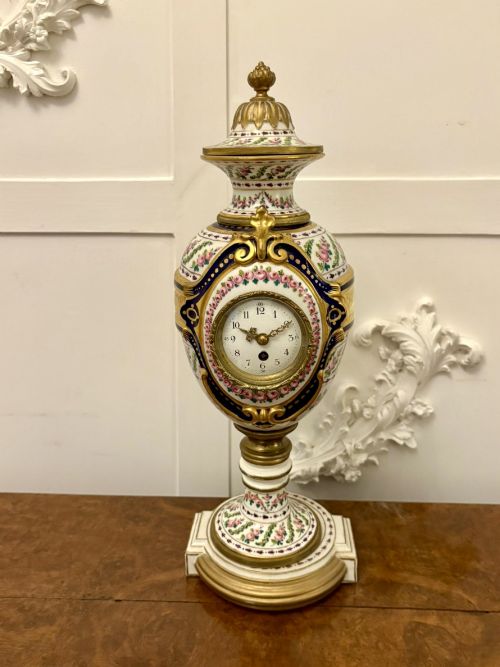
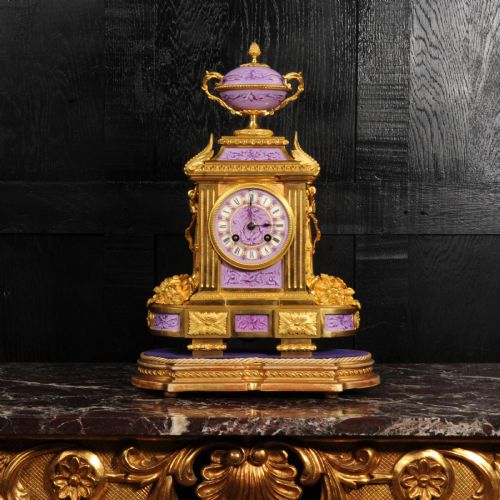
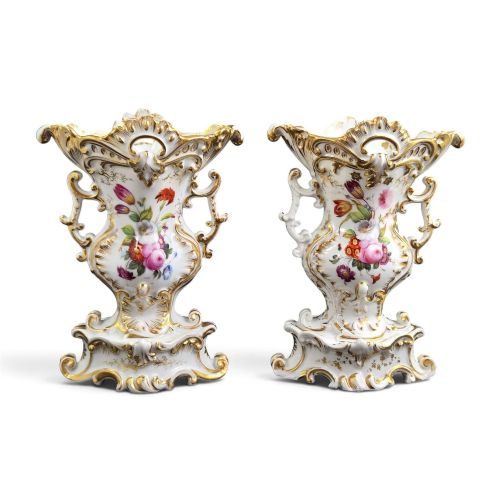
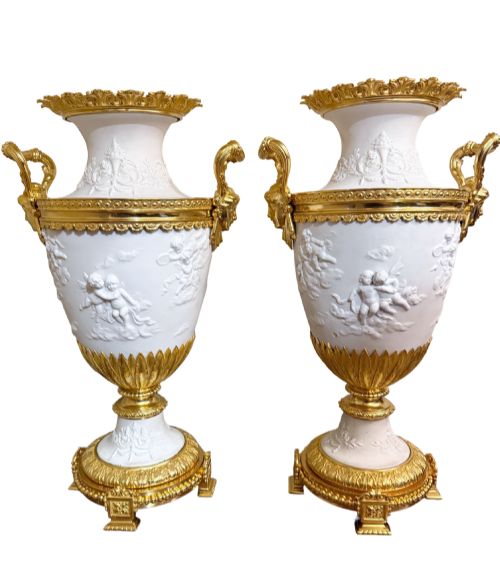
Artisans combined porcelain bodies with cast gilt bronze and ormolu mounts, applying hand-painted scenes, floral designs, and enamel details.
Workshops utilised gold leaf, brass, and glass domes to complete multi-piece garniture sets designed for prominent display.
Some nineteenth-century mantel clocks arrived accompanied by glass domes, ensuring that delicate gilt bronze and porcelain stayed pristine while keeping time.
What varies in quality
Quality rests in the precision of the hand-painted scenes, the crispness of the gilt bronze ormolu casting, and the integration of the ceramic body with its metal mounts.
The sophistication of the stylistic revival work, such as Sèvres style or Louis XVI detailing, separates standard production pieces from exceptional workshop creations.
Japy Freres·Jean-Baptiste Delettrez·Achille Brocot·Jacob Petit·Samson Paris·Vincenti of Paris·KPM Berlin
The French Porcelain Mantel Urns Glossary
- Garniture set
- A matched group of three or more decorative objects, typically comprising a central mantel clock flanked by urns or vases. These sets created symmetrical focal points on nineteenth-century fireplace mantels.
- Ormolu
- Gilt bronze mounts applied to furniture, clocks, and ceramic vessels. The technique involves creating finely chased bronze details coated in gold.
- Bleu céleste
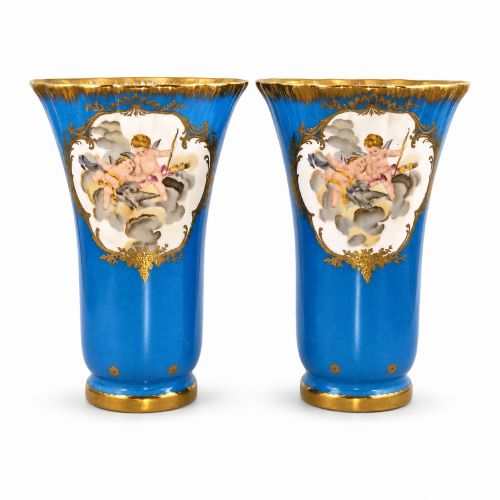
- A bright turquoise blue ground colour used extensively by the Sèvres porcelain factory and later revival workshops. It forms a striking backdrop for hand-painted floral panels.
- Old Paris porcelain
- A term applied to the output of numerous independent porcelain workshops operating in and around Paris during the nineteenth century. These makers produced diverse decorative wares without centralised factory marks.
- Medici vase
- A bell-shaped vessel form featuring a flaring rim, footed base, and scrolled handles, adapted from classical antiquity. French makers rendered this shape in porcelain and ormolu mounts.
French Porcelain Mantel Urns: Frequently Asked Questions
How do I style french porcelain mantel urns?
Place them symmetrically on a mantelpiece or sideboard, often flanking a matching clock as part of a garniture set. Their height and gilt mounts draw the eye upward in traditional interiors.
Keep them away from direct heat sources and sunlight to protect the hand-painted enamel and gilding over time.
What periods do these urns come from?
The listings span the nineteenth century, with concentrations in the 1850s, 1860s, 1880s, and 1900s. Styles range from Regency and Empire to Rococo Revival and Louis XVI.
Victorian and Napoleon III tastes heavily influenced the ornate combination of porcelain and ormolu during this era.
How are clock garnitures arranged?
A garniture typically places the mantel clock in the centre, balanced by a pair of matching urns or vases on either side. This triad creates a unified decorative scheme for a room.
Some sets originally included glass domes to protect the delicate ormolu and painted porcelain surfaces from dust.
What materials make up these pieces?
The primary body is ceramic porcelain, frequently decorated with hand-painted floral scenes or figural subjects. This is combined with gilt bronze, ormolu, brass, and sometimes onyx.
Details often include raised white enamel work and gold leaf highlights applied over coloured grounds like bleu céleste.