




Sevres Blue Decorative Urns
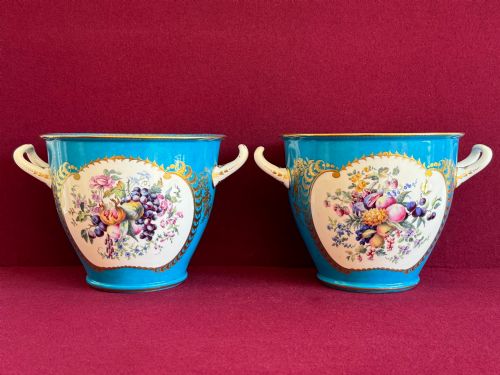
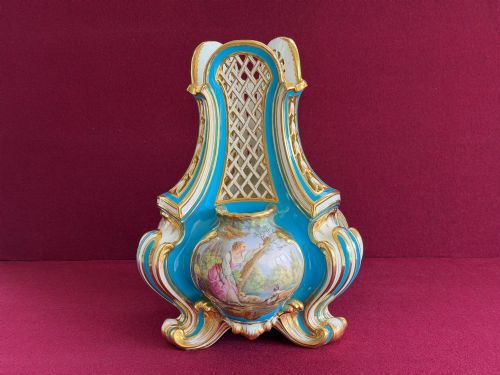
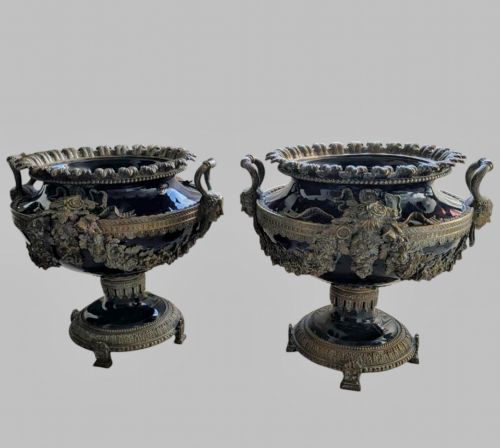
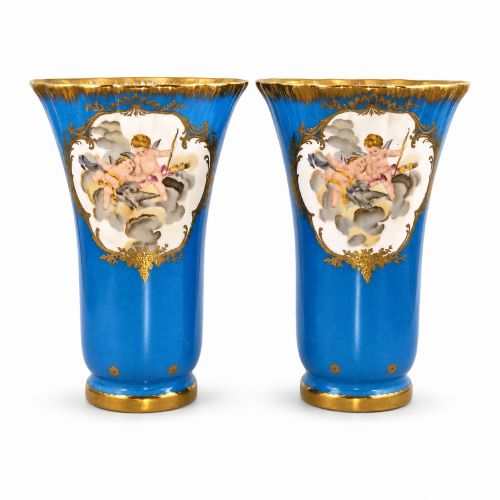
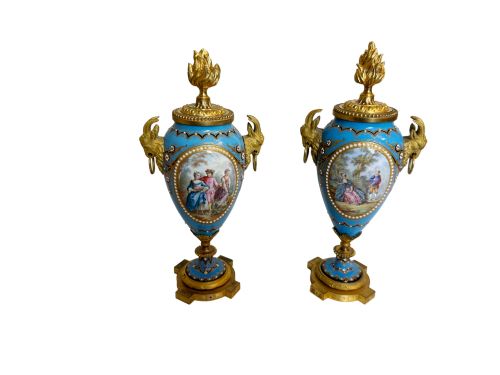
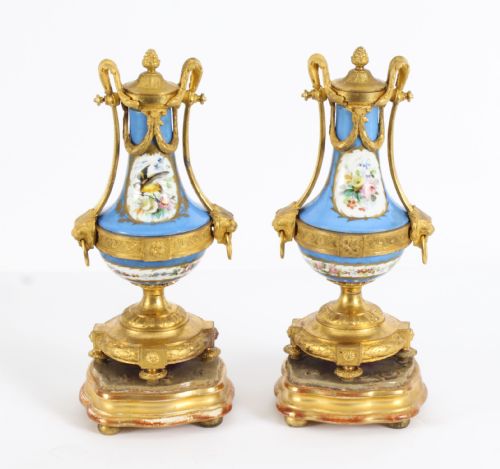
These sevres blue decorative urns are striking nineteenth-century porcelain and gilt bronze display pieces designed to command attention in a formal interior.
Sevres Blue Decorative Urns
When you search for sevres blue decorative urns, you encounter nineteenth-century objects shaped as lidded vases, cassolettes, and jardinieres. These pieces carry the distinct rich blue glaze associated with French porcelain production, often styled after the Louis XVI period or French Rococo revival.
The items listed on this page are predominantly pairs, appearing as matching garnitures or balanced mantel ornaments. They span decades from the eighteen-sixties through the close of the nineteenth century, reflecting sustained Victorian and continental demand for ornate decorative ceramics.
Most examples combine glazed ceramic bodies with metal mounts, drawing on classical forms or elaborate chateau aesthetics. They serve strictly as ornamental centerpieces rather than functional vessels, intended for display on pedestals, consoles, and mantelpieces.
How they were made
Makers shaped these pieces from porcelain or ceramic, applying a vibrant blue glaze known as bleu celeste before firing. Artisans frequently added hand-painted details and enamel work directly onto the ceramic surface.
Craftsmen cast mounts in ormolu, gilt bronze, and gilt metal to frame the porcelain bodies. These metal elements were then gilded using gold leaf and secured with pins or screws to the ceramic handles, rims, and bases.
Some lidded vases double as cassolettes with reversible tops, proving that nineteenth-century decorators enjoyed a clever hiding spot for nothing in particular.
What varies in quality
The distinction between standard and superior pieces rests upon the crispness of the gilt bronze mounts and the depth of the hand-painted enamel decoration. Finer examples display cleanly chased ormolu work that hugs the porcelain contours precisely.
Proportion and scale also dictate worth, with monumental garniture sets and balanced pairs commanding greater visual presence. The consistency of the bleu celeste glaze and the integration of the metal trim reveal the skill of the original workshop.
Samson Paris
The Sevres Blue Decorative Urns Glossary
- Bleu Celeste
- A bright, sky-blue porcelain ground colour popularised by French factories. It provides a vivid backdrop for subsequent gilding and enamel work.
- Ormolu
- Gilded bronze or brass used for mounts and decorative trims on nineteenth-century furniture and ceramics. The technique involves applying a gold amalgam to a bronze base.
- Cassolette
- A dual-purpose decorative vessel featuring a reversible lid that functions as a small bowl or a solid cover. These pieces often incorporate elaborate metal handles and mounts.
- Garniture
- A matching set of three or more ornamental vases or urns designed to sit together on a mantelpiece or sideboard. They typically feature a central larger vessel flanked by smaller matching pieces.
- Jardiniere
- An ornamental pot or stand designed to hold plants or floral arrangements, frequently executed in glazed porcelain with metal trim. In this context, they match the aesthetic of companion urns.
Sevres Blue Decorative Urns: Frequently Asked Questions
What are sevres blue decorative urns?
These objects are nineteenth-century ornamental porcelain vessels glazed in bright blue and finished with metal mounts. They reflect historical French revival styles intended for decorative display.
Created as mantel garnitures, jardinieres, or lidded vases, they combine glazed ceramic bodies with gilt bronze or ormolu trim. Their primary purpose is aesthetic enhancement of formal rooms.
How do I display these urns?
Place matching pairs symmetrically on large mantelpieces, console tables, or dedicated pedestals where their colour and gilt mounts catch the light. Because they are often part of garniture sets, keeping companion pieces together maintains their visual balance.
Avoid placing them in areas of heavy household traffic or direct sunlight to protect the fragile enamel and gilding. Ensure the surface is stable and level, particularly with monumental lidded examples.
Are these pieces functional?
These items are designed exclusively for decorative display rather than practical utility. Their delicate porcelain construction and elaborate metal mounts make them unsuited for holding liquids.
While jardinieres and cassolettes suggest a functional origin, nineteenth-century examples of this type served primarily as interior ornaments. Using them for actual planting or holding water risks damaging the glaze and internal ceramic body.
How do I identify the period?
Examine the style of the metal mounts, the shade of the blue glaze, and the character of the hand-painted decoration. Nineteenth-century pieces frequently draw upon Louis XVI or Rococo revival motifs.
Look closely at the construction methods of the bronze mounts and the wear on the gilding. These physical characteristics align with production dates spanning the eighteen-sixties to the turn of the century.