


French Neoclassical Stool
These French neoclassical stool pieces bring classical proportion and refined seating into a room, offering understated elegance.

French Neoclassical Stool
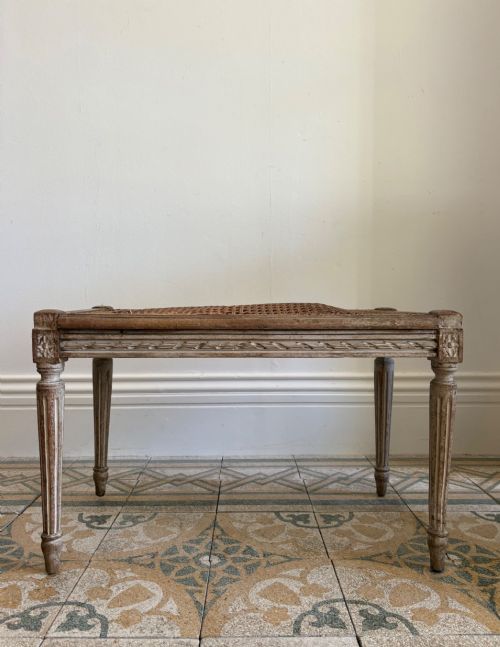
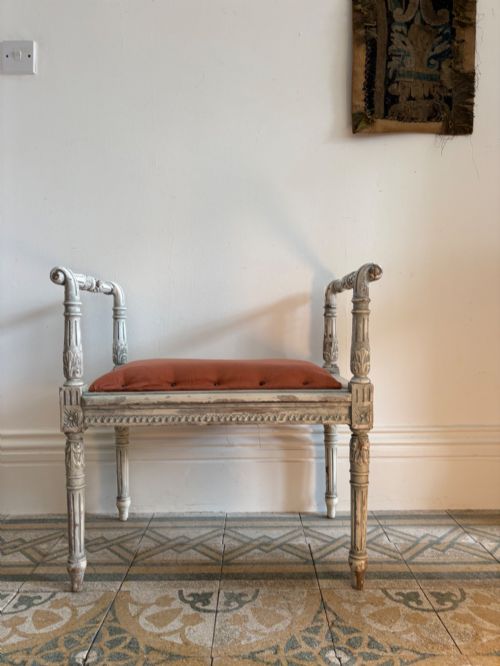
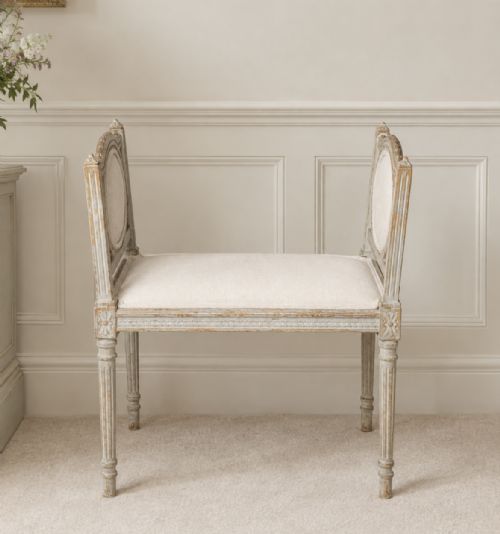
A french neoclassical stool embodies classical restraint, drawn from Louis XVI, Empire, and Gustavian traditions. The selection spans the nineteenth century through the early twentieth century, capturing revivals alongside earlier work.
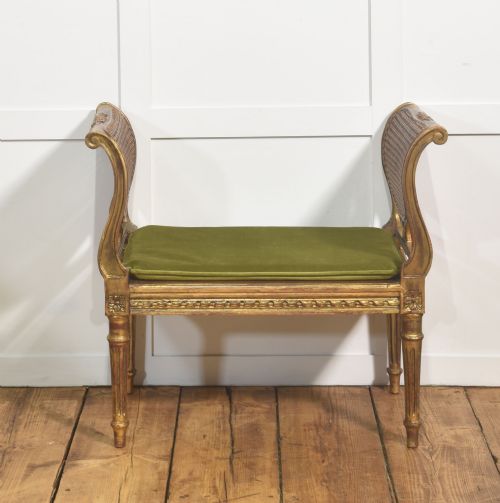
Forms vary from window seats and duet stools to footstools and X frame designs. Pieces appear in giltwood, painted wood, and mahogany, often upholstered in silk, velvet, or fitted with cane.
Most examples date from the nineteenth century and the decades around nineteen hundred, reflecting both French workshops and Scandinavian Gustavian interpretations.
Materials and construction methods
Carved wood provides the primary structure, finished in giltwood, paint, or left as polished mahogany. Ormolu mounts and brass accents appear on specific Empire pieces, adding metallic detail to the timber.
Upholstery relies on silk, velvet, or standard fabric, while other examples utilise woven cane for seats. Frames are constructed with traditional joinery suited to window seats, footstools, and X frame configurations.
One unexpected duet stool manages to share a single seat quite amicably without causing any domestic disputes over armrest territory.
Assessing quality in seating
The refinement of the carving distinguishes finer examples, particularly in giltwood and painted frames where crisp detail defines the classical motifs. Superior pieces show precision in the joinery of X frame and curule structures.
The choice and execution of upholstery, whether silk, velvet, or cane, contribute to the overall integrity of the piece. Ormolu mounts and brass fittings on Empire items indicate the grade of secondary ornamentation employed by the maker.
The French Neoclassical Stool Glossary
- Giltwood
- Wood coated with gold leaf or gilt preparation. This finish appears frequently on Louis XVI style and nineteenth century frames.
- Empire Style
- Design movement drawing on ancient Roman and Greek motifs. This style utilises mahogany, ormolu mounts, and architectural lines.
- Gustavian Neoclassical
- Swedish interpretation of neoclassical taste, typically featuring light paint finishes and restrained carving. White painted surfaces are characteristic.
- Curule Stool
- Ancient Roman inspired seat with X shaped legs. This form provides a distinct architectural silhouette in gilt finishes.
- Cane
- Woven material made from rattan used for seat panels. It offers a light, textured surface on window stools.
French Neoclassical Stool: Frequently Asked Questions
Where should I place a window seat?
These long stools suit narrow spaces like hallways or the foot of a bed. They provide low profile seating without blocking light from windows.
Their linear frames also complement living room arrangements where bulkier armchairs might crowd the floor plan.
How do I care for giltwood frames?
Dust gilt surfaces gently with a soft, dry brush to protect the delicate gold leaf finish. Avoid chemical polishes and moisture.
Keep pieces away from direct sunlight to prevent the underlying gesso from drying and cracking over time.
What is an X frame stool?
An X frame stool uses intersecting diagonal legs to support the seat, creating a curule shape inspired by classical antiquity. This design offers structural strength and visual lightness.
Such forms appear in nineteenth century Empire and giltwood variations within the selection.
How do I identify a Gustavian piece?
Gustavian pieces typically feature pale painted finishes, such as white or soft grey, paired with restrained neoclassical carving. These Swedish interpretations look lighter than their French counterparts.
They often combine wooden frames with silk or fabric seats reflecting Scandinavian interior traditions.