


19th Century Tabouret
A 19th century tabouret offers low seating rooted in French revivalism, combining carved timber frames with rich upholstery to anchor a room.

19th Century Tabouret
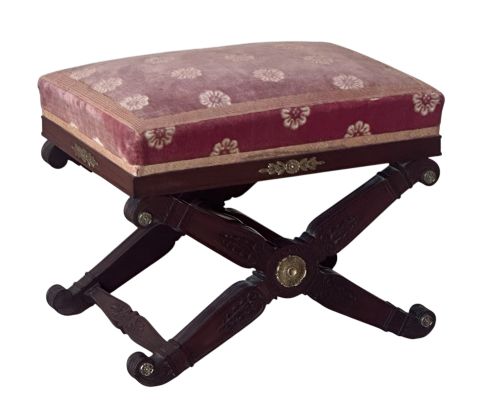
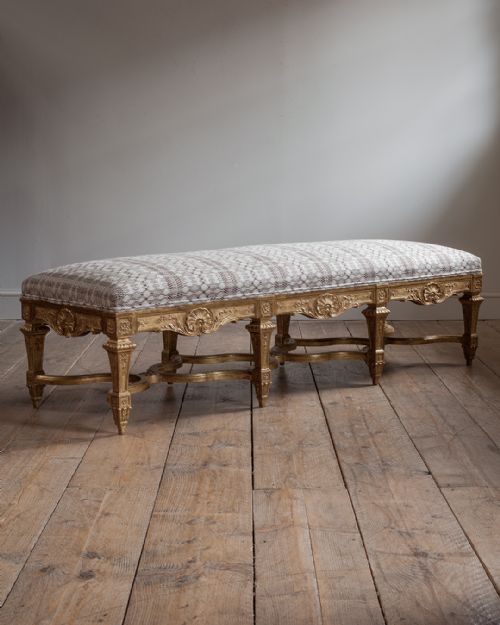
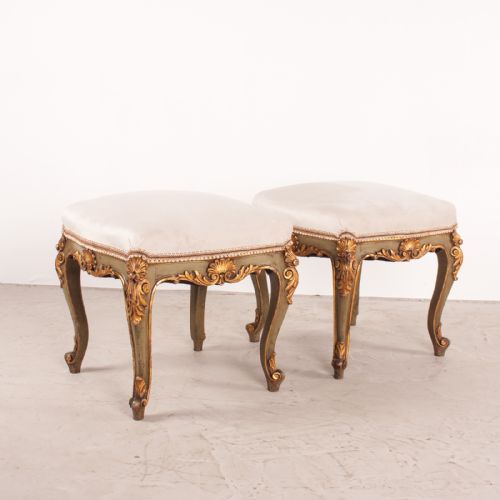
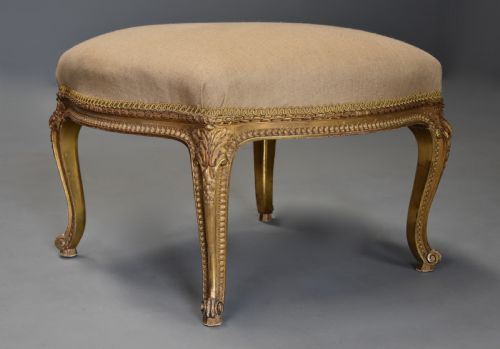
A 19th century tabouret is a low seat or stool, most frequently encountered in styles such as Louis XIV Revival, Louis XV Revival, and French Empire. These pieces function as footstools or centre stools, providing versatile seating options within traditional interiors.
The selections on this page span the 19th century, featuring forms like the X-frame stool alongside larger pairs of carved walnut and giltwood stools. Originating predominantly from French workshops, these items reflect the enduring popularity of historicist design throughout the period.
How these pieces were constructed
Construction relies heavily on timber such as mahogany and walnut, alongside carved wood frameworks finished with giltwood, gold leaf, or paint and gilding. Artisans shaped these materials into elaborate frames defined by revivalist aesthetics.
Upholstery completes the piece, utilising fabrics like velvet alongside gilt bronze mounts. This combination of carved wooden structures and soft textile surfaces characterises the physical make-up of the items recorded here.
One recorded tabouret once belonged to Lord Ballyedmond, proving that even a humble footstool can rub shoulders with the aristocracy.
What distinguishes quality
The standard of carving in the timber framework separates ordinary production from finer examples. Crisp detail in giltwood and carved wood elements indicates superior craftsmanship by skilled hands.
Maker marks and stamps add distinction to individual pieces, reflecting documented Paris workshops. The choice of materials, from solid walnut to quality bronze mounts, further defines the upper tier of these furnishings.
LOIDRAULT FRERES PARIS·a.m.e Fournier
The 19th Century Tabouret Glossary
- Tabouret
- A low stool or seat without arms or a back. It originates from French court furniture traditions.
- Giltwood
- Wood that has been coated with gold leaf or gilt. This finish appears frequently on revivalist frames.
- X-frame
- A structural support formed by two intersecting diagonal members. This shape supports stools and benches.
- Rococo Revival
- A decorative style reviving the curved, asymmetrical ornamentation of the eighteenth century. It appears across nineteenth-century seating.
19th Century Tabouret: Frequently Asked Questions
What is a tabouret used for?
A tabouret serves as a low seat or footstool in sitting rooms and parlours. Its compact proportions allow it to be moved easily around a room as needed.
Historically, such stools provided flexible seating close to the floor. Today, they function both as practical footstools and decorative accent pieces.
How do I identify French revival styles?
French revival styles borrow decorative motifs from earlier periods like Louis XIV and the French Empire. Look for carved giltwood, symmetrical scrollwork, and classical lines.
Mid-nineteenth-century makers often reinterpreted these historical designs with heavier timber frames and rich velvet upholstery.
Are these stools comfortable for daily use?
These stools feature upholstered tops in materials such as velvet, supported by sturdy timber or carved wood frames. They provide firm, low seating suited to short periods of rest.
While built for formal interiors, their solid construction accommodates regular placement in living spaces.
How should I care for giltwood furniture?
Giltwood surfaces require gentle dusting with a soft, dry cloth to protect the delicate gold leaf finish. Avoid harsh cleaning products and moisture.
Keeping these pieces away from direct sunlight and fluctuating temperatures helps preserve the integrity of the carved wood and paint.