


Gilded Wooden Stool
These gilded wooden stool examples bring brilliant leaf and carved frames to any room, offering rich historical seating.

Gilded Wooden Stool
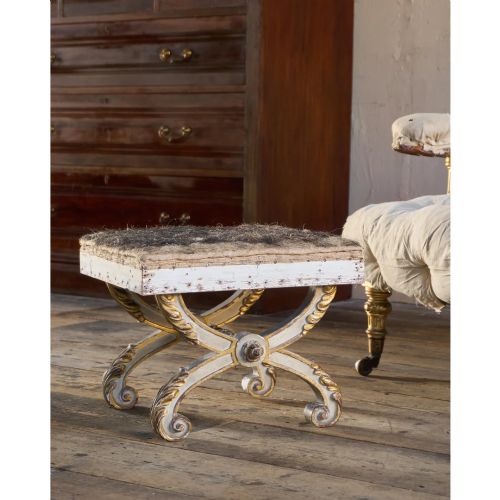
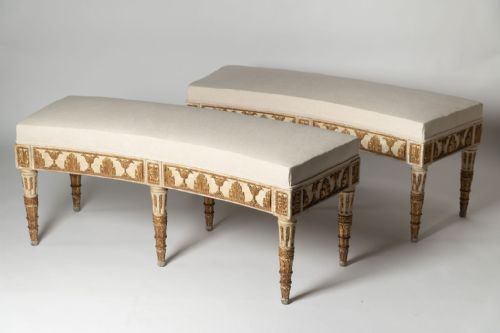
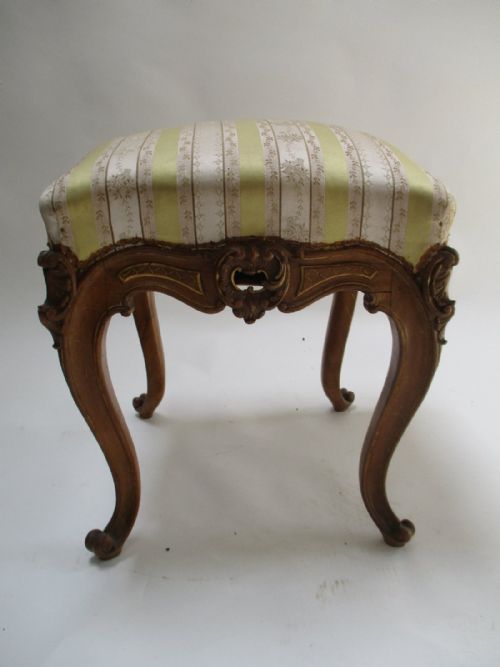
A gilded wooden stool combines carved timber with gold leaf or paint, resulting in a decorative seat designed for prominent rooms. Collectors encounter several distinct forms within this selection, including low stools, footstools, and X frame curule pieces. These items span various periods such as the nineteenth century, Regency, and around nineteen hundred.
The aesthetic diversity ranges from French hand-carved pieces to Italian designs and Asian folk art objects. Makers and regions expressed different movements, visible in Rococo Revival, Baroque Revival, and Empire styles. Buyers frequently select these furnishings to anchor a seating arrangement or accent a traditional interior.
How they were made
Makers utilised solid timbers like walnut and general wood, shaping them by hand with intricate carving techniques. Artisans then applied gold leaf, gilding, or paint to the wooden surfaces to achieve a luminous finish.
Upholstery completed the furniture, utilising textiles such as linen and velvet to pad the top surfaces. Brass elements sometimes augmented the timber framework, particularly on curule and X frame designs.
Sculpted wooden elephant bodies and tusks occasionally double as seating, proving nineteenth-century makers loved a touch of theatrical charm.
What varies in quality
The refinement of the hand carving dictates much of the visual success, separating simply turned wood from deeply sculpted botanical or figurative motifs. Crisp detailing in the giltwood surface shows superior artisan control during the gilding process.
The integrity of the underlying timber frame and the authenticity of the period upholstery materials also distinguish finer examples. Pieces bearing specific workshop attributions or distinct stylistic cohesion across a suite carry greater historical weight.
Miles and Edwards·John Tesch
The Gilded Wooden Stool Glossary
- Giltwood
- Wood that has been covered with a thin layer of gold leaf or gold paint. This finish creates a bright, reflective surface characteristic of formal antique seating.
- Curule stool
- An ancient Roman magistrate chair design featuring intersecting curved legs forming an X shape. Nineteenth-century makers revived this form for ceremonial and decorative footstools.
- Rococo Revival
- A nineteenth-century design movement inspired by eighteenth-century French styles, known for asymmetrical curves and ornate naturalistic carving. Such pieces often feature prominently gilded surfaces.
- Empire style
- A neoclassical design aesthetic popular in the early nineteenth century, drawing heavily on ancient Roman and Greek motifs. It frequently appears in stools with strict symmetry and bold structural lines.
Gilded Wooden Stool: Frequently Asked Questions
What periods do these stools come from?
The available pieces originate primarily from the nineteenth century, including specific Regency and 1880 eras.
Craftsmen across these decades produced varied regional interpretations, from French carved seats to Swedish furniture suites.
How were these stools used historically?
These decorative seats served as functional footstools, low seating, or parts of larger furniture suites in formal rooms.
Their ornate gilded surfaces meant they were designed to be displayed prominently rather than tucked away.
What materials make up these pieces?
Makers constructed the frames from woods like walnut, applying gold leaf, gilding, or paint to the exterior.
Upholstered versions incorporate textiles such as velvet and linen on the seating surfaces, sometimes accented with brass.
How do I identify different design styles?
Styles range from Baroque Revival and Rococo Revival curves to strict Italian Neoclassical and Empire geometries.
Examining the carving motifs and leg configuration helps distinguish between these historical revivals.