
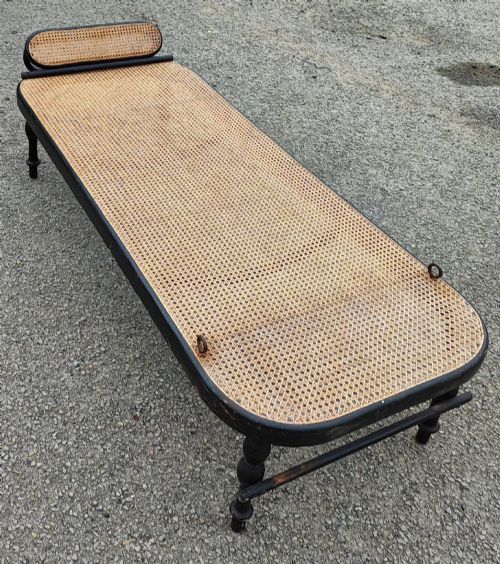


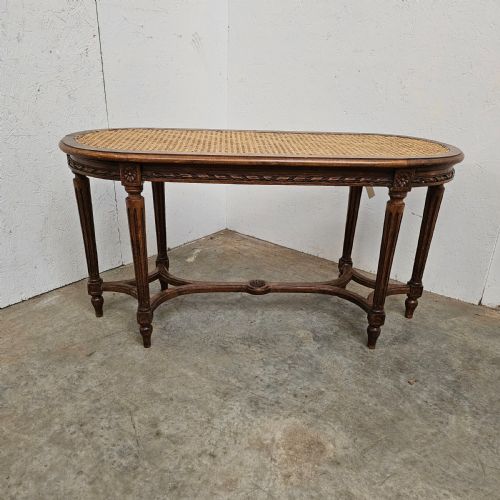


Vintage Cane Seat Bench
A vintage cane seat bench brings woven texture and understated woodwork to a room, offering lightweight seating with classical lines.
Vintage Cane Seat Bench
A vintage cane seat bench encompasses a range of seating forms including daybeds, window seats, banquettes, and loveseats produced across the nineteenth and early twentieth centuries. These pieces draw on French Chateau, Victorian, Edwardian Neoclassical Revival, and Viennese Bentwood styles, reflecting varied regional tastes of their eras.
The most frequent examples found under a vintage cane seat bench search are French nineteenth-century painted or carved beech sofas and window seats. Alongside these sit compact Thonet bentwood pieces and Edwardian mahogany forms, providing a mix of grand decorative framing and simpler structural outlines.
Materials and construction
The framework relies heavily on beech, walnut, and mahogany, frequently shaped through carving or ebonised and painted wood finishes. Some examples incorporate brass details or fabric elements to complement the primary structure.
Canework forms the defining seat or back panels, woven tightly to create a supportive and flexible surface. This traditional technique pairs with steam-bent wood in Viennese designs or heavy joinery in heavier French and Victorian frames.
Listings feature items spanning the nineteenth century through to nineteen-twenty, utilising cane, beech, painted wood, fabric, ebonised wood, brass, and walnut.
Judging quality in design and execution
Quality rests in the crispness of the wood carving and the precision of the woven canework panels. Finer examples display harmonious proportions between the decorative frame and the light woven seat, whilst simpler pieces rely on basic turned or bent components.
The integrity of the surface finish also dictates worth, distinguishing original painted or ebonised patinas from later decorative updates. Heavier structural timber work found in nineteenth-century daybeds and sofas provides greater permanence than lighter auxiliary seating.
The Vintage Cane Seat Bench Glossary
- Cane
- Plant material woven into open patterns to form resilient seat and back panels. It offers a light, breathable surface characteristic of traditional seating.
- Ebonised wood
- Timber treated to resemble ebony through dark staining or finishing. This technique creates a formal, uniform black surface popular in nineteenth-century furniture.
- Banquette
- An upholstered or caned long seat intended for domestic interiors. These pieces often feature decorative carved wooden frames.
- Bentwood
- Wood softened by steam and bent into curved structural forms. This process defines lightweight nineteenth-century production methods.
Vintage Cane Seat Bench: Frequently Asked Questions
What is a vintage cane seat bench?
A vintage cane seat bench is a piece of seating furniture featuring woven cane panels and a wooden frame produced during the nineteenth or early twentieth centuries.
These items range from French carved window seats to Viennese bentwood loveseats and daybeds.
How were these benches used historically?
These seating forms served multiple domestic purposes, acting as window seats, daybeds for resting, or decorative sofas in formal rooms.
Their lightweight construction allowed them to be moved easily between light-filled galleries and private chambers.
What materials are common on these benches?
The frames utilise beech, walnut, mahogany, and ebonised or painted wood, occasionally accented with brass fittings or fabric.
Seats and backrests consist of woven cane material designed to provide flexible support.
How do I identify a Victorian example?
Victorian pieces often display heavier carved wooden frames and reflect revival styles rooted in historical European design.
Comparing the turned wood details and upholstery integration helps differentiate them from Edwardian or continental pieces.
Are these benches suitable for daily use?
Many examples are sturdy enough for regular sitting, particularly those built from solid beech or walnut.
Care should be taken with older woven cane panels to maintain tension and avoid sharp point loads.