




Louis XVI Bench
A louis xvi bench brings neoclassical restraint and carved symmetry to an interior, offering practical seating with a distinct French heritage.
Louis XVI Bench
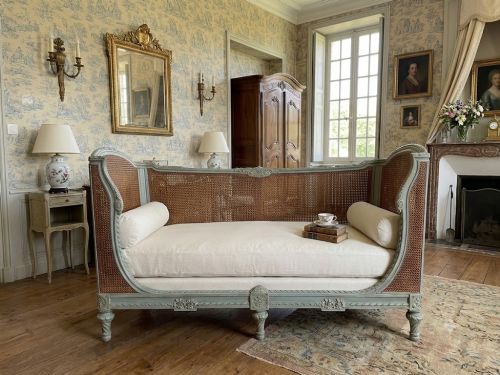
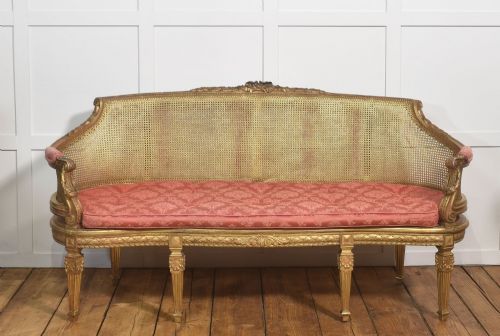
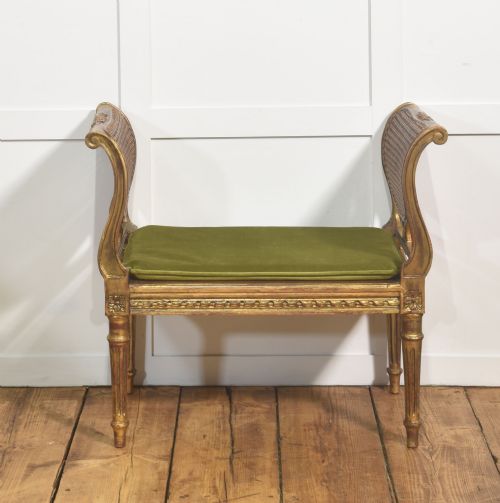
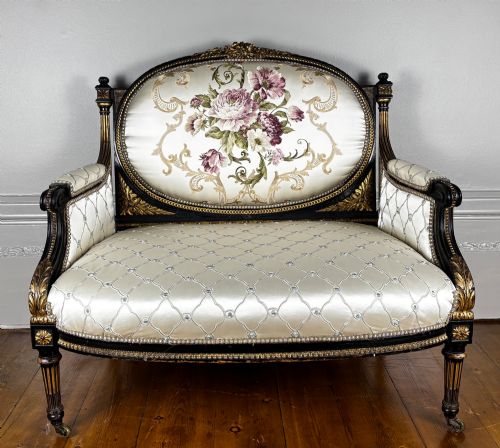
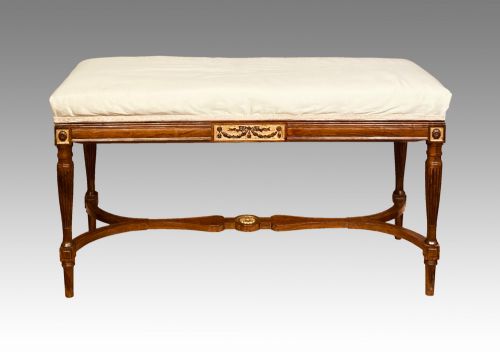
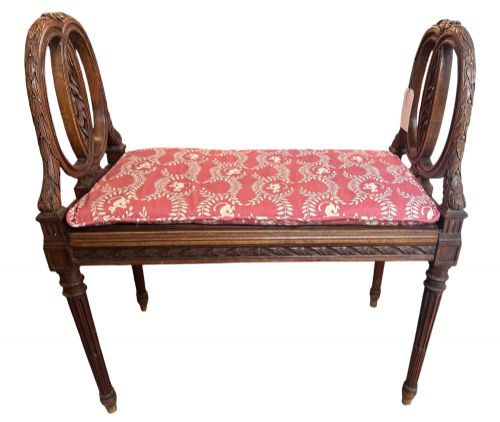
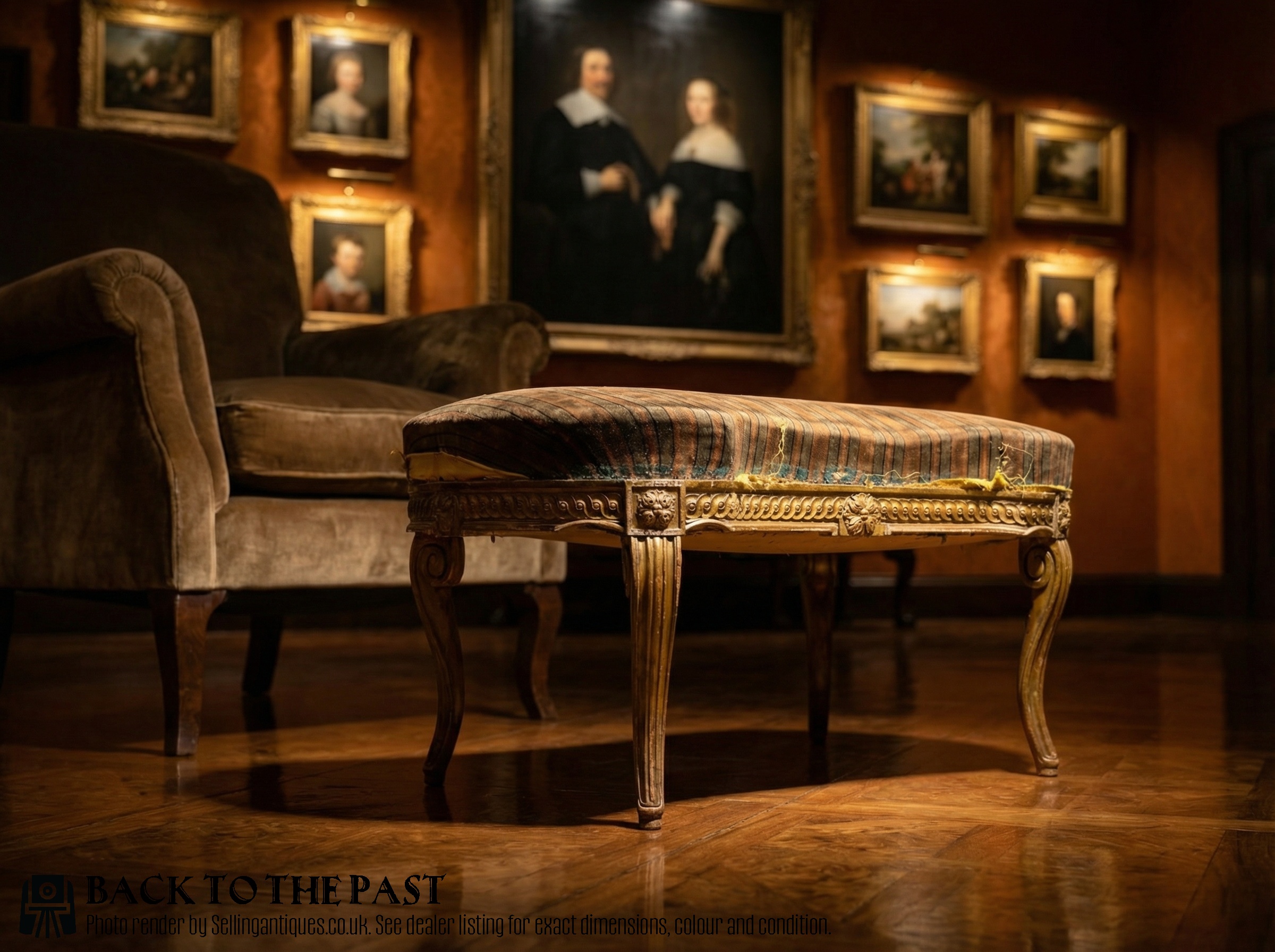
A louis xvi bench encompasses seating forms such as window seats, window stools, duet stools, and banquettes shaped by neoclassical principles. Buyers frequently encounter examples from the nineteenth century and the early twentieth century executed in revival styles.
The silhouettes draw directly from eighteenth-century French design, favouring straight structural lines over curved rococo excesses. Pieces range from long day beds and canapé settees down to compact footstools intended for specific rooms.
Originating largely from French workshops, these forms also appear in Swedish Gustavian adaptations. The inventory reflects this geographical spread through painted finishes and giltwood frames.
Assessing quality in a louis xvi bench
The crispness and depth of the wood carving dictate the visual standard of the piece. Crisp fluting on legs and sharply defined neoclassical motifs indicate superior craftsmanship compared to soft, shallow detailing.
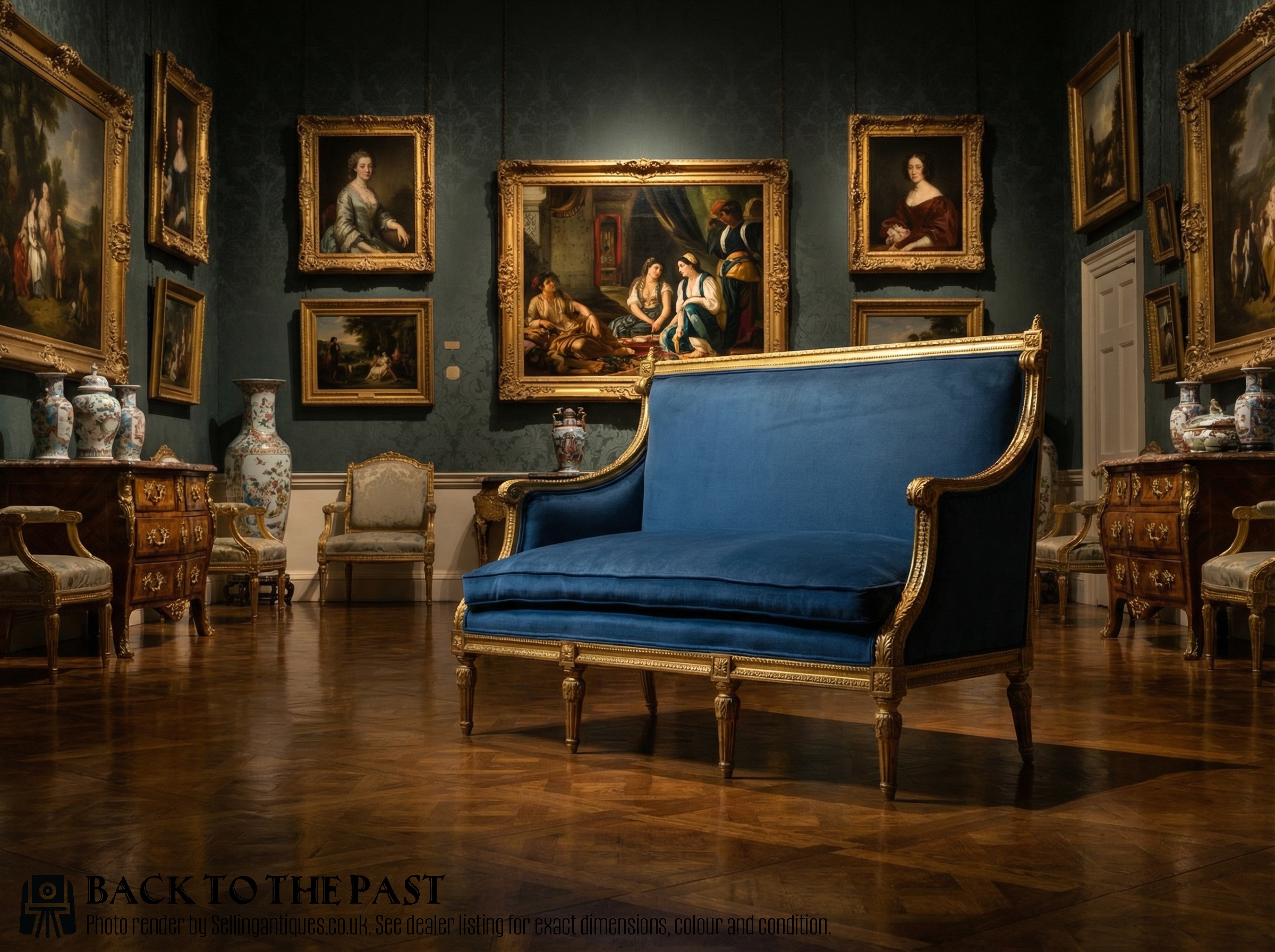
The integrity of the frame construction and the quality of the original gilding or paint layers determine the overall execution. Hand-applied finishes that show subtle ageing hold more decorative merit than flat, uniform modern coatings.
Louis XVI Bench Retail Price Guide 2026
Typical asking prices for louis xvi bench among the pieces listed under this phrase on Sellingantiques today, from the lower quarter to the upper quarter. They describe what is for sale here now, not the wider market.
The selection spans eighteenth-century origins, nineteenth-century revivals, and early twentieth-century interpretations.
Charles Nosotti
The Louis XVI Bench Glossary
- Canapé
- A French upholstered sofa or settee designed with an exposed wooden frame. These pieces often feature matching armchairs from the same suite.
- Giltwood
- Timber coated with a thin layer of gold leaf or gilt composition. This finish was widely utilised on formal seating during the neoclassical period.
- Fluted legs
- Vertical grooves carved into furniture legs, mimicking classical architectural columns. This feature is a hallmark of the neoclassical aesthetic.
- Bergère
- An enclosed armchair or sofa featuring upholstered sides. The frame is typically constructed from exposed beech or walnut.
- Gustavian
- The Swedish interpretation of French neoclassical design, commissioned by King Gustav III. It is characterised by lighter colour palettes and restrained ornamentation.
Louis XVI Bench: Frequently Asked Questions
Where should I place a louis xvi bench?
These benches fit naturally at the foot of a bed, beneath a tall window, or along a hallway wall. Their slender proportions allow them to occupy circulation spaces without blocking light or movement.
In living areas, a smaller window stool serves as flexible extra seating that maintains an open field of vision across the room.
How do I distinguish Louis XVI from Louis XV styles?
Louis XVI design relies on straight lines, symmetry, and classical geometry, whereas the earlier Louis XV style favours asymmetry and sweeping C-scrolls.
Look at the legs: Louis XVI pieces typically feature straight, fluted legs resembling columns, while Louis XV examples display curved cabriole legs.
Are these benches comfortable for daily sitting?
Most antique stools and window seats are built for upright posture rather than deep lounging. Upholstered versions with supportive fabric or cane provide a firm seat suitable for reading or putting on shoes.
Adding a loose cushion can adjust the seat height and softness according to personal preference.
How do I care for giltwood and painted frames?
Giltwood requires gentle dusting with a soft, dry brush to protect the delicate gold leaf surface from abrasion. Avoid liquid cleaners and modern polishes, which can strip historic finishes.
Painted frames respond well to occasional wiping with a barely damp cloth, followed immediately by drying with a soft lint-free cloth.