





Antique Caned Stool
These antique caned stool examples bring flexible seating and tactile woven texture into a room, combining practical utility with lasting decorative presence.
Antique Caned Stool
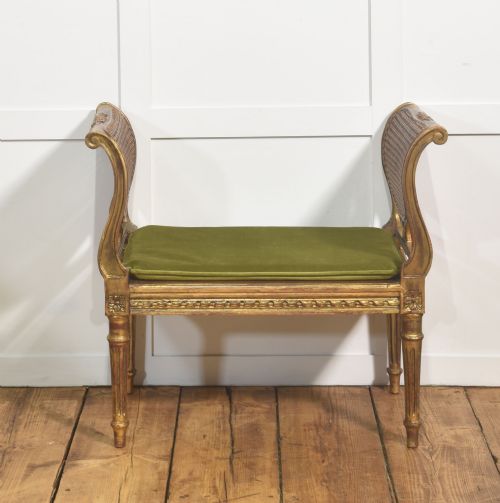
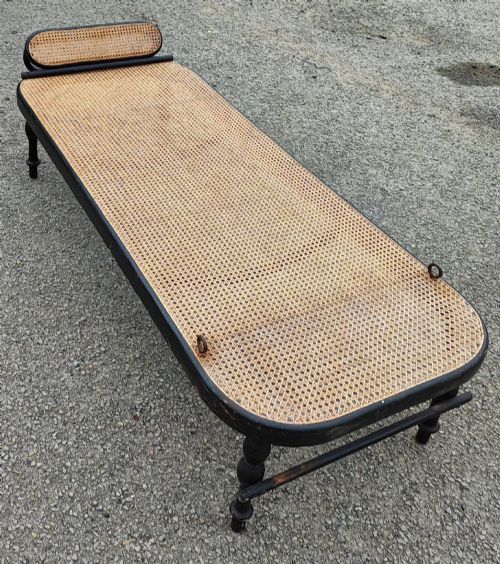
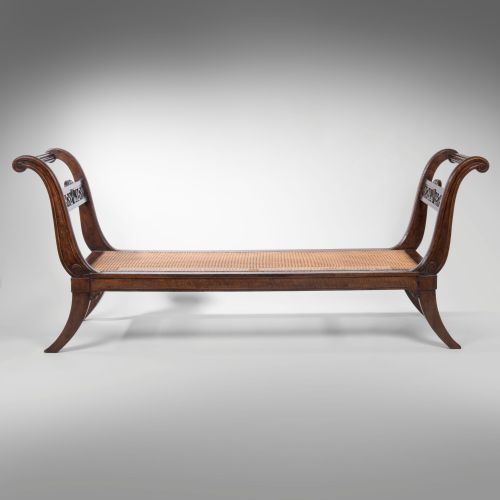
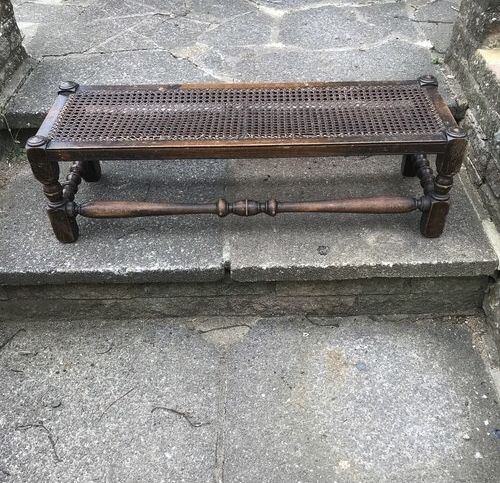
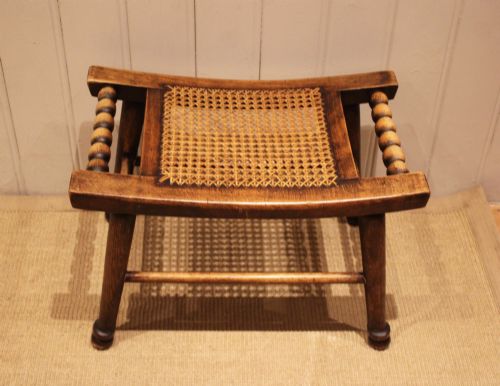
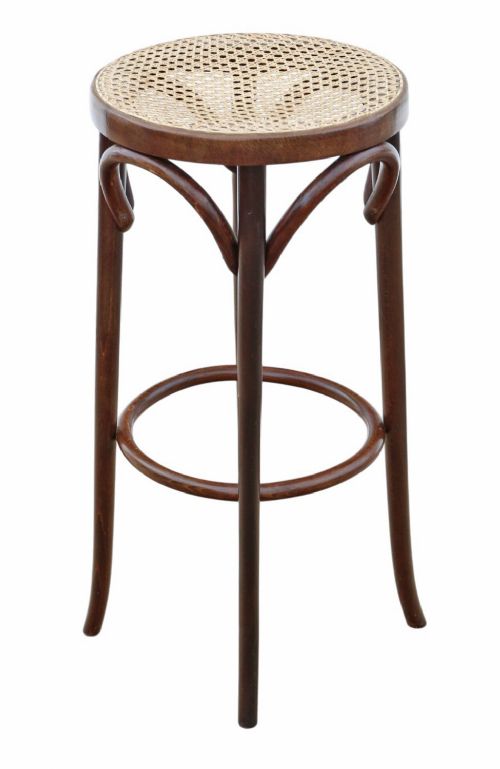
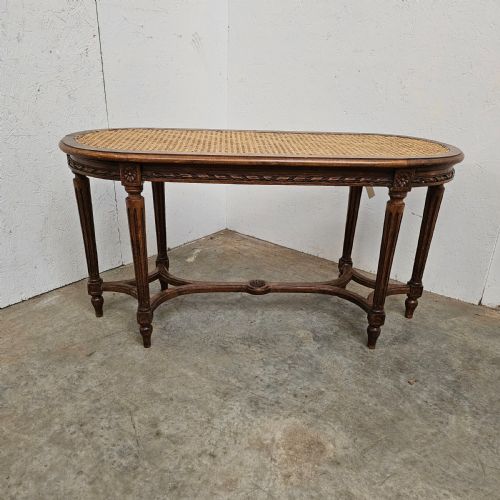
An antique caned stool serves various domestic functions, appearing across this selection as dressing table seats, window benches, and low footstools. These forms emerge primarily from nineteenth-century workshops, the Edwardian era, and the early twentieth century.
Makers produced these pieces in forms ranging from French Louis XVI and Régence styles to simple turned beech or oak frames. Buyers frequently encounter window seats and long stools designed with woven cane panels set into wooden borders.
Materials and construction methods
Frames rely on traditional timbers including mahogany, beech, oak, satinwood, and giltwood, occasionally enhanced by paint or ebonising. Joinery techniques connect these woods to support the woven seating surfaces.
Seating areas utilise natural cane and bergere woven through designated channels in the wooden frames. Brass fittings and turned wooden legs appear across various pieces to complete the structural design.
Object forms include window seats, footstools, dressing table stools, daybeds, and metamorphic library steps.
Distinguishing quality in construction
The standard of a piece depends on the tightness and regularity of the cane weaving within the frame. Closer, more uniform work indicates superior craftsmanship compared to loose or uneven strands.
Timber selection and carving depth dictate the refinement of the frame. Solid hardwoods and finely detailed mouldings separate standard production items from more ambitious decorative seating.
The Antique Caned Stool Glossary
- Cane
- A material made from the peeled outer bark of rattan palms, used for woven seats and panels. It offers flexibility and strength under tension.
- Bergere
- A type of fine cane work or a French upholstered armchair style incorporating woven panels. This technique creates a light, breathable seating surface.
- X Frame
- A structural base formed by intersecting diagonal timbers that support the seat above. This geometric configuration appears frequently on window seats and benches.
- Giltwood
- Timber treated with a thin layer of gold leaf or gold paint to simulate solid gold decoration. It provides a bright, reflective surface finish on formal frames.
Antique Caned Stool: Frequently Asked Questions
Where do people place an antique caned stool today?
These pieces fit easily at the foot of a bed, beneath a dressing table, or positioned by a window for extra seating.
Their narrow profiles also make them useful as low side tables or impromptu surfaces for books and magazines in a living room.
How do I clean a caned seat?
Dust the woven surface regularly with a soft brush to prevent dirt from settling between the strands.
Occasional wiping with a damp cloth keeps the natural material conditioned, but avoid soaking the wood or cane.
Can I sit on an antique caned stool daily?
Most sturdy frames support normal daily use, provided the woven seating remains taut and secure.
Heavier loads require caution on older or finer weaves to prevent stretching or breaking the natural strands.
What styles are most common?
Edwardian and nineteenth-century pieces dominate the selection, often drawing on French Louis XVI or simple regional designs.
Mahogany and beech frames with turned legs appear frequently alongside painted or giltwood variations.