




Low Oak Footrest
A low oak footrest grounds a room with timber character, offering solid craftsmanship and tactile upholstery from past centuries.
Low Oak Footrest
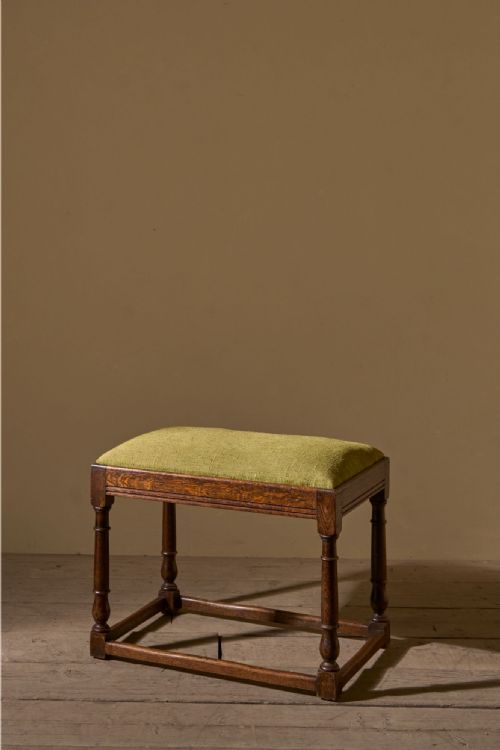
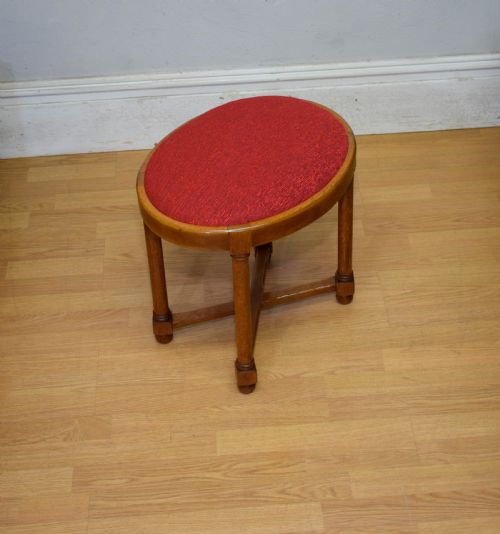
Every low oak footrest in this selection is a timber stool designed for resting feet or low seating, spanning the nineteenth and early twentieth centuries. These pieces appear in forms such as joint stools, prayer stools, and upholstered centre stools, often styled with revival or vernacular influences.
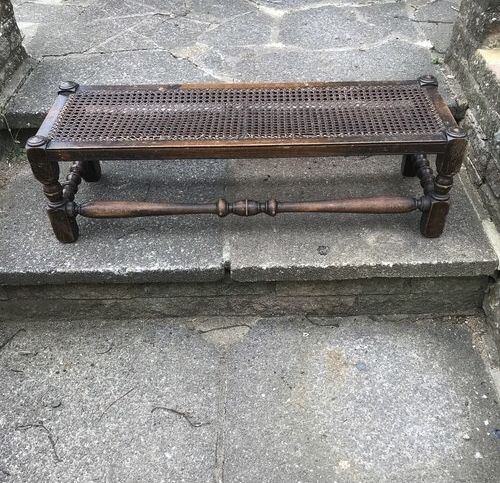
Buyers most frequently encounter nineteenth-century and early twentieth-century examples shaped by Arts and Crafts ideals or rustic country traditions. The selection includes compact rush-seated stools alongside larger carved pieces upholstered in leather, linen, or fabric.
How they were made
Makers built these pieces using solid oak and related hardwoods, jointed with traditional framing techniques and supported by turned wooden legs. Structural assembly frequently employed pegged joints to ensure rigidity under daily use.
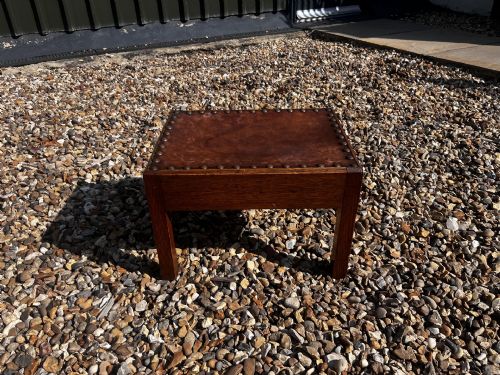
Surfaces were finished with applied upholstery including leather, heavy green linen, and woven rush seats, often secured with metal studs or decorative brass detailing.
Carved wooden lions peer out from beneath upholstered tops, watching the floor.
What varies in quality
Quality rests upon the crispness of timber carving, such as detailed lions heads or restrained mouldings, compared against plain vernacular framing. Finer examples display balanced proportions and thoughtful turning on the legs rather than utilitarian heft.
The integrity of the original materials separates standard utilitarian seating from pieces bearing distinct stylistic attribution or specialist maker provenance.
Arthur Simpson Of Kendal·Arthur W Simpson·Simpson Kendall
The Low Oak Footrest Glossary
- Joint stool
- A solid wooden stool constructed with mortise and tenon joints, common in early furniture design. They served diverse domestic purposes before standalone chairs became widespread.
- Arts and Crafts
- A design movement prioritising traditional craftsmanship and honest materials over mass production. Pieces from this tradition often feature exposed joinery and simple geometric forms.
- Carolean
- A decorative style spanning the mid to late seventeenth century, revived in later Victorian and Edwardian periods. It is characterised by ornate turning and scrolling carved timber.
- Rush seat
- A woven seating surface made from dried marsh grasses. This technique provides a resilient, textured top common in vernacular country seating.
Low Oak Footrest: Frequently Asked Questions
How do I date an oak footrest?
Dating relies on examining the construction methods, tool marks, and timber shrinkage visible beneath the frame. Stylistic clues such as turning patterns and upholstery materials also point toward specific decades.
Comparing the piece against documented examples from periods like the Arts and Crafts era helps narrow down its age.
Were these stools meant for kneeling?
Certain low forms, including prayer stools, were specifically constructed for devotional use with a padded or inclined top. Other variations served purely as footrests or compact seats beside firesides.
Their sturdy oak frames suited heavy domestic tasks across different rooms in the house.
Can I use an antique footrest daily?
Solid oak construction provides remarkable durability, making these pieces well-suited for everyday weight bearing and foot resting. Original upholstery may require careful handling or gentle cleaning to preserve fragile textiles.
Placing them on level flooring prevents undue strain on historical joints.
What defines Arts and Crafts oak stools?
These pieces emphasise visible hand-craftsmanship, unadorned timber surfaces, and functional honesty. Makers working in this tradition avoided excessive ornament in favour of pleasing proportions and structural clarity.
Such stools often bear workshop labels or characteristic vernacular joinery.