




Oak Dressing Seat
An oak dressing seat brings solid timber and textured upholstery into the bedroom, offering a sturdy perch for your morning routine.
Oak Dressing Seat
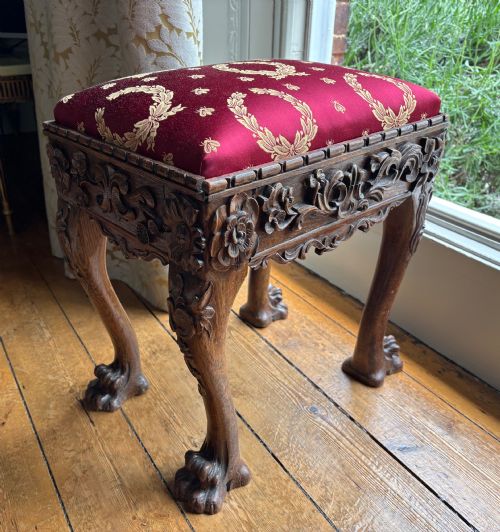
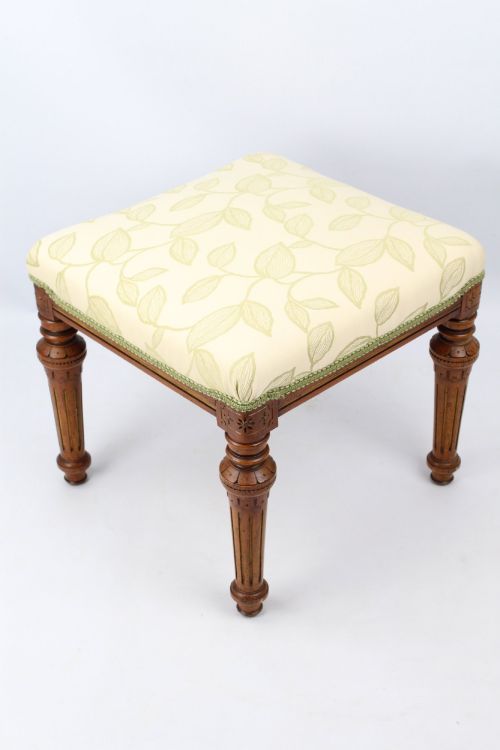
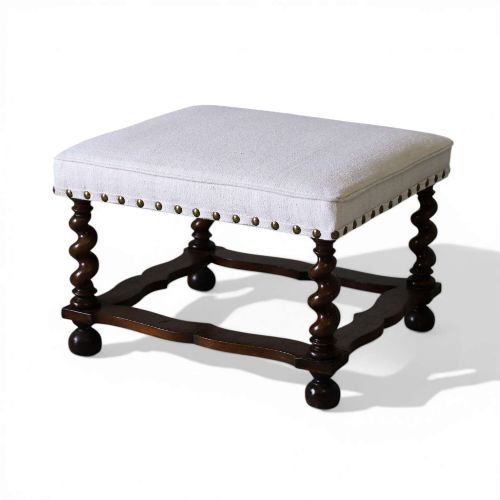
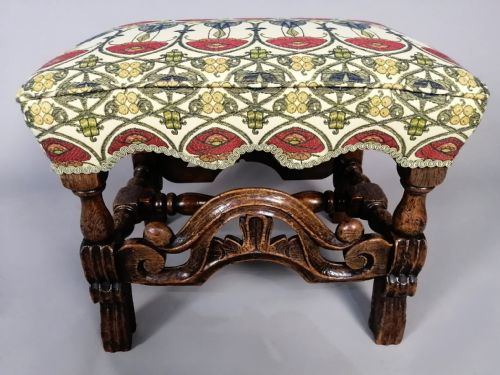
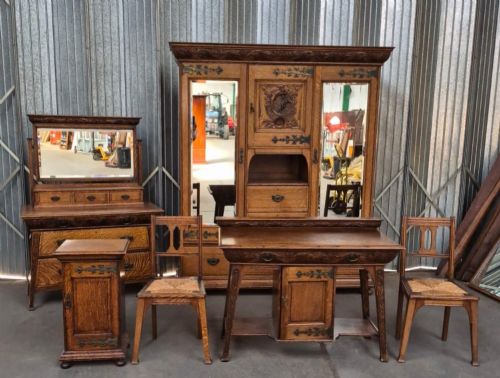
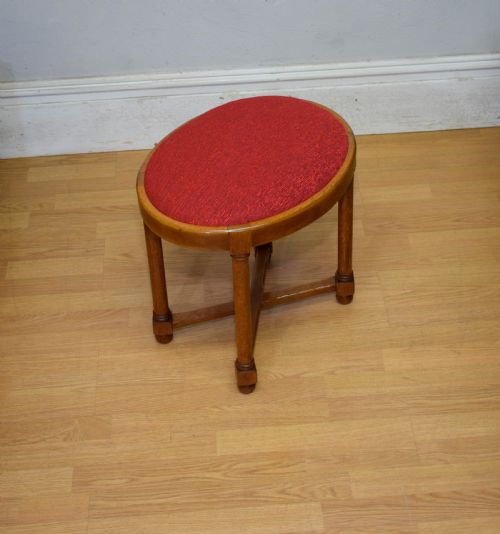
Victorian and Arts and Crafts examples dominate the selection, alongside revival pieces that look back to William and Mary and Carolean eras. You will find rectangular frames, X-frame supports, and saddle-seated designs upholstered in fabric, linen, tapestry, and red damask.
Assessing quality in period seating
The distinction between standard examples and finer pieces lies in the crispness of the timber carving and the integrity of the structural joinery. Hand-carved details, well-turned legs, and thoughtful proportions separate workshop pieces from mass-produced items.
Upholstery choices and the preservation of original materials also influence the character of each piece. Superior examples retain matching textiles, sound cane work, and uncompromised timber surfaces that show age honestly.
At least one coronation stool is present, reminding us that royal events occasionally leave surplus seating behind in country workshops.
Harry & Lou Epstein·B. North & Son
The Oak Dressing Seat Glossary
- Barley-sugar twist
- A spiral turning technique applied to wooden furniture legs and stretchers during the seventeenth century and later revival periods. It creates a dynamic, rope-like column that catches the light.
- Oyster veneering
- A decorative woodworking method where small branches or roots are cross-cut to reveal concentric rings resembling oyster shells. This technique creates intricate patterns on flat surfaces like stretchers.
- Damask
- A reversible figured fabric traditionally woven on a jacquard loom with patterns formed by contrasting warp and weft threads. It provides a formal, textured surface frequently used for antique upholstery.
- X-frame stool
- A seating form featuring intersecting diagonal legs that cross in the centre to form an X shape. This neoclassical design offers structural stability and a distinct architectural silhouette.
Oak Dressing Seat: Frequently Asked Questions
What is an oak dressing seat?
An oak dressing seat is a compact stool or bench designed specifically for use at a bedroom dressing table. These pieces combine a sturdy wooden frame with an upholstered top for comfortable seating during daily grooming.
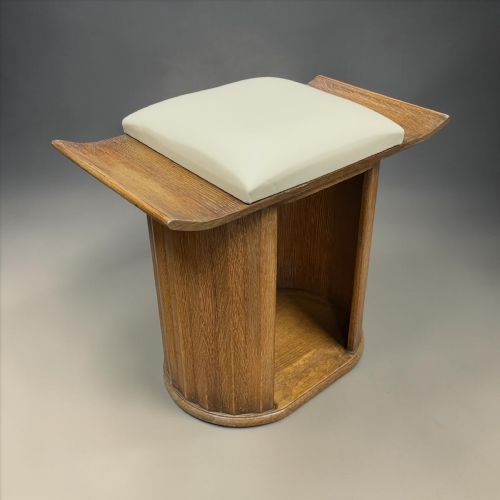
They appear in various revival styles and periods, ranging from Victorian interpretations of earlier centuries to clean-lined Arts and Crafts and Art Deco designs.
How were these seats used historically?
Historically, these low seats provided a dedicated place to sit while dressing, styling hair, or putting on shoes in the bedroom. Some variants included built-in storage beneath the seat for small personal items.
They functioned primarily as bedroom furniture, though their modest size allowed them to double as occasional seating in parlours or hallways when needed.
How do I care for antique oak furniture?
Caring for antique oak involves keeping the timber away from direct heat sources and sudden humidity changes that can cause the wood to split. Regular dusting with a soft, dry cloth preserves the finish without building up heavy wax residues.
Upholstered sections benefit from gentle vacuuming with a low-suction attachment to remove surface dust without disturbing delicate vintage textiles or fabric covers.
How do I tell different periods apart?
Distinguishing periods relies on observing the decorative vocabulary and construction traits inherent to each era. Victorian pieces often feature heavy carved oak, while Arts and Crafts examples lean toward simpler, functional lines and golden oak.
Revival pieces borrow specific motifs from seventeenth-century styles, such as barley-sugar legs, whereas Art Deco items display geometric forms and integrated storage drums typical of the interwar years.