





Oval Dressing Stool
These oval dressing stool examples are low seats for bedroom use, valued for their compact curves and period woodwork.
Oval Dressing Stool
An oval dressing stool is a bedroom seat designed to sit beneath a dressing table, taking various historical forms from the eighteenth century onwards. Buyers searching this phrase encounter pieces spanning the Victorian era, the nineteenth century, and earlier revival periods.
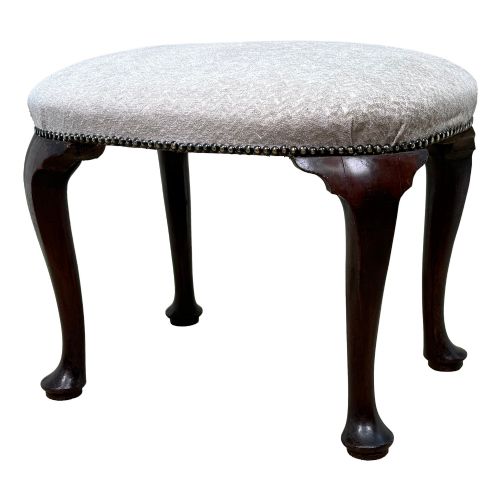
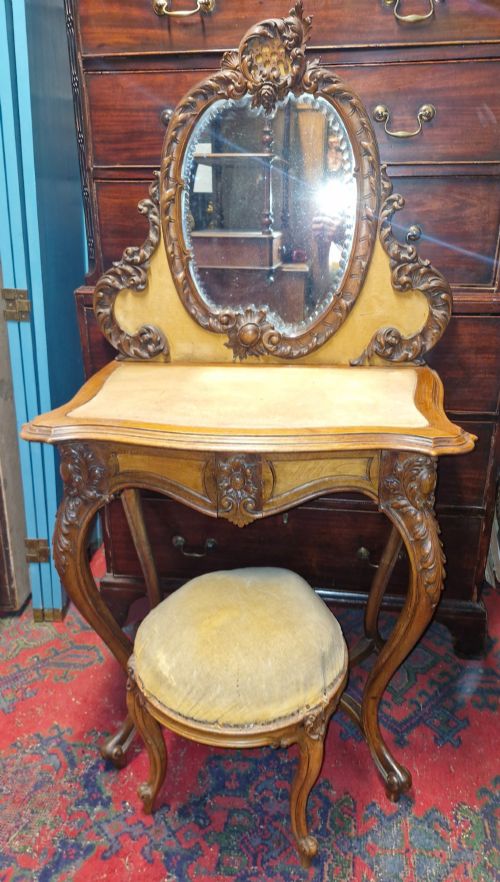
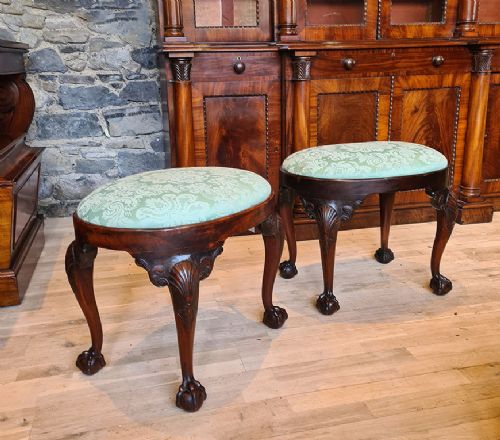
The common form on this page is walnut or mahogany with upholstered tops, sometimes paired directly with dressing tables. Makers built these seats in styles ranging from Queen Anne and George I to Rococo and Louis XV revivals.
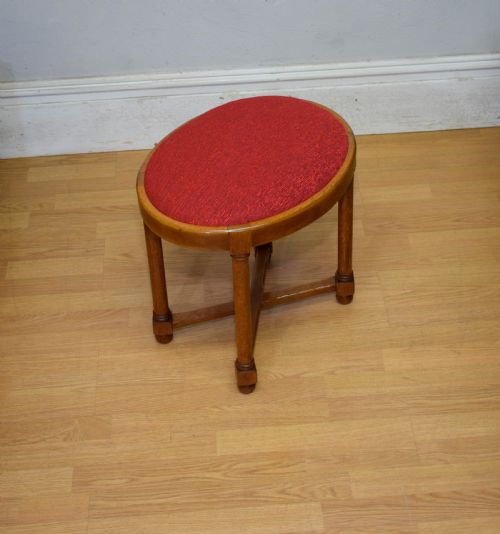
While many examples date from the nineteenth and early twentieth centuries, earlier eighteenth-century prototypes also appear in walnut and oak. These seats serve primarily as functional bedroom furniture while bringing traditional timber and textile work into domestic spaces.
How they were made
Cabinetmakers constructed the frames of these stools using solid timbers such as walnut, mahogany, oak, and beech, shaping the wood to achieve the characteristic curved oval perimeter. Joinery methods included traditional mortise and tenon construction to support the load placed on the seat.
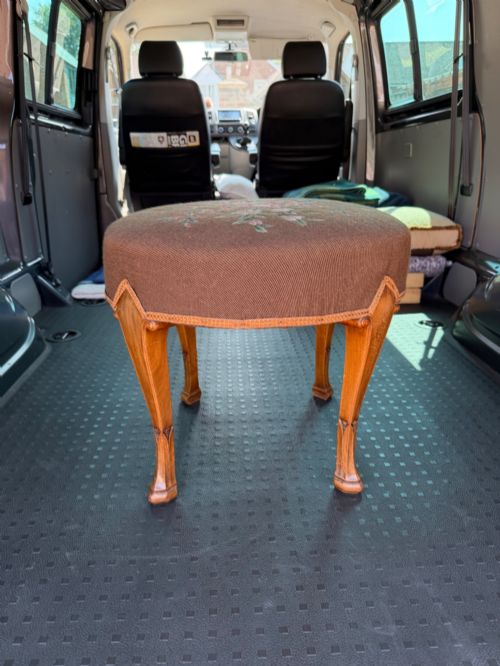
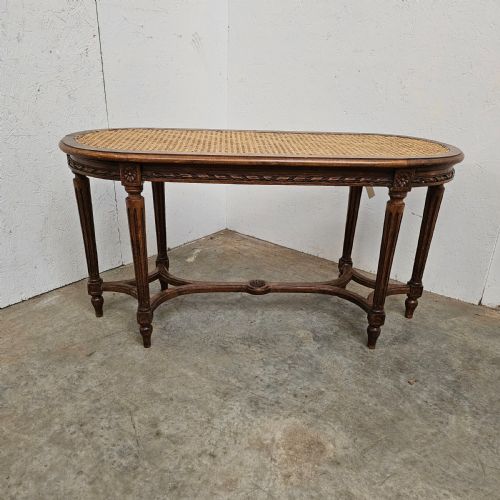
Upholstery forms a major part of the construction, utilising fabrics, tapestry, and needlework textiles stretched over stuffing and secured to the wooden frame. Some variations incorporate brass details or cane work alongside the carved woodwork.
The listings on this site feature walnut and mahogany most frequently among framing materials.
What varies in quality
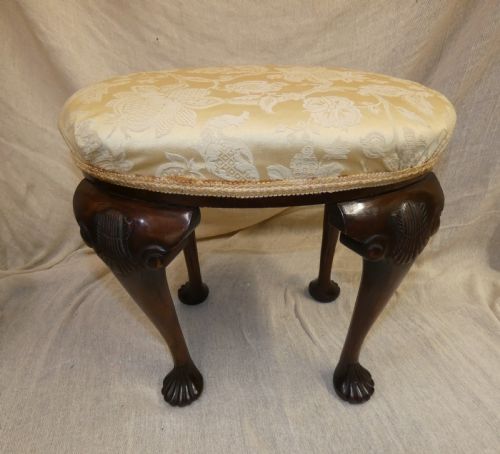
The refinement of the timber carving sets apart the finer examples, particularly where legs show cabriole shaping or detailed ornamentation rather than plain turning. Walnut and mahogany frames with crisp joinery represent a higher standard of craftsmanship than later, simpler utility pieces.
The integrity and originality of the upholstery materials also dictate quality, with hand-worked tapestry and period textiles holding more distinction than modern replacement covers. Frames that retain their original structural rigidity without excessive alteration command greater respect among collectors.
The Oval Dressing Stool Glossary
- Cabriole leg
- A furniture leg that curves outward at the knee and tapers inward toward the foot, commonly ending in a pad or claw shape. This design appears frequently on eighteenth-century and revival seating.
- Tapestry
- A heavy textile woven with decorative designs, frequently utilised for period seat upholstery. It provides both a durable surface and intricate visual patterns.
- George I
- A stylistic period spanning the early eighteenth century, known for plain walnut surfaces and curved lines. Pieces from this era often feature restrained carving.
- Banquette
- A long upholstered bench or stool, sometimes featuring cane work or carved wooden framing. These pieces share construction traits with dressing stools.
Oval Dressing Stool: Frequently Asked Questions
What is an oval dressing stool used for?
These stools provide seating specifically proportioned for use at a bedroom dressing table or vanity mirror. Their compact oval shape allows them to tuck neatly underneath furniture when not in use.
Beyond dressing areas, buyers often place them as occasional seats or footstools in living spaces and bedrooms. Their decorative frames and upholstered tops add a traditional accent to interior rooms.
Are these stools comfortable to sit on?
Comfort depends entirely on the padding and upholstery materials used within the seat structure. Period examples often feature firm stuffing covered in tapestry, fabric, or needlework.
Many buyers choose to use them for short periods at a dressing table rather than as long-term lounge seating. The primary purpose remains a balance of utility and decorative period charm.
How do I match a stool to my decor?
Selecting the right piece involves looking at the timber tone, such as dark walnut or mahogany, to coordinate with existing furniture. The style of the legs, whether cabriole or straight, also helps integrate the stool into a room.
Upholstery fabric can be chosen or replaced to tie in with existing colour schemes and textile patterns. Mixing revival styles with older furniture is a common approach in traditional interiors.