
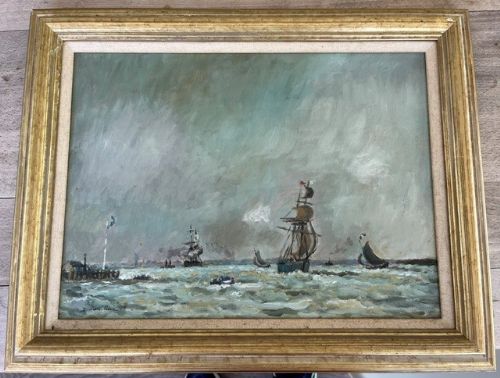


French Maritime Oil Painting
A french maritime oil painting captures the historic coastal scenes, bustling harbours, and open waters associated with French art across multiple centuries.
French Maritime Oil Painting
A french maritime oil painting encompasses coastal views, harbour scenes, and open sea studies originating from France or produced by French artists. Buyers searching this phrase commonly encounter works stretching from the nineteenth century through the mid-twentieth century.
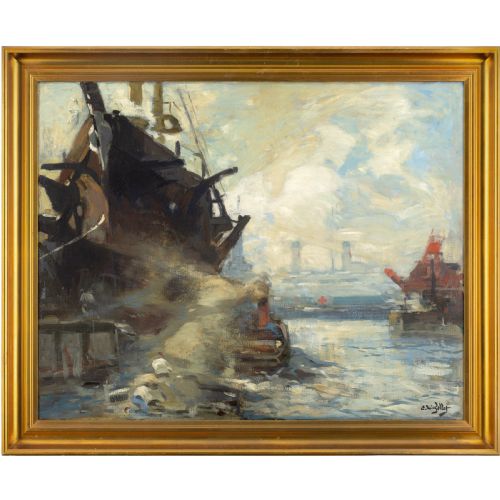
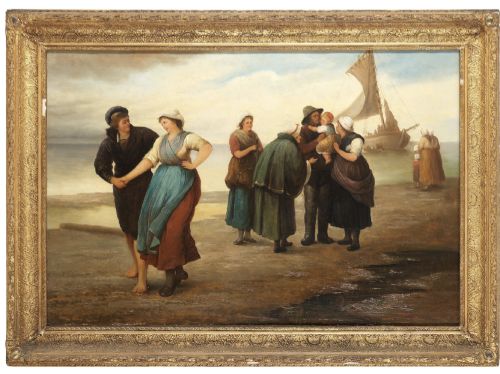
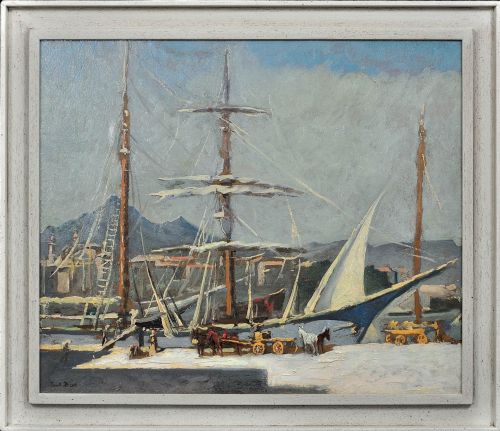
The subjects range from tranquil river landscapes and quiet fishing ports in Brittany to bustling Mediterranean harbours along the Côte d'Azur. Canvases depict galleons, modern steamships, fishing boats, and coastal towns under changing atmospheric conditions.
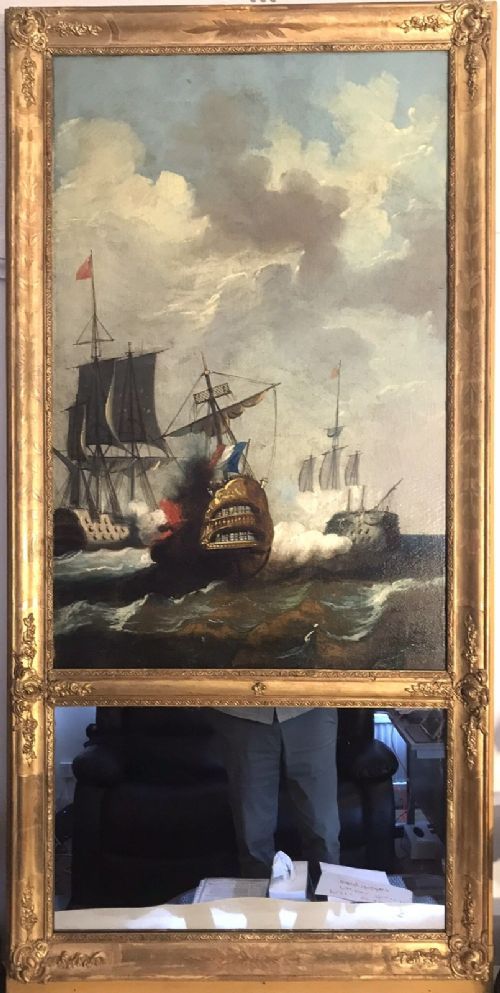
Beyond traditional framed canvases, the selection includes decorative formats such as painted trumeau mirrors and folding fire screens incorporating coastal scenes. These diverse objects reflect how maritime subjects permeated domestic French interiors during various periods.
Materials and construction
The works utilise traditional oil paint applied to prepared canvas, wood panels, or occasionally board supports. Artists manipulated the pigment using varied brush techniques, from smooth academic blending to thick impasto applications that capture the texture of sea and sky.
Listings feature works executed on canvas, wood panels, and boards, framed in period giltwood and painted surrounds.
Evaluating artistic merit and condition
Quality in these works rests on the artist's handling of light, atmosphere, and composition, particularly in capturing movement within water and skies. Stronger examples demonstrate confident brushwork and a sophisticated understanding of colour harmony, whether executed in an impressionist or realist manner.
The preservation of the original paint surface and the integrity of the canvas or wood support influence the overall standard of a piece. Original framing that complements the period and style of the painting also adds to the integrity of the object.
Eugène-Louis Gillot·Paul Bret·Elisabeth Bardon·Louis Suire·Jean-Baptiste Olive·Raymond Picque·Fred Pailhes·Armand Guillaumin·Edward Henry Holder·Charles Euphrasie Kuwasseg·Henri Ottman·Henri Cadiou
The French Maritime Oil Painting Glossary
- Impressionism
- An art movement focused on capturing transient effects of light and ordinary subject matter. Artists working in this style employed rapid, visible brushstrokes.
- Impasto
- Paint applied thickly to a canvas or panel, standing out in relief from the surface. This technique adds tactile dimension to representations of water, foam, and clouds.
- Trumeau
- A decorative wall mirror or panel featuring a painted artwork in the upper section. These architectural elements frequently incorporated coastal or pastoral scenes during the nineteenth century.
- Plein air
- Painting outdoors to directly observe landscape and atmospheric conditions. This approach defined much of the nineteenth-century French landscape tradition.
- Post-Impressionism
- A diverse artistic development following impressionism that explored expressive use of form and colour. Practitioners retained the vivid palette of their predecessors while seeking structural definition.
French Maritime Oil Painting: Frequently Asked Questions
What periods do these paintings cover?
The available works span from the nineteenth century through the mid-twentieth century, capturing shifts in artistic approach from academic realism to impressionism and modernism.
Most pieces date from the late nineteenth century and the decades between the First and Second World Wars.
Where were these maritime scenes painted?
Subjects range widely across French coastal regions, including the rocky shores of Brittany, the Norman ports, and the sunny waters of the French Riviera.
Some compositions also record international harbours and river scenes visited by French painters during their travels.
How should I display a framed canvas?
Select a wall with stable humidity and temperature away from direct sunlight to protect both the oil pigments and the wooden frame. Ensuring proper hanging hardware supports the weight of the frame preserves the structure over time.
Allow the artwork adequate breathing room on the wall so its composition can be appreciated clearly.
How can I tell different art styles apart?
Academic and early works tend to feature precise detailing and smooth transitions of light, while impressionist and post-impressionist canvases rely on visible brushwork and vibrant colour relationships. Modernist examples further simplify forms to emphasise dynamic composition over strict realism.
Observing the treatment of water and sky usually reveals the artist's primary stylistic allegiance.