




Muted Green Wall Art
Muted green wall art brings subdued botanical and landscape tones into interiors through period oils and watercolours.
Muted Green Wall Art
Muted green wall art centres on landscape and figurative works spanning the nineteenth century through the mid-twentieth century. Buyers encounter oil paintings on canvas and board alongside delicate watercolours on paper.
Materials and construction
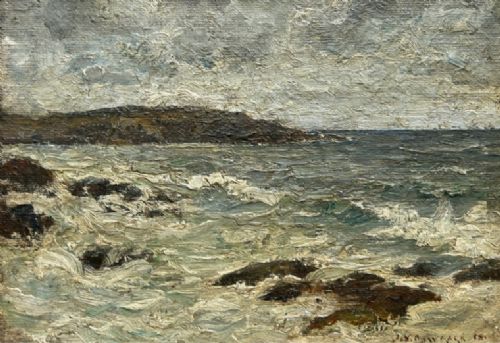
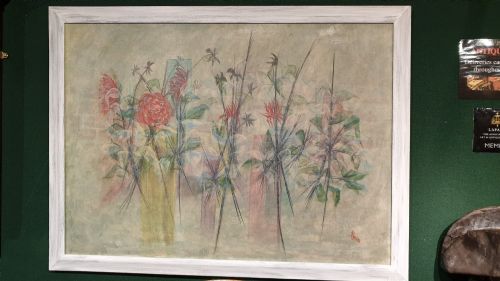
Works rely on oil paint applied to canvas, board, or wood panels, capturing rich texture as seen in impasto coastal seascapes. Watercolours on paper offer a lighter, transparent medium favoured for detailed rural water scenes and garden views.
Framing often incorporates traditional wood surrounds that complement the age of the canvas or paper substrate. Pigments draw on natural earth tones to achieve the subtle green hues characteristic of these landscapes.
Materials span canvas, oil paint, paper, wood, board, and watercolour.
Quality variations
Quality rests upon the artist's handling of light and atmospheric depth within the landscape. Works by established named painters demonstrate superior brushwork and compositional balance compared to anonymous studio pieces.
The preservation of the original canvas, paper support, and surface pigment dictates the overall integrity of the piece. Clear provenance and distinct signatures elevate specific works above standard decorative examples.
Percy Robertson·Ernest Higgins Rigg·Herbert Royle·George Faulkner Wetherbee·Kershaw Schofield·Henry John Sylvester Stannard·William Stephen Coleman
The Muted Green Wall Art Glossary
- Impasto
- Paint applied thickly to a canvas, leaving visible brush or palette knife strokes. This technique adds tactile dimension to foliage and water.
- Watercolour
- A painting method where pigment is suspended in a water-based solution on paper. It creates luminous, translucent washes often seen in early twentieth-century views.
- Board
- A rigid wooden or fibrous substrate used instead of stretched canvas for oil paintings. It provides a stable surface frequently utilised by landscape artists.
- Impressionism
- A style focused on accurate depiction of light in its changing qualities. British interpretations often embrace muted green and grey tones suited to local weather.
Muted Green Wall Art: Frequently Asked Questions
What periods do these paintings cover?
The works span from the nineteenth century through the 1960s, encompassing Victorian, Edwardian, and mid-century modern movements.
Most pieces originate from British and French artistic traditions of the early twentieth century.
How should I hang these works?
Pair framed canvases and watercolours with traditional wall colours that complement the earthy pigments of the landscape scenes.
Keep pieces away from direct sunlight to protect delicate watercolours on paper and oil pigments from fading.
Are these works signed by artists?
Many pieces feature visible signatures or attribution to known painters of the British Impressionist and Victorian eras.
Some examples remain attributed to broader regional schools or are indistinctly signed while retaining clear period characteristics.
What subjects are most common?
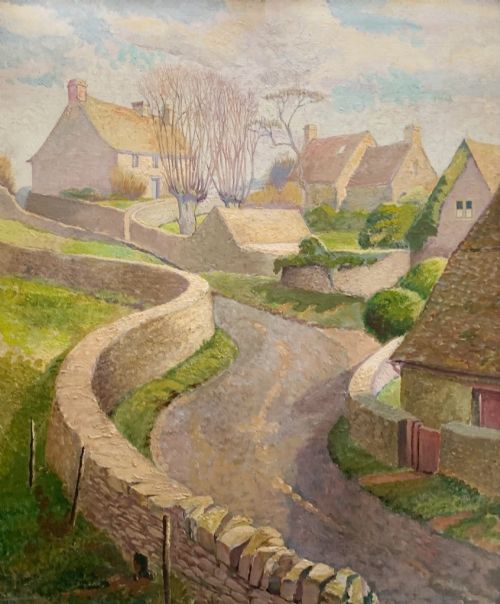
Landscapes dominate the selection, including river scenes, rural farm ponds, coastal views, and quiet pastoral meadows.
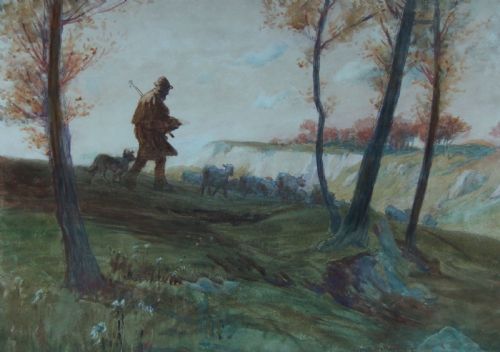
Figurative elements also appear, such as children fishing by streams, gardeners, and rural workers integrated into natural settings.