



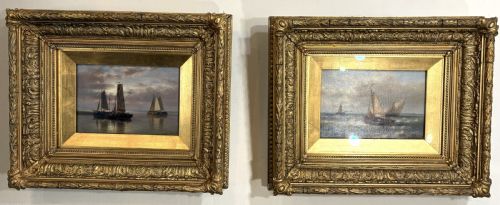
Vintage Boat Oil Painting
When choosing a vintage boat oil painting, you select a maritime artwork capturing historical vessels upon canvas or board.
Vintage Boat Oil Painting
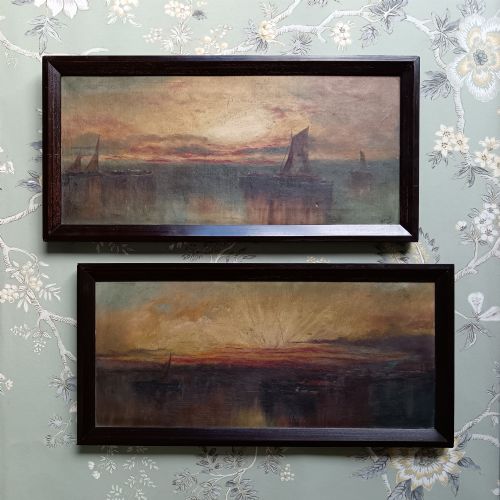
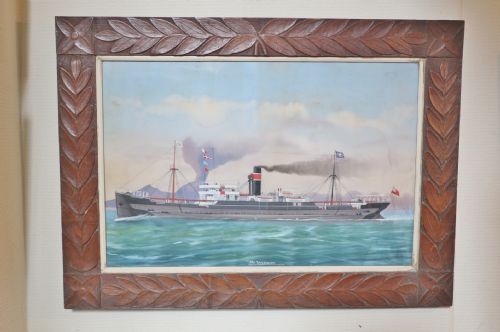
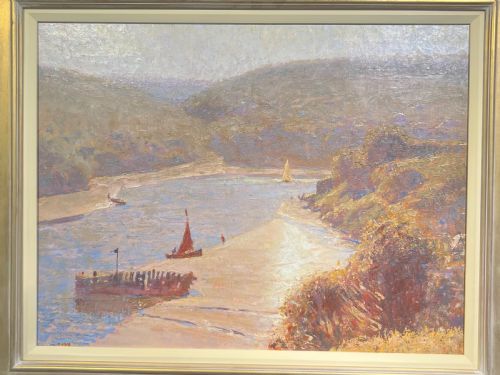
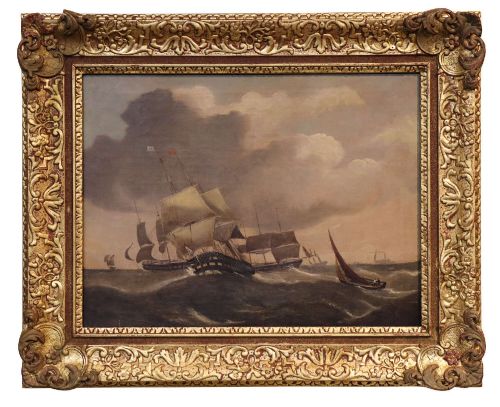
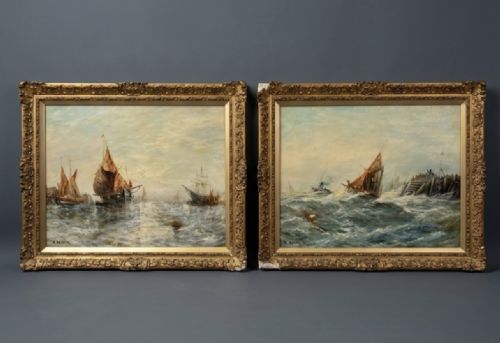
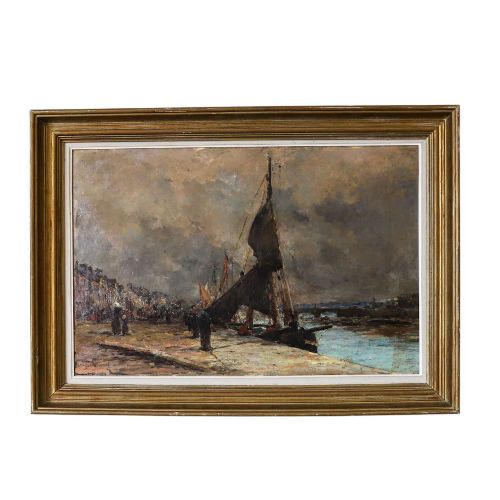
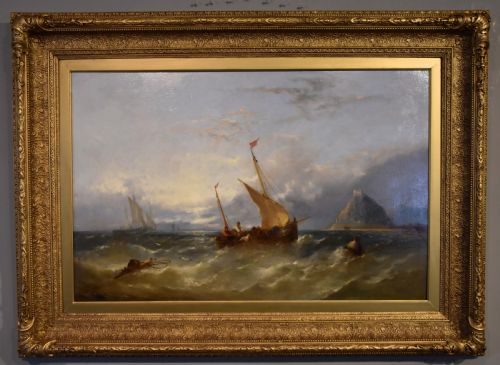
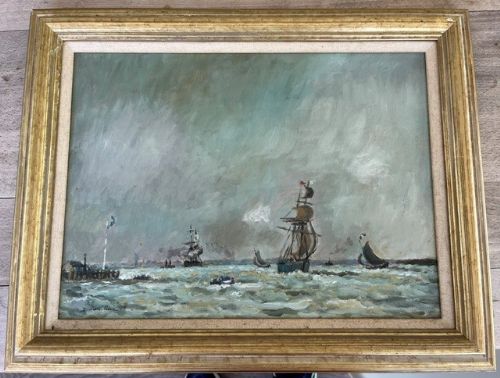
A vintage boat oil painting captures maritime subjects, ranging from early Victorian shipping scenes to mid-century coastal views. These artworks depict vessels such as barges, steamships, and fishing boats navigating rough seas, calm harbours, or quiet rivers.
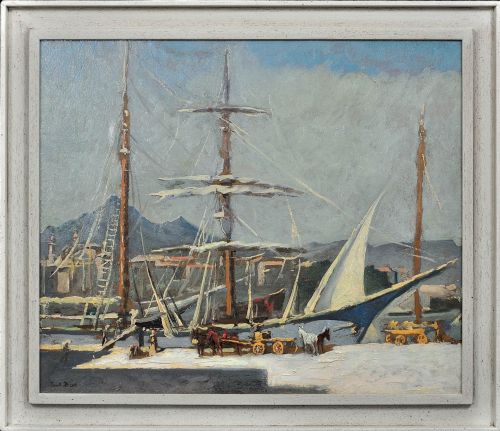
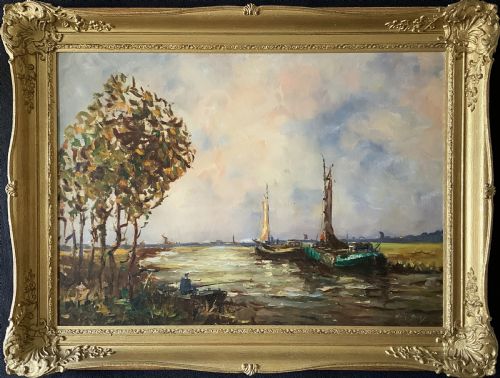
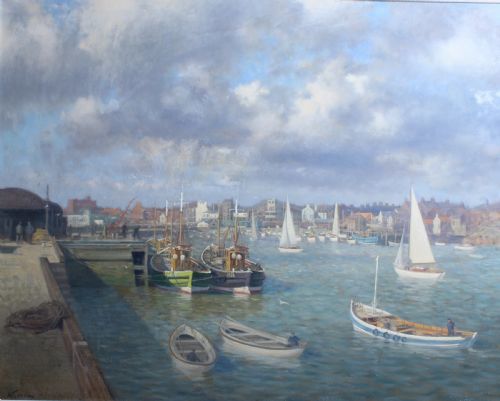
You frequently encounter works produced during the nineteenth and twentieth centuries, reflecting British, French, Dutch, and Italian coastal traditions. The selection spans detailed realism through to impressionist interpretations of harbours and open water.
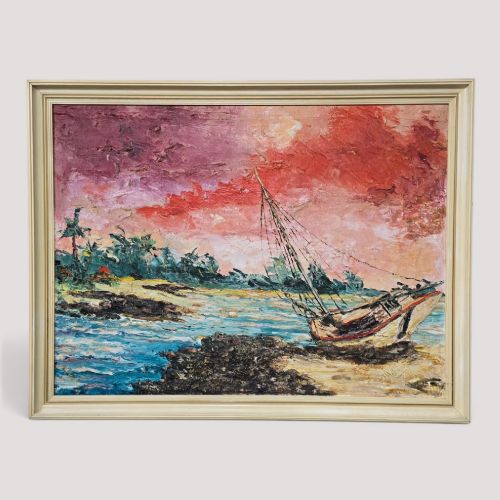
Subjects encompass working vessels, leisure yachts, and dramatic marine landscapes set against sunrise, sunset, or stormy skies. These paintings range from intimate miniature board panels to large canvases suited for prominent wall display.
How They Were Made
Artists applied oil paint using traditional brushes and palette knives onto surfaces such as stretched canvas, wooden panels, and sturdy boards. Canvas supports often required careful priming with gesso to accept layers of pigment and oil binder.
Many works retain their original gilt wood frames, which complement the maritime palette of deep blues, greys, and warm earth tones. Brushwork varies from meticulous academic detail to textured impasto capturing the movement of water and wind.
Vintage Boat Oil Painting Retail Price Guide 2026
Typical asking prices for vintage boat oil painting among the pieces listed under this phrase on Sellingantiques today, from the lower quarter to the upper quarter. They describe what is for sale here now, not the wider market.
Several paintings record bustling maritime traffic where tiny steamships puff alongside traditional sailing barges.
What Varies in Quality
The standard of a vintage boat oil painting depends on the artist's ability to render atmospheric light, water movement, and accurate vessel rigging. Skilled handling of perspective and maritime anatomy separates accomplished works from ordinary decorative pieces.
Provenance and documentation strongly influence interest, particularly when signed by known painters or associated with established galleries and exhibitions. The preservation of the original paint layer without extensive overpainting also marks a superior example.
Kenneth Cozens·Paul Bret·Willem Bos·Cecil Allan Mould·William Henry Williamson·Abraham Hulk·William Edward Webb·Edward Matthew Elliott·Charles Napier Hemy·Jean-Baptiste Olive·Raymond Picque·Gabriel Dauchot·Fernando Del Basso·Edward Henry Eugene Fletcher·George Shaw·Edward Seago·Stephen J Renard·Hendrik Willebrord Jansen·Anders Hune·Emil Ekman·Sam Barnes Robson·John Riddle·Paul Henry Lafon
The Vintage Boat Oil Painting Glossary
- Impasto
- Paint applied thickly to a canvas or board, standing out in relief from the surface and capturing visible brush marks.
- Seascape
- A painting depicting the sea, coastal views, or maritime activities involving vessels.
- Gilt wood
- Wood coated with a thin layer of gold leaf or gold-coloured pigment, commonly used for traditional picture frames.
- Board
- A rigid flat substrate used instead of stretched canvas for supporting an oil painting.
Vintage Boat Oil Painting: Frequently Asked Questions
How do I identify the period of a maritime painting?
Examine the vessel types, clothing styles of any figures, and framing methods to estimate the era of creation. Nineteenth-century works often show detailed rigging on sailing ships, whereas mid-century pieces lean towards impressionist or abstract coastal forms.
Signatures, artist dates, and exhibition labels on the reverse provide further clues to confirm whether a piece originates from the Victorian, Edwardian, or later twentieth-century period.
What is the difference between canvas and board paintings?
Canvas paintings utilise woven fabric stretched over a wooden frame, offering slight flexibility and a traditional textured surface. Board paintings use a rigid wooden or composite panel, which provides a completely firm foundation for the pigment.
Both supports were widely used across different periods, though boards frequently appear in smaller works and plein-air studies painted directly outdoors.
How should I display an antique oil painting?
Hang the artwork away from direct sunlight and steady heat sources to protect the oil pigments and wooden frame from fading or warping. Maintaining a stable indoor environment prevents moisture damage to both the canvas and the supporting structure.
Pairing the painting with a compatible period gilt frame enhances the visual presentation while maintaining the historical character of the piece.
Where were most vintage boat paintings created?
Artists produced these works across major maritime nations including Britain, France, the Netherlands, and Italy. Coastal towns such as St Ives, Palermo, and Rotterdam served as popular locations for painters seeking active harbours and varied shipping traffic.
Many paintings record specific local topography, documenting historical ports and working vessels as they appeared during the nineteenth and twentieth centuries.