
French Louis XVI Cabinet
A french louis xvi cabinet brings neoclassical symmetry and restrained proportion to an interior, built for practical storage with refined decorative mountings.
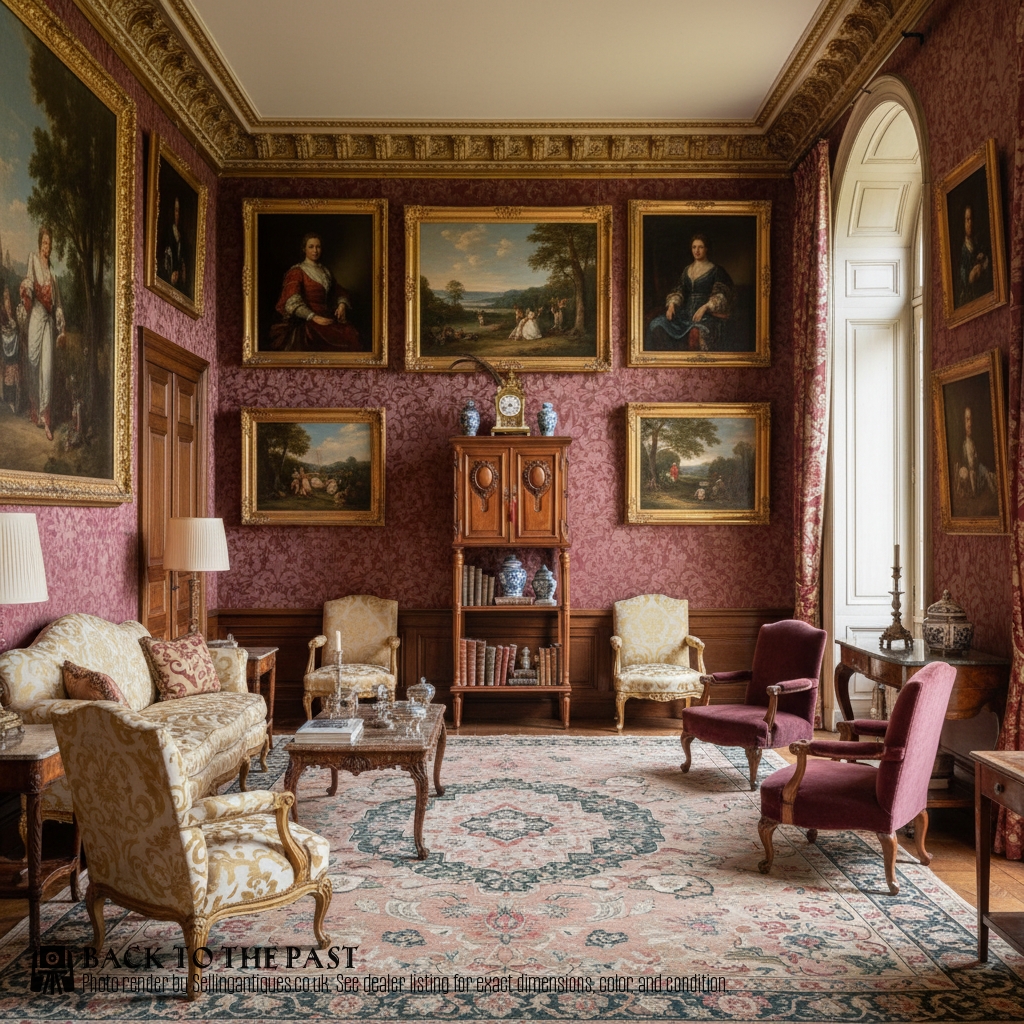
French Louis XVI Cabinet
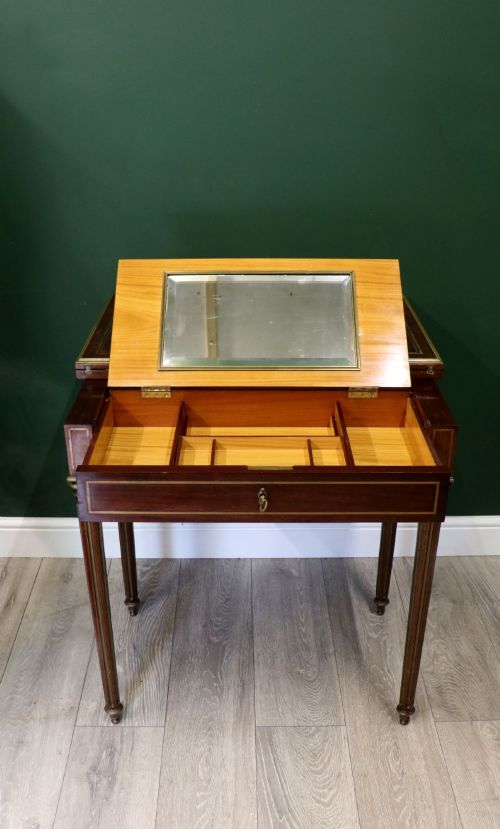
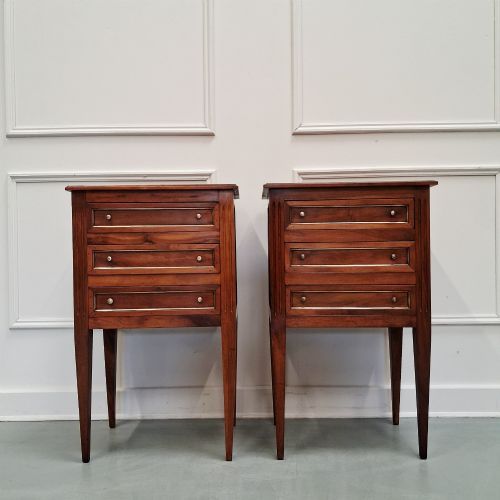
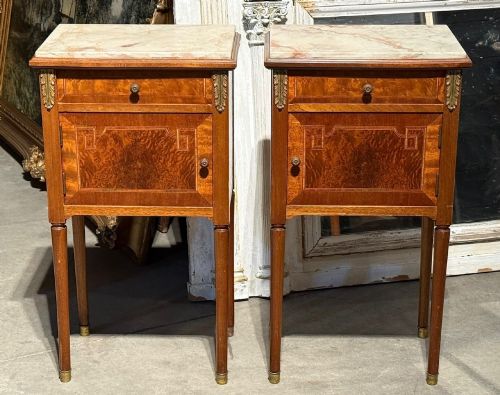
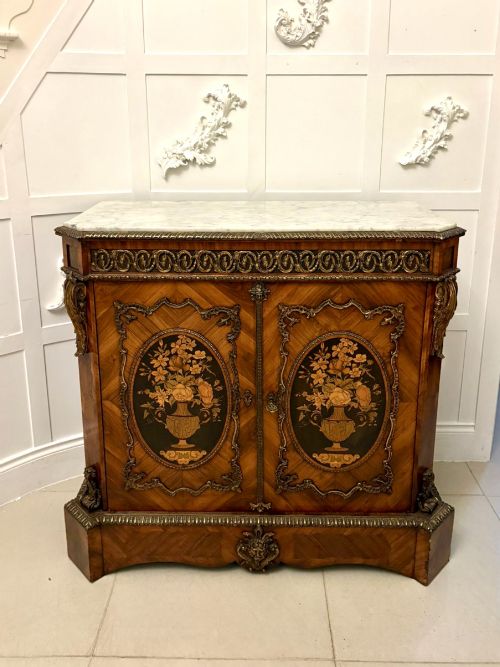
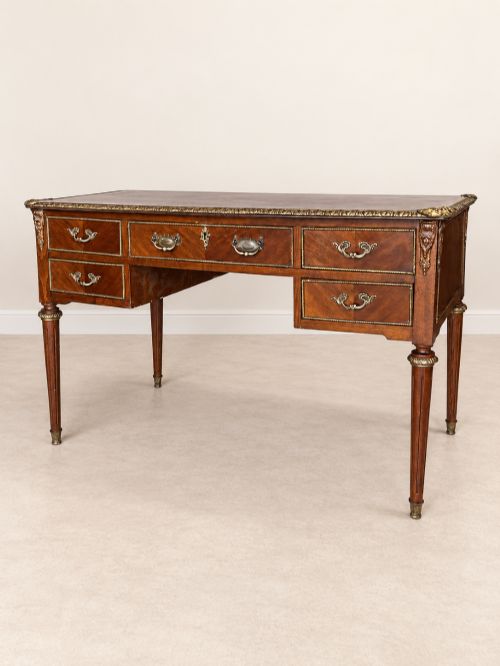
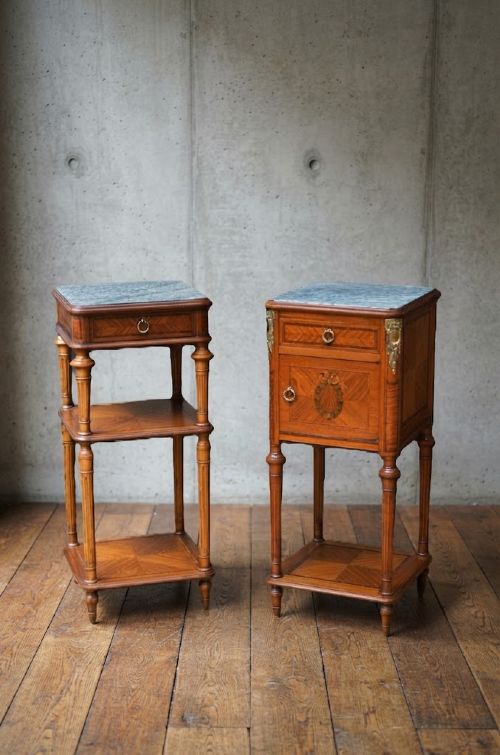
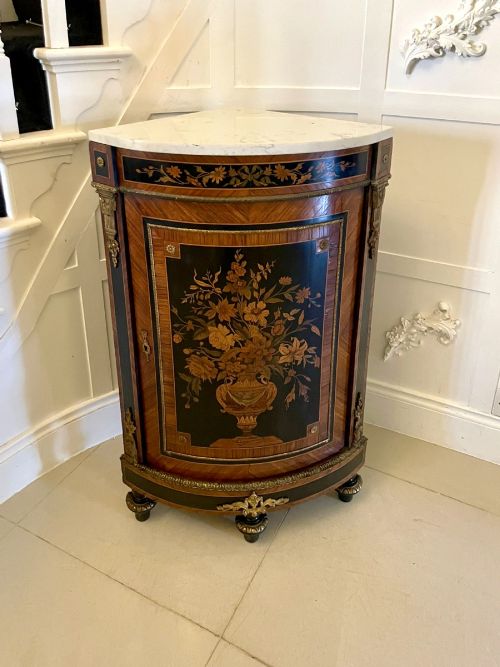
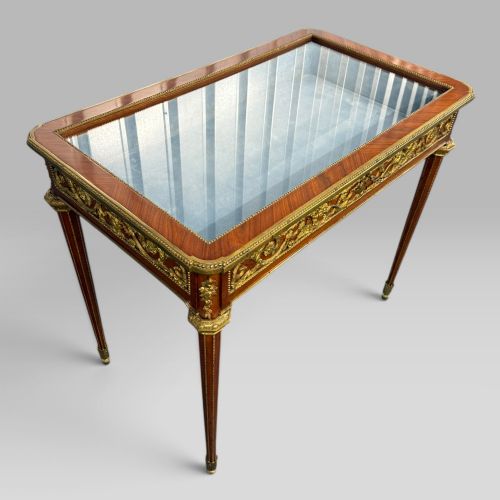
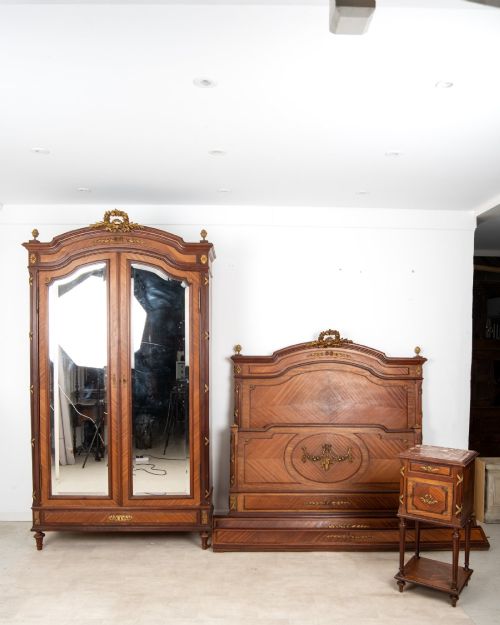
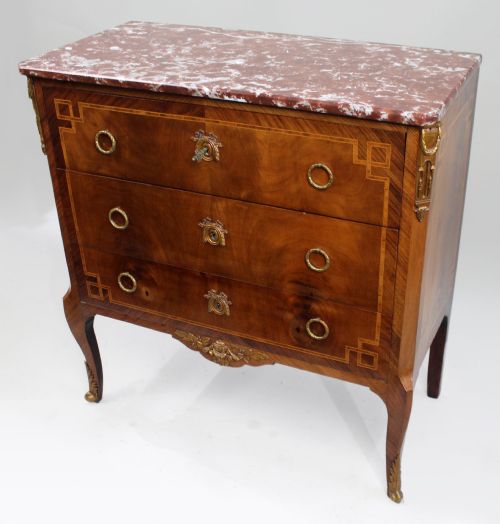
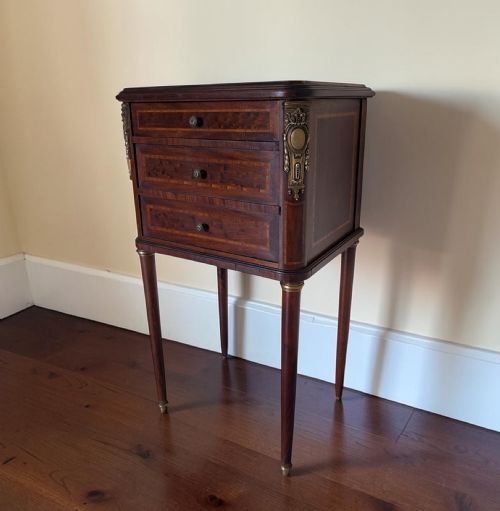
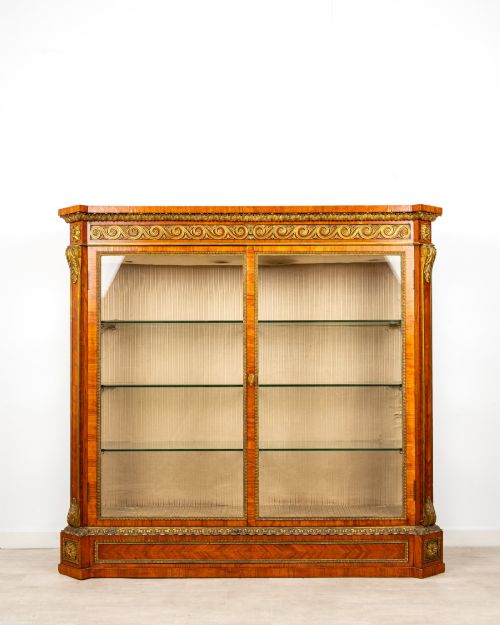
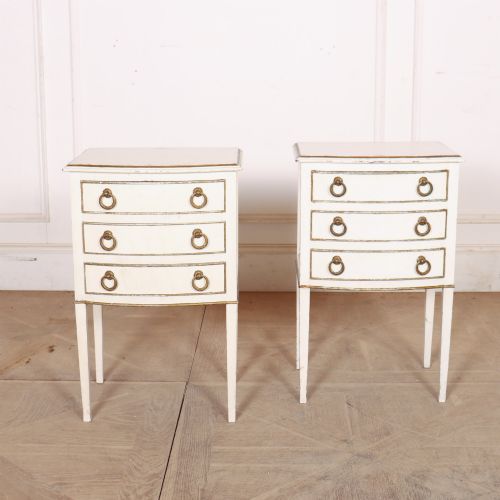
A french louis xvi cabinet encompasses a range of formal and domestic storage forms, from bedside tables and side cabinets to larger commodes, display vitrines, and secretaires. The selection draws heavily upon nineteenth-century revivals alongside pieces produced around nineteen hundred, capturing the neoclassical taste for straight lines, fluted pilasters, and architectural symmetry.
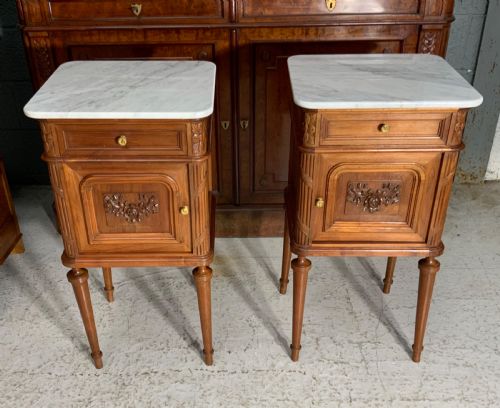
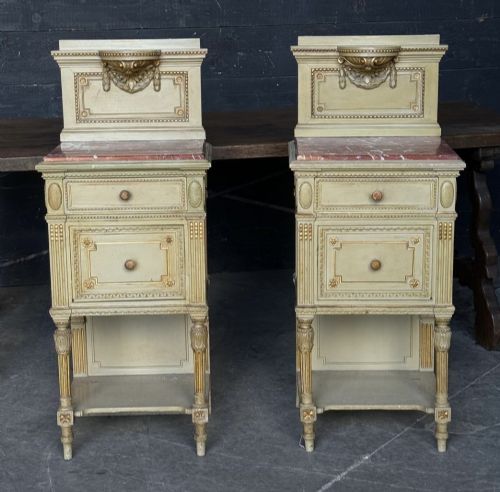
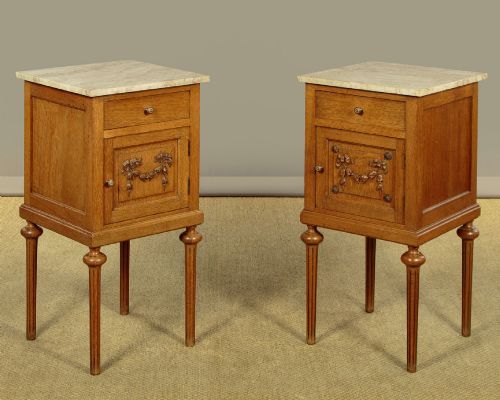
Bedside cabinets and compact commodes with marble tops dominate the domestic forms, alongside demi-lune console cabinets and tall vitrines for display. Makers frequently utilised marquetry and parquetry patterns in exotic timbers to soften the rectilinear geometry characteristic of the style.
Originating predominantly from French workshops across the nineteenth and early twentieth centuries, these pieces adapt eighteenth-century royal aesthetics for later drawing rooms, bedrooms, and salons. They combine utility with decorative restraint, favouring balanced proportions over excessive ornamentation.
How They Were Made
Cabinetmakers constructed carcass frames in solid timbers such as mahogany, walnut, oak, and cherry, then applied intricate veneers of kingwood, satinwood, tulipwood, and fruitwood. Marquetry designs depicted floral arrangements or geometric parquetry patterns using contrasting wood grains.
Cast and chased ormolu, or gilt bronze, mounts edge the panels, frame drawer fronts, and protect the vulnerable corners and feet of each piece. Marble slabs, often in shades of white or rouge, were shaped to fit precisely onto the upper surfaces of commodes and bedside tables.
Some bedside cabinets were made in handed pairs, curving left and right to mirror each other precisely beside the bed.
What Varies in Quality
The standard of execution in the bronze mounts largely defines the grade of a piece, separating crisp, hand-chased ormolu from simpler, softer castings. Finer examples display meticulous attention to detail in the chiselling of acanthus leaves, beadings, and floral husks.
Cabinetwork quality reveals itself in the precision of the veneer matching and the depth of the marquetry shading, often achieved by scorching wood pieces in hot sand. Interior construction, including the dovetailing of drawer linings and the selection of secondary timbers, reflects the workshop standard behind the piece.
François Linke·H. J. Hatfield And Sons·Maison Krieger·Henry Dasson·Blake London·Ambroise Michel
The French Louis XVI Cabinet Glossary
- Ormolu
- Gilt bronze mounts applied to furniture for decorative accent and edge protection. This technique involves coating cast bronze with a mercury-gold amalgam and heating it to drive off the mercury.
- Marquetry
- Decorative veneer work arranged in pictorial or floral patterns using various coloured wood veneers. Craftsmen carefully cut thin slices of timber and fit them together like a puzzle.
- Demi-lune
- A half-moon shape used for the plan of small console tables, chests, and cabinets designed to fit flat against a wall. This profile became particularly popular in neoclassical design.
- Secretaire
- A cabinet or desk incorporating a writing surface, often featuring a fall-front flap or a pull-out drawer. These pieces conceal pigeonholes and small compartments for correspondence.
- Vitrine
- A glass-fronted display cabinet intended for porcelain, silver, or curiosities. Glazed doors and sides allow light to enter and illuminate the collection within.
French Louis XVI Cabinet: Frequently Asked Questions
How do I identify a revival piece?
Nineteenth-century revival pieces often reveal their age through the construction methods of the carcase, secondary woods used inside drawers, and the wear patterns on internal surfaces. Makers working during this period imitated eighteenth-century models with great technical skill.
Examining the screws, hinges, and backboards helps distinguish nineteenth-century production from original eighteenth-century work. Stylistic clues also point to the revival eras, particularly when proportions are adapted for Victorian or Edwardian interiors.
Where should I place a bedside cabinet?
These compact cabinets suit bedrooms as functional nightstands, offering enclosed cupboard space and drawer storage alongside a protective marble surface. Their restrained neoclassical lines pair easily with various bed frames.
Beyond the bedroom, smaller commodes and side cabinets function effectively as lamp tables in hallways or sitting rooms. Their marble tops provide a durable surface for daily use.
How do I care for marble tops?
Marble surfaces benefit from regular dusting with a soft cloth and immediate cleaning of any liquid spills to prevent staining. Mild, neutral soap and water work best for routine cleaning.
Avoid abrasive cleaners and acidic substances like citrus or vinegar, which etch polished stone surfaces. Applying a specialist stone wax periodically helps protect the polish.