




Carved Wood Etagere Cabinet
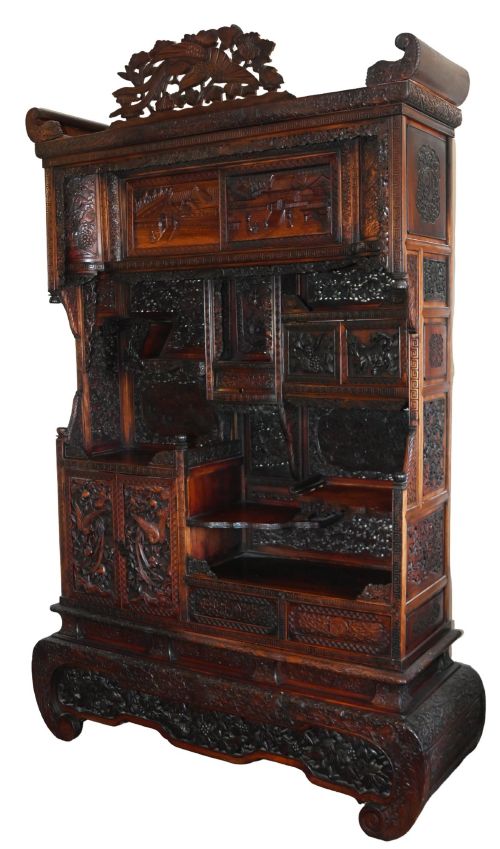
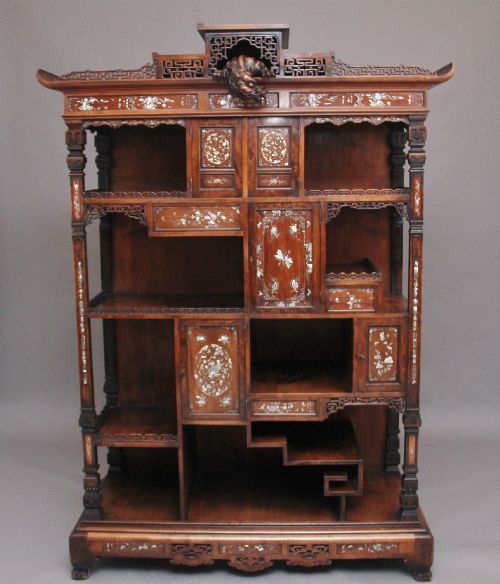
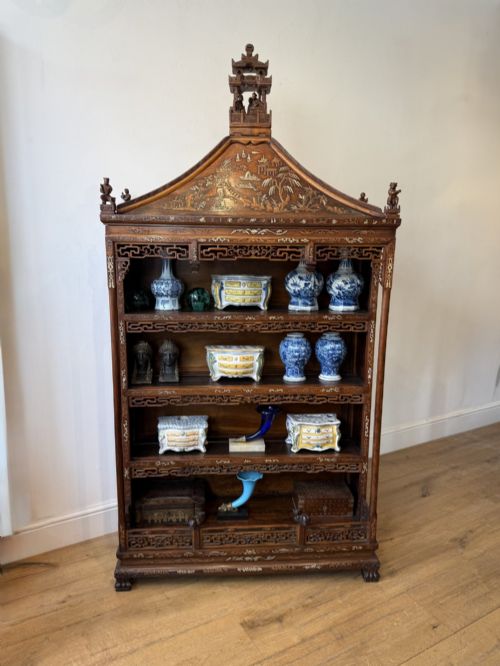
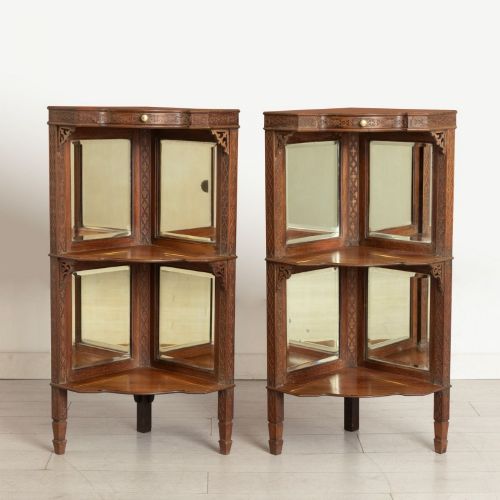
These carved wood etagere cabinet examples combine open tier display with enclosed storage, offering a practical solution for showcasing small treasures.
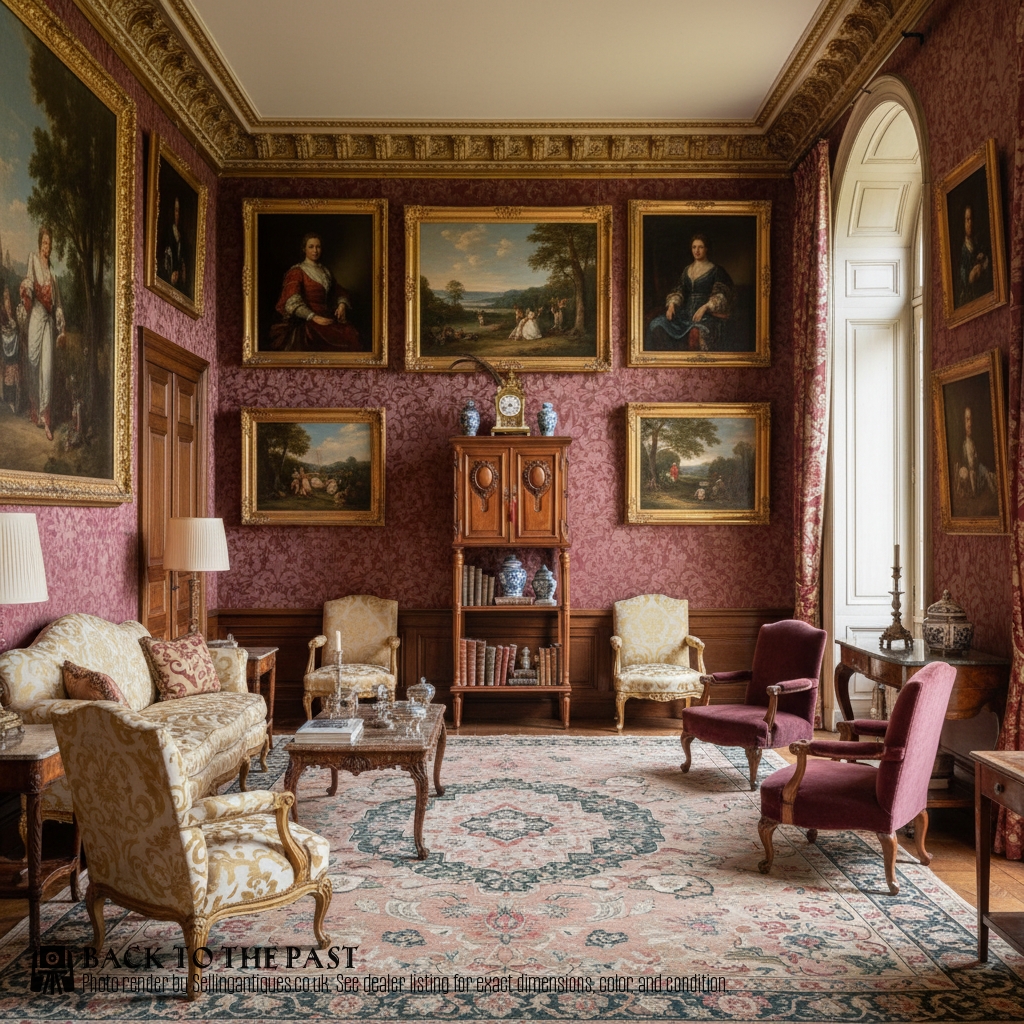
Carved Wood Etagere Cabinet
A carved wood etagere cabinet unites tiered shelving with a cupboard or display section, appearing across the Victorian era into the early twentieth century. Buyers encounter forms ranging from corner cabinets and music cabinets to side cabinets and traditional whatnot designs.
Origins span British and French workshops alongside Japanese influenced shodona cabinets from the Meiji and Taisho periods. Walnut, mahogany, rosewood, and padouk form the primary structures, frequently enhanced with glass doors and brass mounts.
The selection embraces diverse aesthetics including Rococo Revival, Chinoiserie, Japonisme, and Victorian Gothic Revival. Pieces range from compact corner display units to large floor standing shelving and bookcases.
Materials and construction methods
Cabinet makers utilised dense hardwoods such as mahogany, walnut, and rosewood, applying hand carving to create elaborate frames and decorative panels. Ebonised finishes and giltwood details frequently appeared on pieces influenced by Japanese design.
Glass panels were fitted into doors to protect displayed items, while brass hardware secured hinges and locks on cupboards. Secondary elements incorporated mirror plates and mother of pearl inlay to catch light within the display sections.
The listings feature nineteenth and early twentieth century pieces spanning Victorian, Meiji, and Taisho periods in walnut, mahogany, and rosewood.
Distinctions in craftsmanship and design
Quality rests in the crispness of the hand carving and the selection of figured timber veneers like walnut or mahogany. Superior pieces exhibit refined joinery, well proportioned tiers, and integrated decorative motifs that remain balanced across the entire structure.
Maker attribution and stylistic cohesion elevate certain examples, particularly where European cabinet making intersects with meticulous Japanese carving techniques. The integration of functional storage with delicate open shelves demands precise structural execution.
Gabriel Viardot·Edwards & Roberts
The Carved Wood Etagere Cabinet Glossary
- Etagere
- A piece of furniture consisting of a set of open shelves for displaying small objects. These tiered structures provide vertical display space while maintaining an open, airy silhouette.
- Shodana
- A Japanese tiered display cabinet featuring asymmetrical shelving and cupboards. Such pieces influenced late nineteenth century European design through the Japonisme movement.
- Whatnot
- A multiple tiered piece of furniture used for storing or displaying ornaments. They gained popularity during the nineteenth century in various wood types including mahogany and rosewood.
- Padouk
- A durable tropical hardwood exhibiting a reddish hue and distinct grain. Cabinet makers utilised this timber for decorative display pieces requiring strong structural support.
Carved Wood Etagere Cabinet: Frequently Asked Questions
What is an etagere cabinet?
An etagere cabinet combines open tier shelving with enclosed cupboard space, designed specifically to display decorative objects and collectables.
These pieces use vertical space efficiently, offering both visibility on open shelves and secure storage behind cabinet doors.
Where should I place a corner display cabinet?
Corner display cabinets fit into unused room angles, making them practical for smaller rooms or tight spaces.
They draw the eye upward and utilise corners that standard rectangular furniture leaves empty.
How do I clean carved wooden furniture?
Dust carved wooden surfaces regularly with a soft, dry cloth to prevent dirt accumulation in intricate crevices.
Avoid liquid polishes containing silicones, opting instead for traditional beeswax applied sparingly to maintain the timber finish.
Are these cabinets suitable for heavy books?
Most etagere cabinets and whatnots are constructed for display ornaments and light porcelain rather than heavy volumes.
Open tiers and delicate carved supports serve decorative display purposes best, while lower cupboards handle heavier storage.