
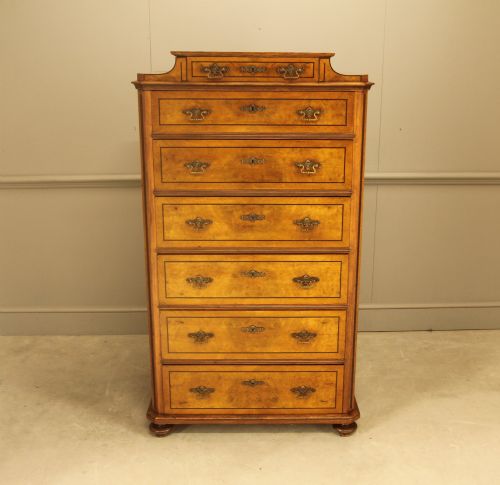
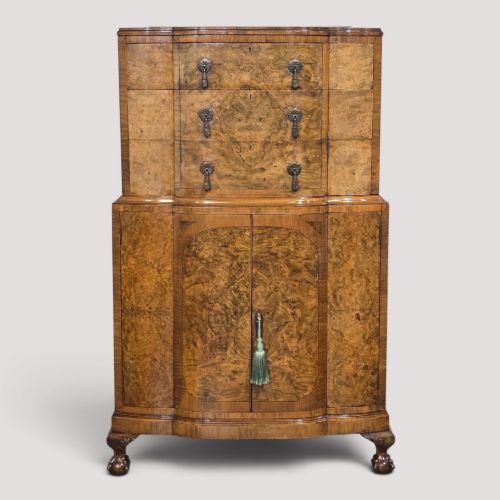
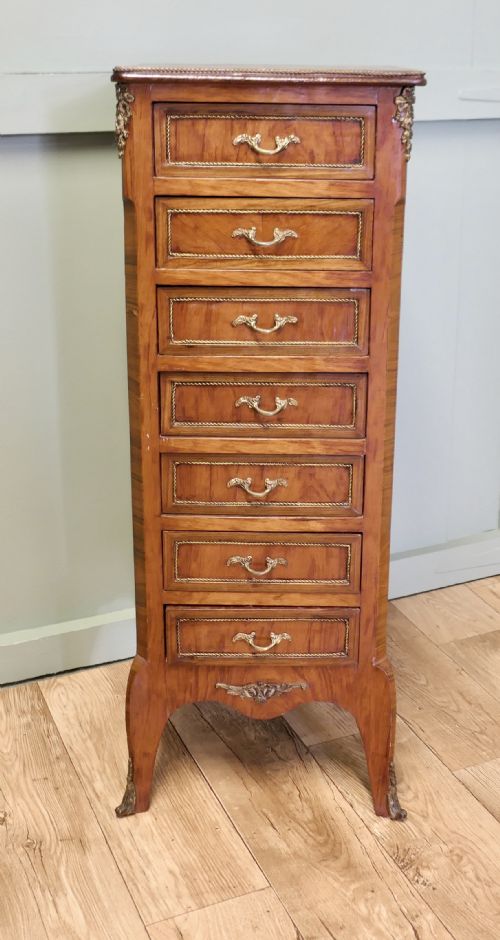
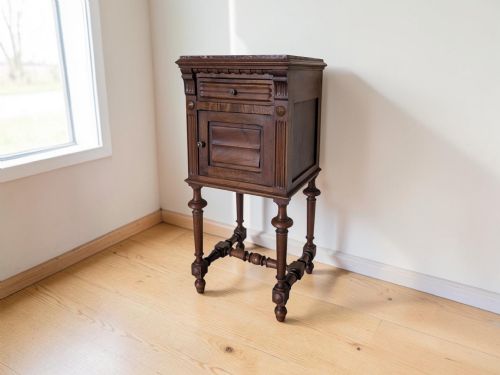

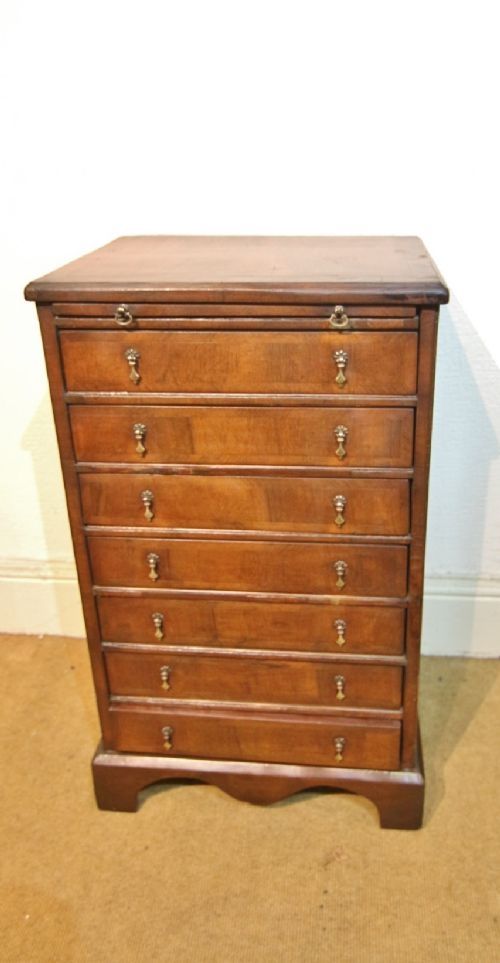
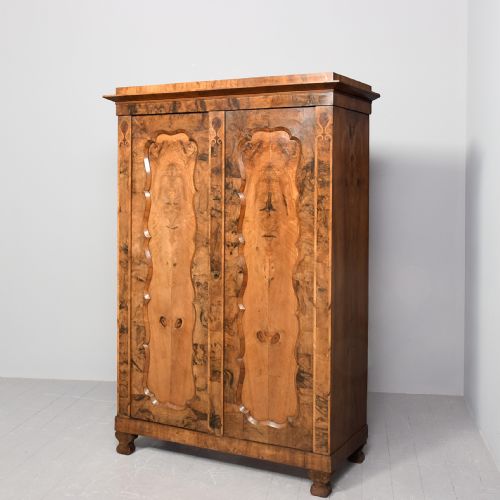

Vintage Walnut Tall Cabinet
A vintage walnut tall cabinet brings vertical presence and rich grain figure to a room, offering practical storage without claiming excessive floor space.
Vintage Walnut Tall Cabinet
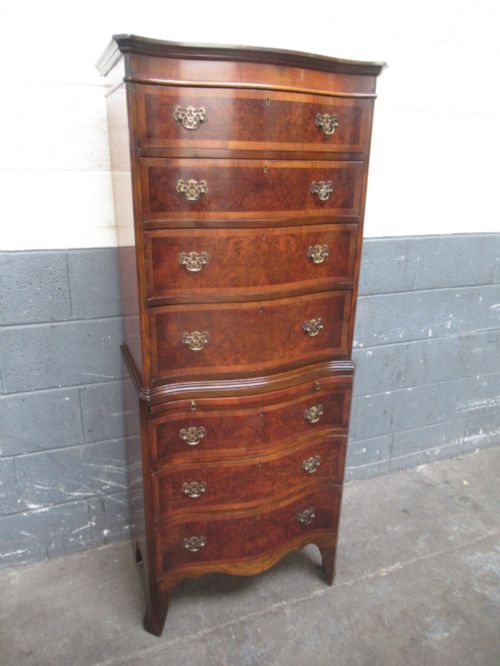
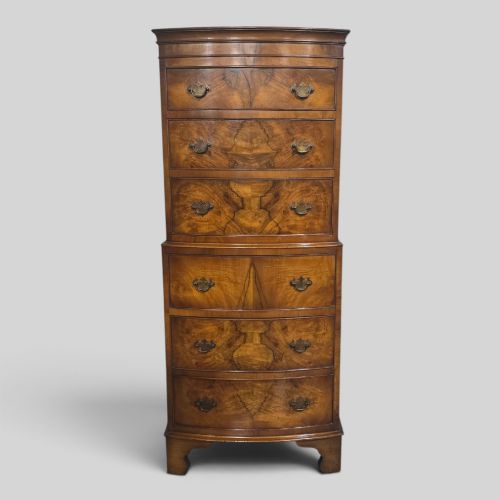
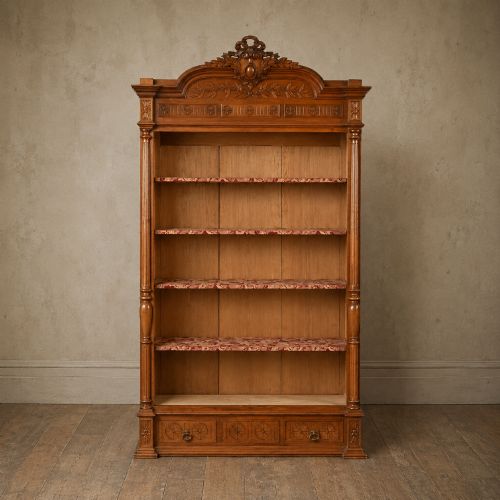
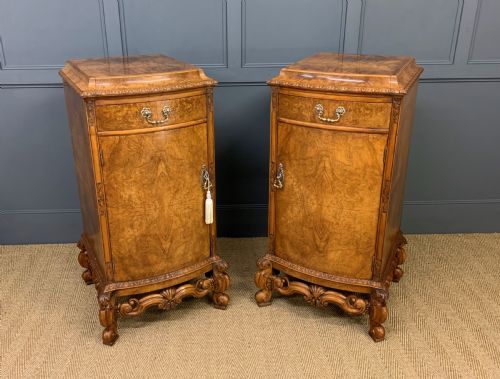
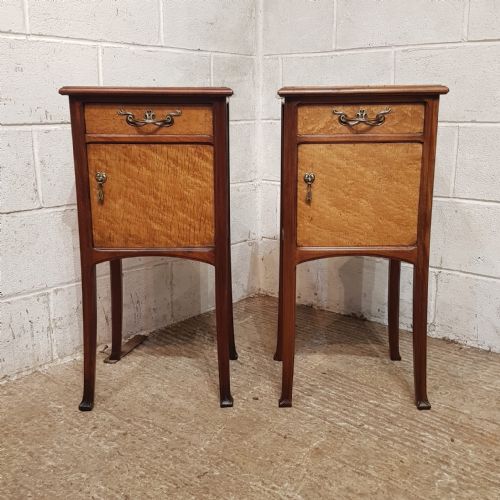
A vintage walnut tall cabinet encompasses upright furniture forms designed to maximise storage in domestic spaces. The selection ranges from slender bookcases and bedside cupboards to towering chests on stands, tallboys, and collector cabinets.
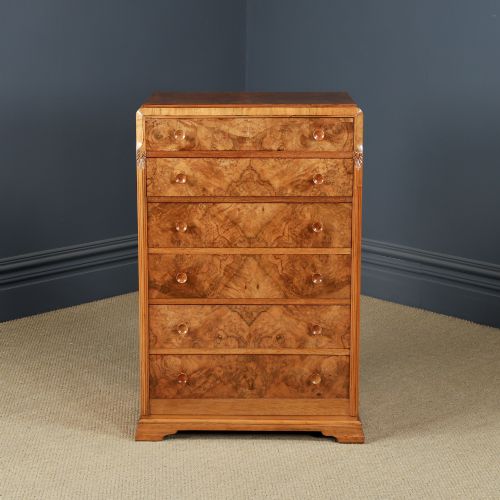
Most examples date across the nineteenth and early twentieth centuries, drawing heavily on earlier Georgian, Queen Anne, and continental aesthetic traditions. Buyers encounter everything from austere Art Deco tall chests to ornate French provincial side cabinets.
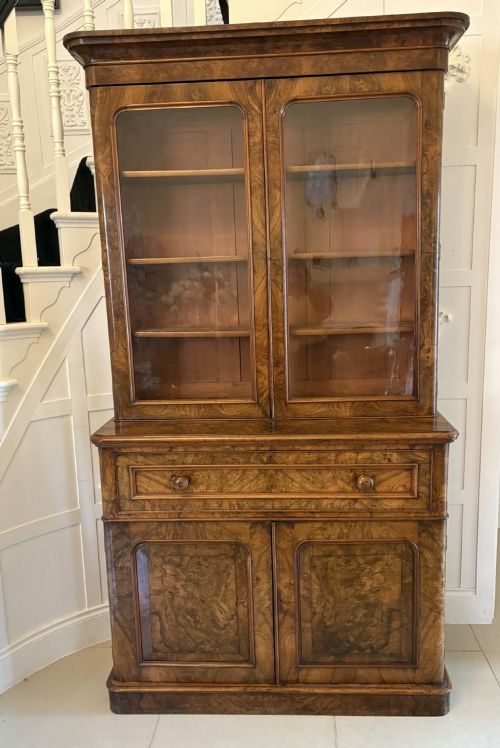
Forms often combine vertical drawer arrangements with enclosed shelving, tambour fronts, or glazed upper compartments. This variety ensures that pieces function equally well in libraries, bedrooms, and grand hallways.
Materials and construction
Cabinetmakers utilised solid walnut alongside finely figured veneers, burr walnut, and flame patterns to create rich surface movement on vertical planes. Secondary timbers such as oak occasionally support the internal structure of drawers and carcases.
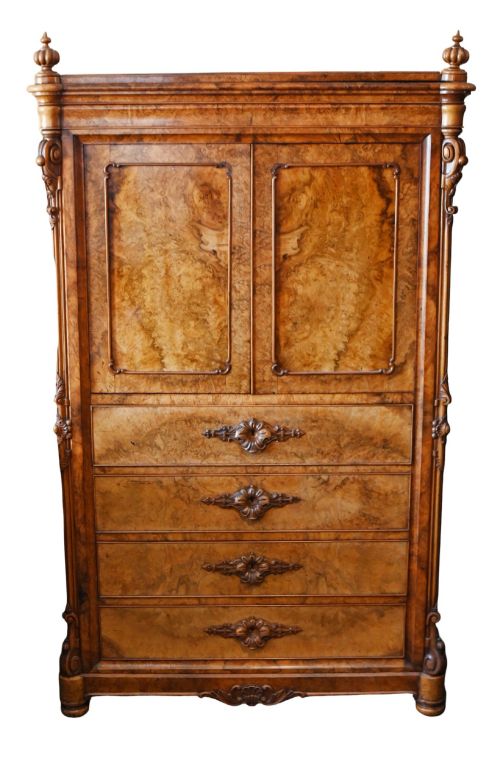
Decorative elements frequently include brass handles, ormolu mounts, inlaid marquetry, and parquetry veneer work. Glazed doors incorporate astragal bars, while taller architectural pieces utilise carved cornices and moulded plinths.
Certain tall cabinets conceal hidden compartments behind sliding panels or secret drawers disguised within decorative mouldings.
Distinctions in craftsmanship
Quality rests primarily in the choice and matching of timber veneers, where symmetrical burr or flame figures demand exceptional skill from the cutter. The depth of grain and the harmony of the grain pattern across multiple drawers signal superior workshops.
Structural integrity reveals itself in the joinery of drawer linings, the smoothness of sliding mechanisms like tambour fronts, and the original patination of the timber. Finely cast brass hardware and crisp carving rather than moulded substitutes elevate an example.
Betty Joel·Gillows of Lancaster
The Vintage Walnut Tall Cabinet Glossary
- Tallboy
- A tall chest of drawers, often constructed in two stacked sections where a larger base supports a slightly narrower upper chest.
- Burr walnut
- Timber taken from the gnarled growth of a walnut tree, producing swirling, highly decorative grain patterns prized by cabinetmakers.
- Escritoire
- A writing cabinet featuring a fall-front flap that conceals an arrangement of small interior drawers and pigeonholes.
- Astragal
- Moulding profiles used to hold panes of glass within cabinet doors, dividing the window into smaller geometric sections.
- Wellington chest
- A tall, narrow chest of drawers secured by a hinged vertical locking sidebar that fastens with a key.
Vintage Walnut Tall Cabinet: Frequently Asked Questions
How do I style a tall walnut cabinet?
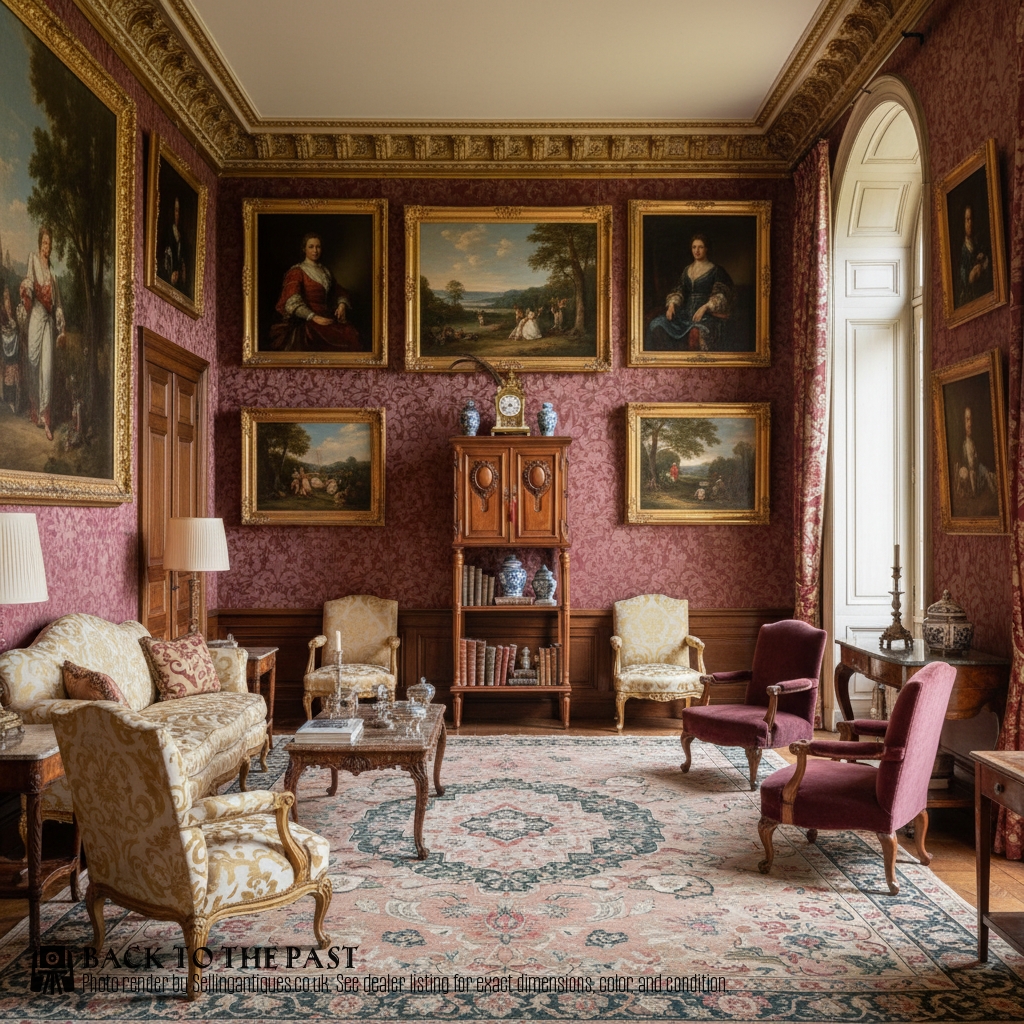
Allow the vertical proportions of the cabinet to anchor a blank wall, pairing it with complementary antique seating or minimalist modern surroundings to highlight the dark grain.
Keep surrounding furniture lower in scale to emphasise the height of the piece, utilising the top surface for simple ceramics or leaving it bare.
What is the difference between a tallboy and a chest on chest?
A tallboy generally refers to a single tall chest of drawers or a wardrobe-style cabinet, though historical usage often blurs the line with stacked forms.
A chest on chest specifically describes two distinct cabinetry sections stacked together, where a wider lower chest carries a slightly smaller upper chest.
How do I care for walnut veneer?
Protect antique walnut from direct sunlight and sudden temperature shifts to prevent the underlying veneers from drying out or lifting over time.
Apply microcrystalline wax sparingly to nourish the timber and maintain the surface sheen without building up heavy residue.
Are these cabinets suitable for small rooms?
The defining characteristic of these pieces is their vertical orientation, which provides substantial storage capacity while occupying a minimal footprint on the floor.
Slender proportions make them ideal for narrow hallways, alcoves, or compact bedrooms where wide furniture would overwhelm the space.