

French Gilt Urns
French gilt urns bring classical elegance and opulent nineteenth-century craftsmanship into domestic interiors.
French Gilt Urns
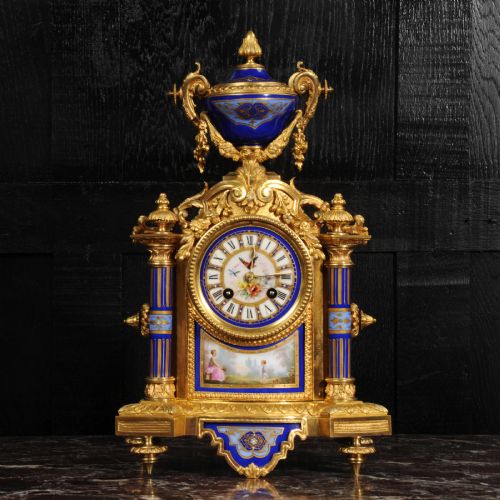
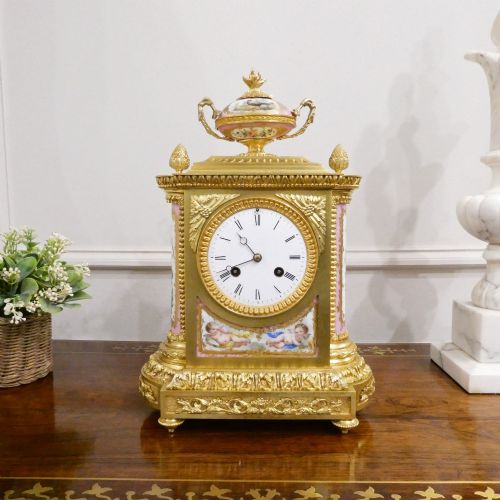
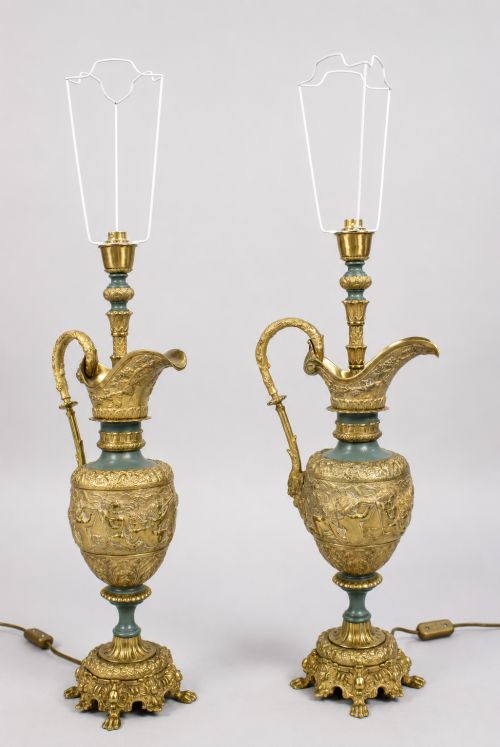
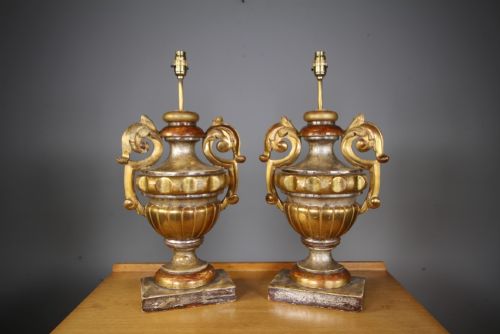
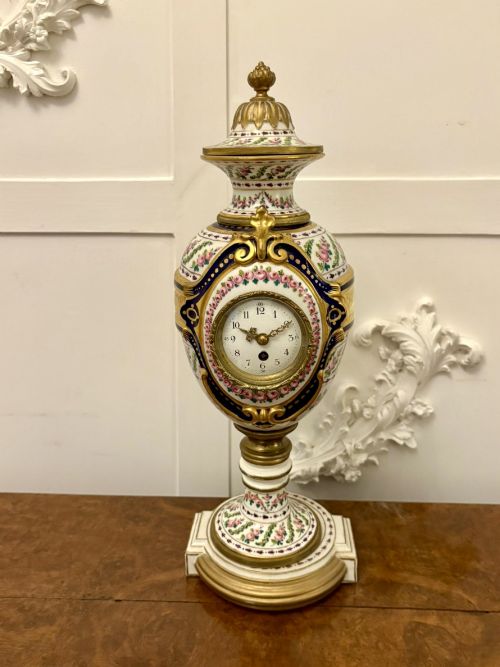
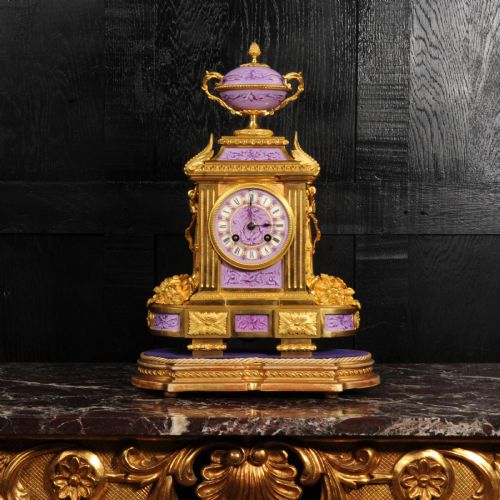
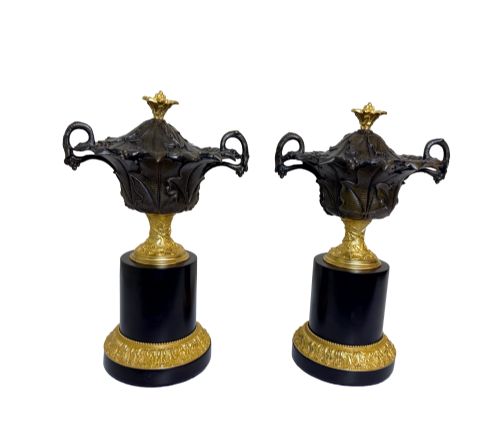
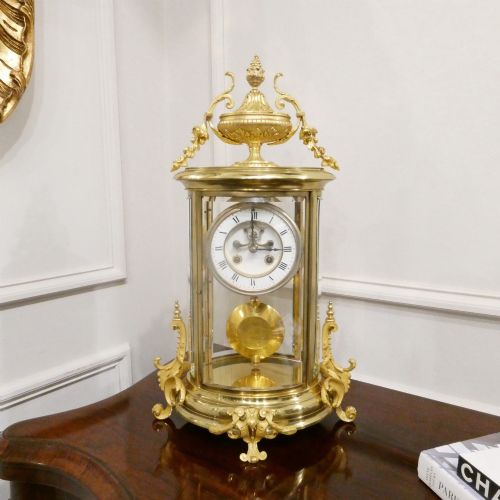
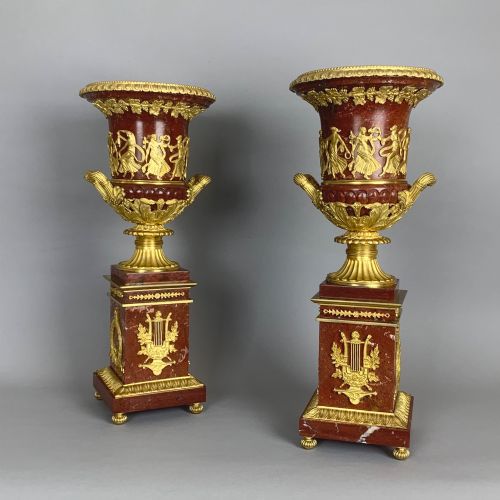
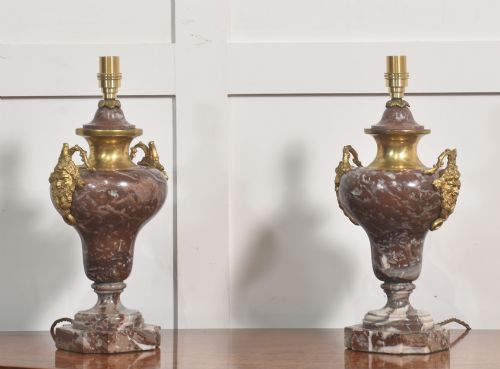
French gilt urns encompass decorative vessels, mantel clocks, and table lamps originating predominantly from the nineteenth century.
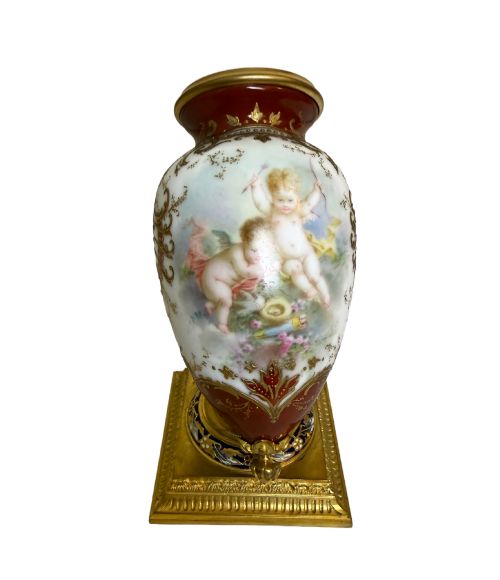
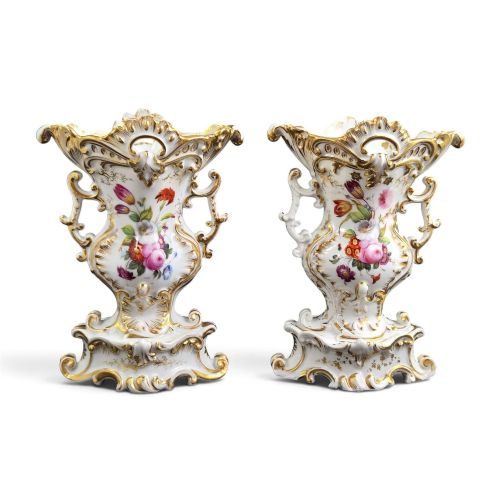
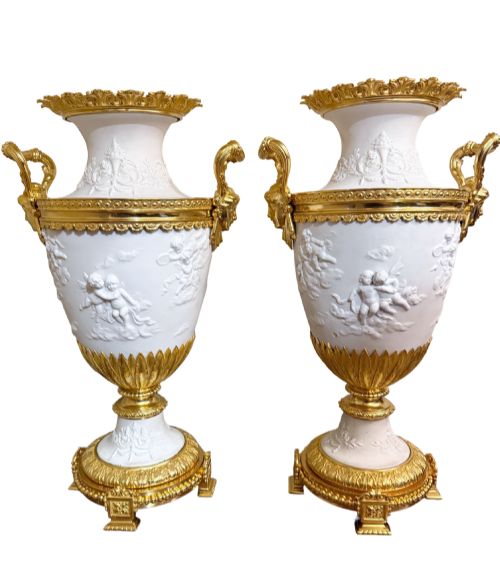
Buyers frequently encounter pieces combining gilded bronze or ormolu mounts with ceramic bodies, particularly porcelain from Sèvres and Limoges.
The selection includes Grand Tour reductions of classical antiquities alongside revival pieces styled in the manner of Louis XVI and the French Empire.
Materials and construction methods
Foundational structures utilise cast bronze, brass, or carved marble, which are subsequently fire-gilded or fitted with ormolu mounts.
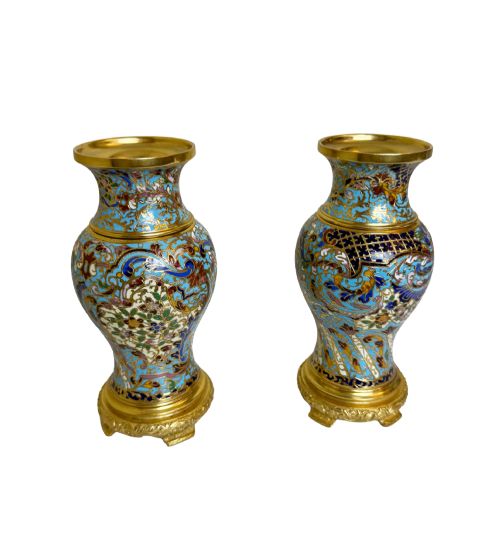
Porcelain elements display hand-painted floral or figural scenes, often glazed in turquoise, bleu céleste, or deep blue, and secured with metal trim.
Bacchus and cherubs frequently peer from the handles of these urns, keeping watch over nineteenth-century mantelpieces with stone-faced mischief.
Distinguishing quality factors
Superior examples demonstrate crisp chasing on the bronze work and finely detailed hand-painting on porcelain surfaces rather than printed transfers.
The weight of the marble base and the precision of the joinery between metal mounts and ceramic bodies indicate the standard of manufacture.
Achille Brocot·Samuel Marti·Jacob Petit·Casier·Samson Paris
The French Gilt Urns Glossary
- Ormolu
- Gilded bronze produced by applying a mercury-gold amalgam to cast metal and heating it until the mercury vaporised. This technique created a durable, rich golden surface on nineteenth-century decorative objects.
- Champlevé
- An enamelling technique where troughs are dug into a metal surface and filled with vitreous enamel powder before firing. The resulting coloured patterns sit flush with the surrounding metal mount.
- Cassolette
- A dual-purpose decorative vessel featuring a reversible lid that transforms the piece from an urn into a burner or candle holder. These items typically combine gilt bronze with marble or porcelain.
- Grand Tour
- A traditional journey through Europe undertaken by nineteenth-century elites to study classical art. Souvenirs included bronze reductions of famous antiquities such as the Warwick Vase.
- Garniture
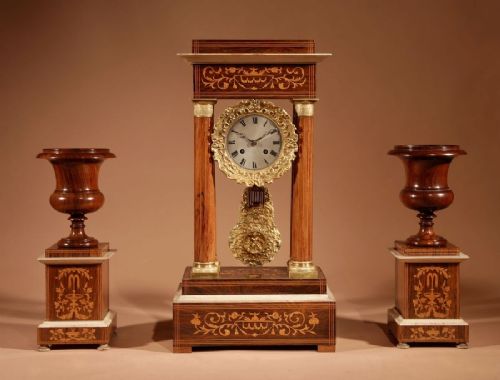
- A set of three or more matching decorative objects, commonly comprising a clock flanked by matching vases or urns. These sets were designed to sit symmetrically on a mantelpiece.
French Gilt Urns: Frequently Asked Questions
What were french gilt urns used for originally?
These pieces served primarily as decorative focal points within nineteenth-century drawing rooms and salons, often displayed on mantelpieces or console tables.
Some specialised forms functioned as clocks, incense burners, or vessels for displaying cut flowers during formal receptions.
How do I identify a reproduction from a nineteenth-century piece?
Examine the construction methods visible in the bronze mounts and the ceramic bodies. Nineteenth-century items show hand-chased metalwork and traditional assembly pins rather than modern machine screws.
Patination on the gilt surfaces develops unevenly over decades, showing wear patterns consistent with age and handling.
What styles are common among these urns?
Neoclassical and Louis XVI revivals dominate the selection, reflecting a nineteenth-century fascination with ancient Roman and Greek aesthetics. You will also encounter Rococo Revival designs featuring asymmetrical curves and naturalistic motifs.