

Ormolu Mantel Urns
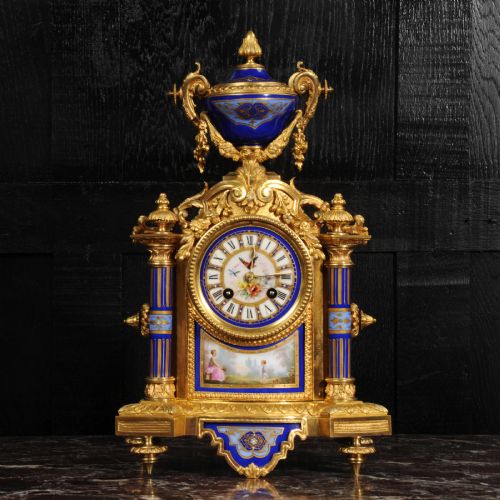
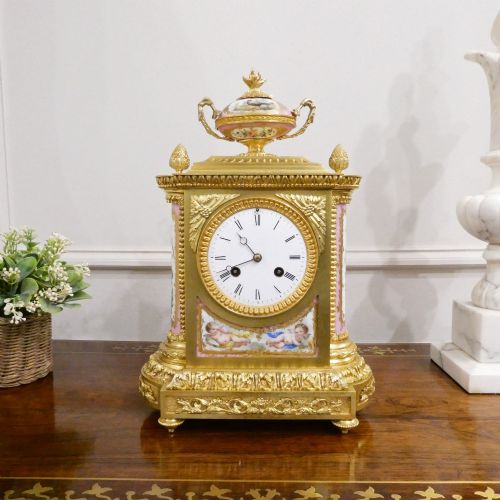
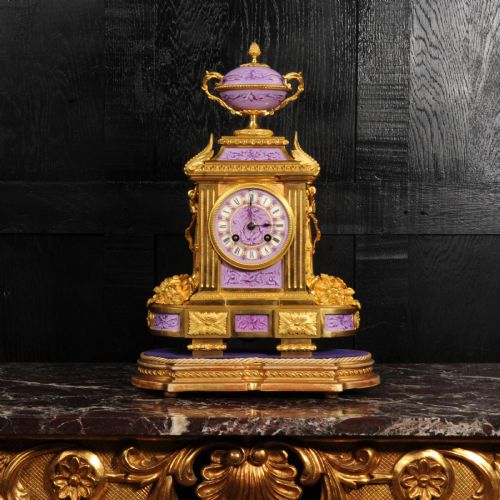
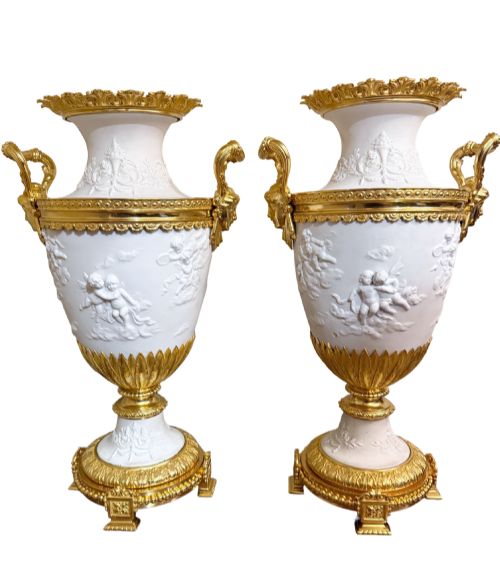
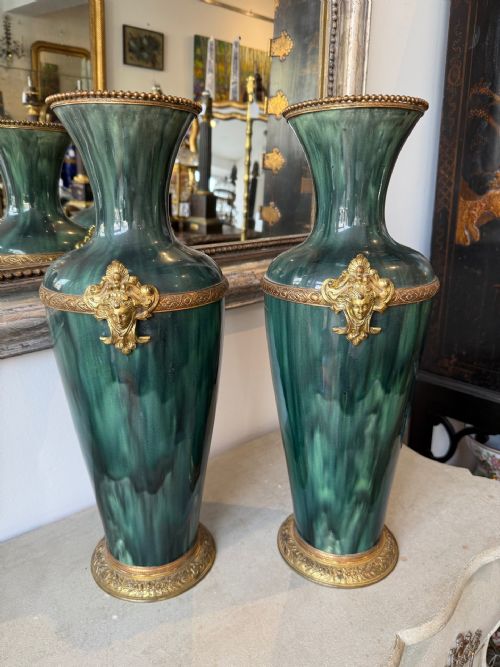
These ormolu mantel urns and associated garnitures combine gilded metal and porcelain to anchor a formal interior.
Ormolu Mantel Urns
Ormolu mantel urns encompass decorative vessels, cassolettes, and clock garniture sets designed to sit upon a fireplace mantel or console table. These pieces emerge predominantly from nineteenth-century French workshops, spanning revival styles such as Louis XVI, French Rococo, and French Empire.
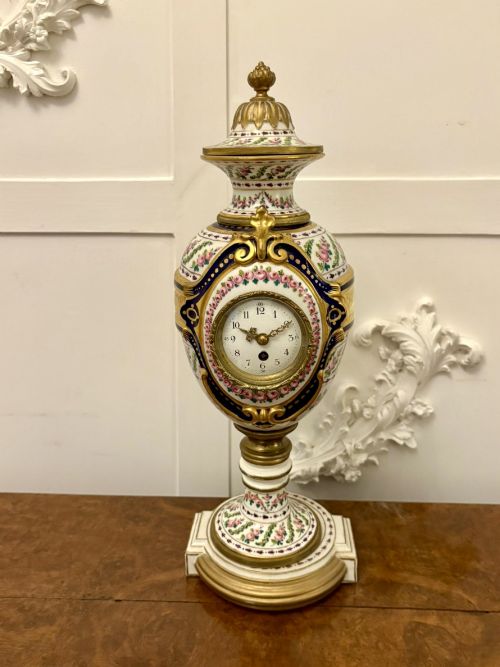
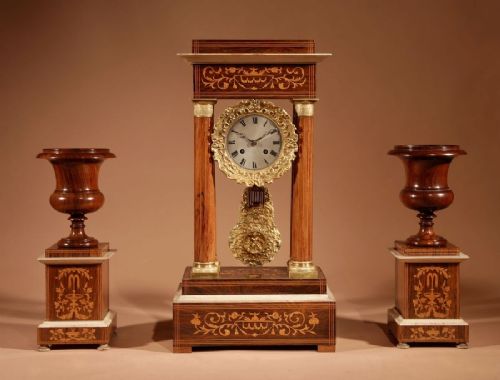
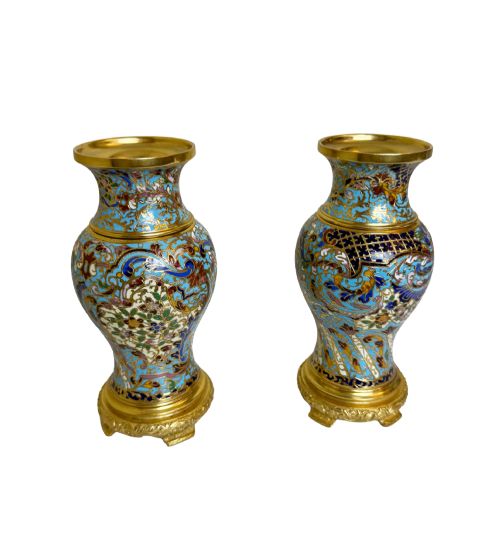
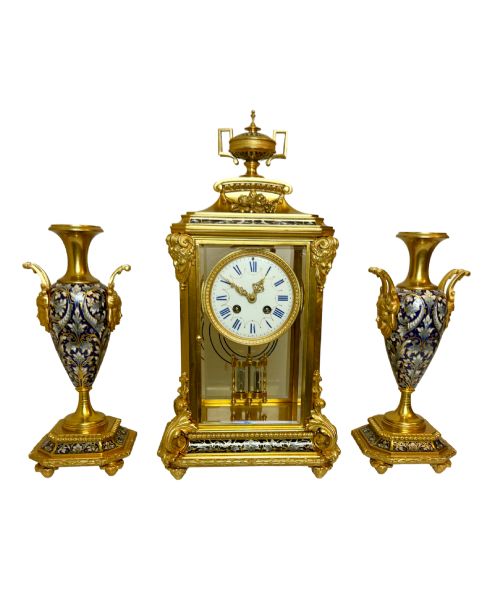
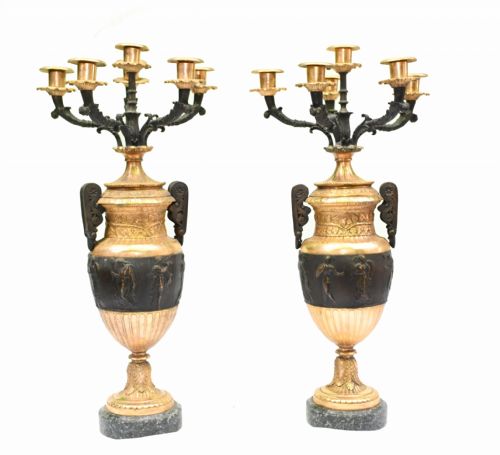
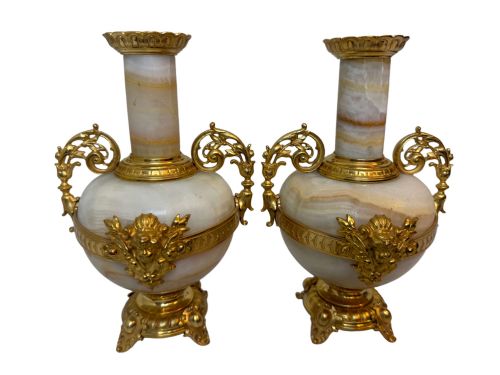
The selection ranges from standalone twin vases and tazzas to complex three-piece clock garnitures flanked by matching urns or candelabras. Materials paired with the gilt bronze frequently include Sevres style porcelain, marble, onyx, glass, and champleve enamel.
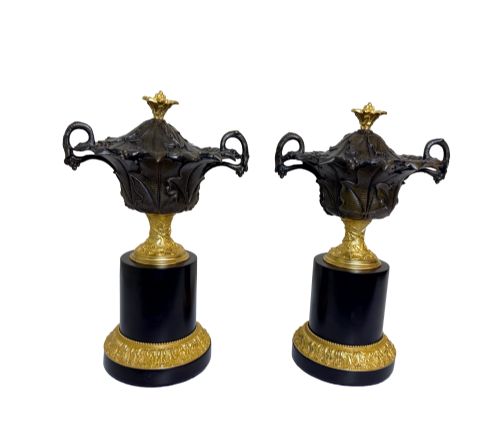
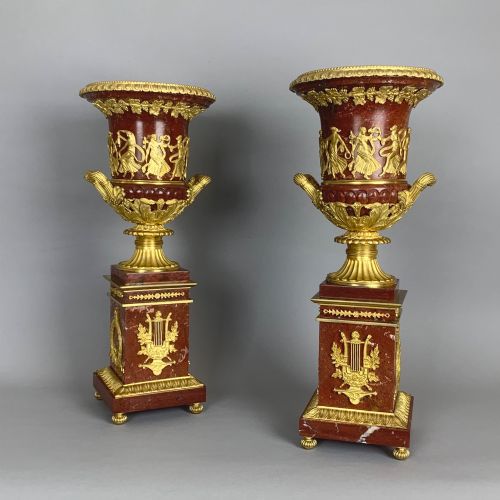
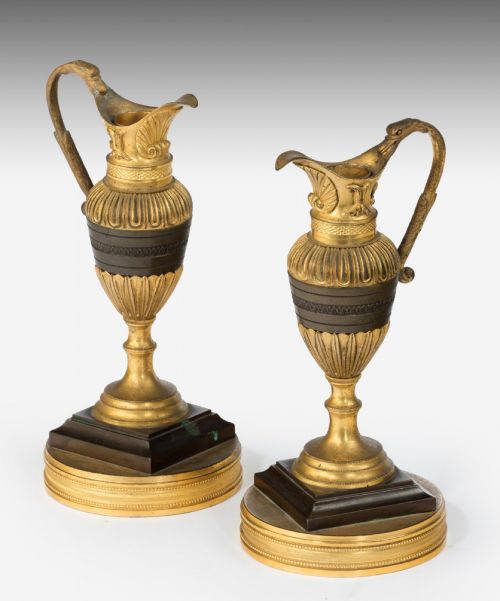
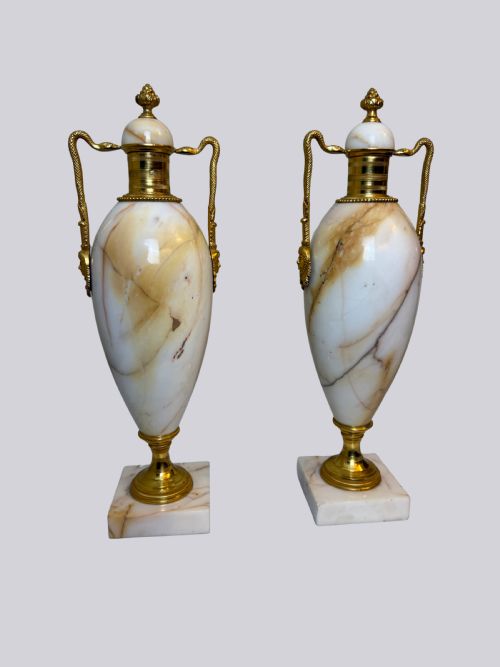
Buyers encounter matched pairs mounted on stone plinths alongside single monumental display pieces. Formats follow classical architectural lines, incorporating handles, pedestals, and removable lids that sometimes conceal cassolette burner inserts.
Materials and Construction
Production relies on the combination of cast bronze finished with mercury gilding, known as ormolu, alongside hand-painted ceramic and carved natural stone. Metal components are cast in sections, chased with fine detail using small chisels, and then assembled with threaded pins or screws.
Porcelain elements are fired, glazed, and decorated with polychrome enamels and gilding, frequently imitating Sevres factories. Marble, white onyx, and rouge marble bases are turned on lathes and polished to support the heavy metalwork.
Enamel work appears on clock dials and champleve decorative panels where coloured glass paste is fused into recessed metal channels. Bronze elements are occasionally given contrasting patinations, setting dark patinated figures against bright gilt mounts.
Some nineteenth-century cassolettes double as scent burners, ready to fill a formal nineteenth-century parlour with perfume.
Assessing Quality and Execution
Quality rests upon the crispness of the bronze chasing and the depth of the mercury gilding. Superior examples display sharp, hand-tooled details in the acanthus leaves and classical motifs rather than soft, rounded edges typical of secondary casting.
The integration of materials dictates the overall success of the piece, where porcelain panels align precisely with the surrounding bronze mounts without visible gaps. Heavier gauge bronze and substantial marble or onyx plinths indicate higher expenditure during original manufacture.
Japy Freres·Jean-Baptiste Delettrez·Achille Brocot·Louis Goret·Pons de Paul
The Ormolu Mantel Urns Glossary
- Ormolu
- Gilt bronze produced by applying a mercury and gold amalgam to a bronze base and heating it until the mercury vaporises, leaving a durable golden coating. This technique creates the characteristic rich lustre seen on nineteenth-century French metalwork.
- Cassolette
- A decorative vessel with a reversible lid that functions either as a vase or a perfume burner. When turned, the solid side presents a continuous decorative urn profile.
- Garniture
- A coordinated set of three or more ornamental objects designed to be displayed together on a mantelpiece. Typically, this comprises a central clock flanked by matching urns, candelabras, or vases.
- Champleve
- An enamelling technique where troughs or cells are hollowed out of the metal surface and filled with vitreous enamel before firing. The resulting piece shows coloured patterns divided by thin metal lines.
- Tazza
- A wide, shallow saucer-like vessel raised on a stem and foot, used for display. These pieces frequently incorporate marble bowls set with cast bronze mounts.
Ormolu Mantel Urns: Frequently Asked Questions
What is an ormolu mantel urn?
An ormolu mantel urn is a decorative nineteenth-century vessel made from gilded bronze, frequently combined with porcelain or marble, designed for display on a fireplace mantel.
These pieces often form part of a garniture set accompanying a matching mantel clock.
How do cassolettes differ from standard urns?
Cassolettes feature a reversible lid that transforms the piece from a closed decorative vase into an open burner. One side displays solid ornamentation while the reverse reveals pierced metalwork.
This functional dual purpose distinguishes them from static decorative urns.
Where were these pieces made?
The majority of these decorative objects originate from French workshops and Parisian foundries active during the nineteenth century. Makers utilised historical revival styles drawing on earlier Louis XVI and French Empire aesthetics.
Production involved specialised artisans handling bronze casting, gilding, and stone turning independently before final assembly.
How do I care for ormolu surfaces?
Ormolu surfaces require gentle dusting with a soft, dry brush to prevent the accumulation of grit in recessed chasing. Avoid liquid cleaners, abrasives, and polishes that strip the historic mercury gilding.
Maintaining a stable room environment away from direct heat sources protects both the metal gilding and underlying stone bases.