

Antique Ormolu Urns
Antique ormolu urns bring classical elegance and rich metallic warmth into a room, uniting bronze and gilt mounts with decorative vessels.
Antique Ormolu Urns
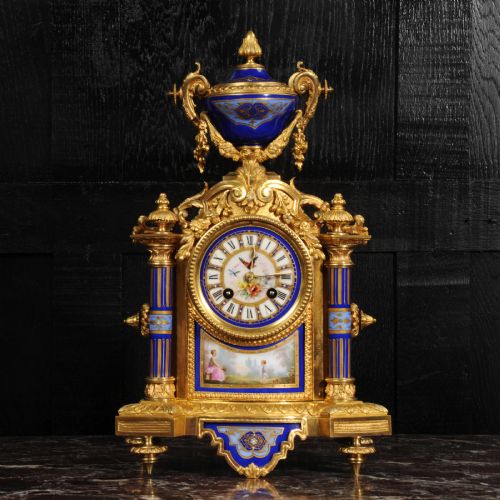
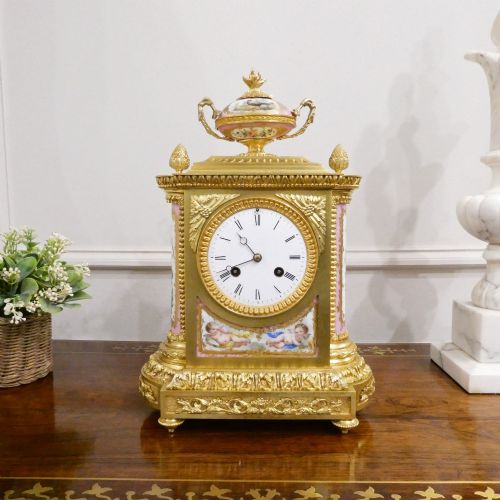
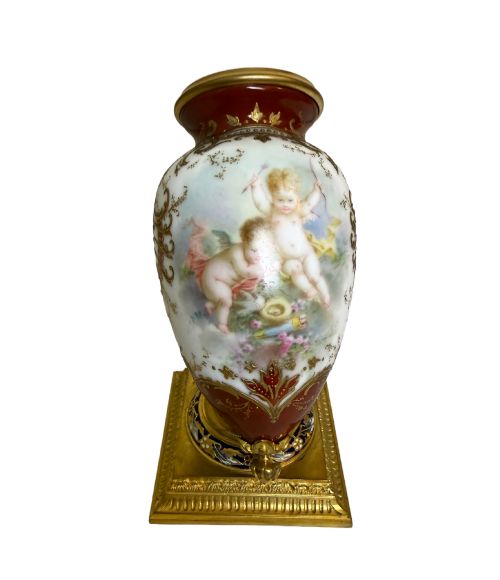
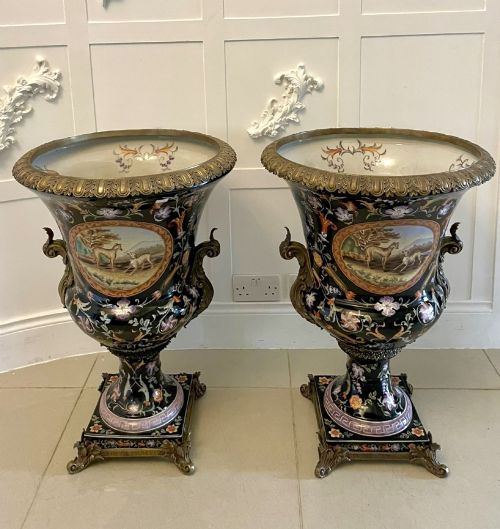
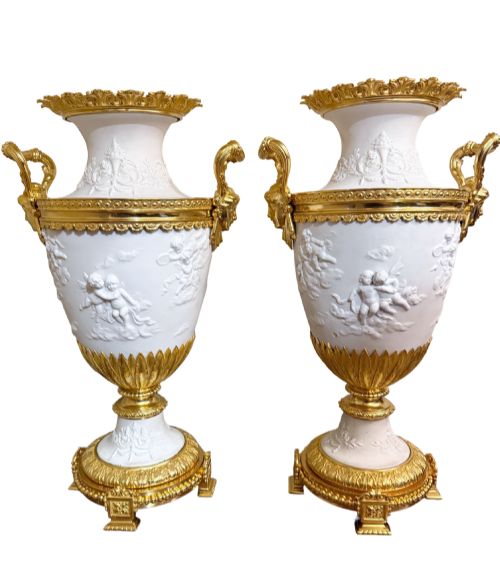
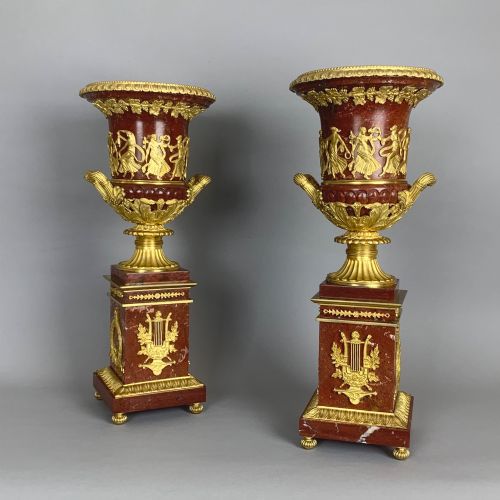
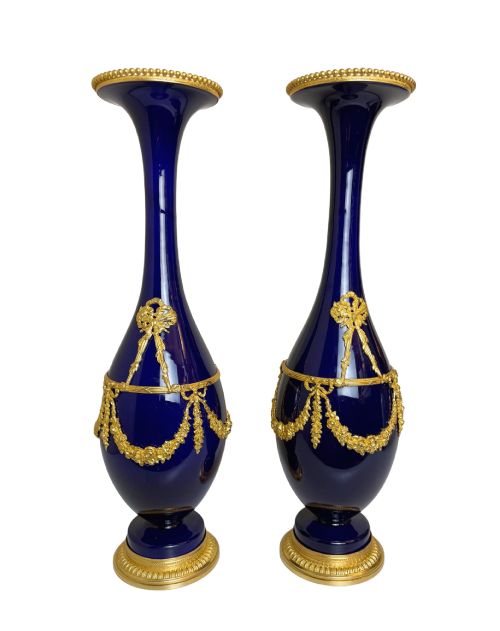
When you search for antique ormolu urns, you encounter decorative objects that combine cast bronze with mercury gilding alongside receptacles fashioned from porcelain, marble, and glass. The items meeting you on this page span the eighteenth, nineteenth, and early twentieth centuries, with a strong presence of nineteenth-century French manufacture.
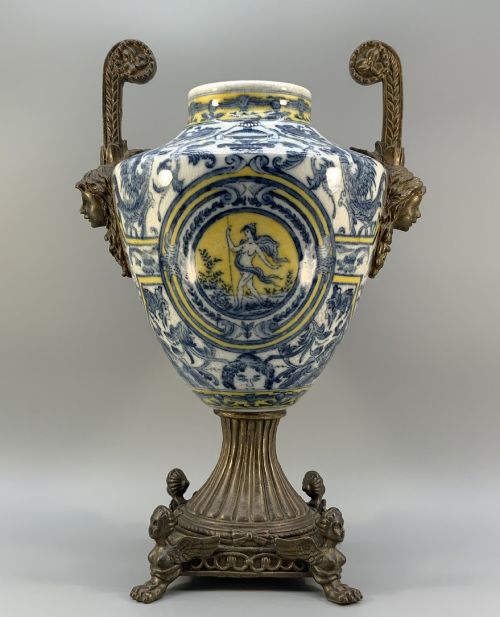
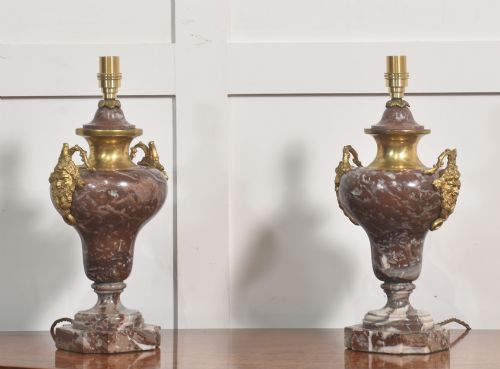
Many of these pieces function as decorative mantel ornaments, garniture sets, or transformed utility items such as table lamps. They draw upon classical, neoclassical, Louis XVI, and French Empire styles, incorporating mounts shaped as rams' heads, foliate scrolls, and classical handles.
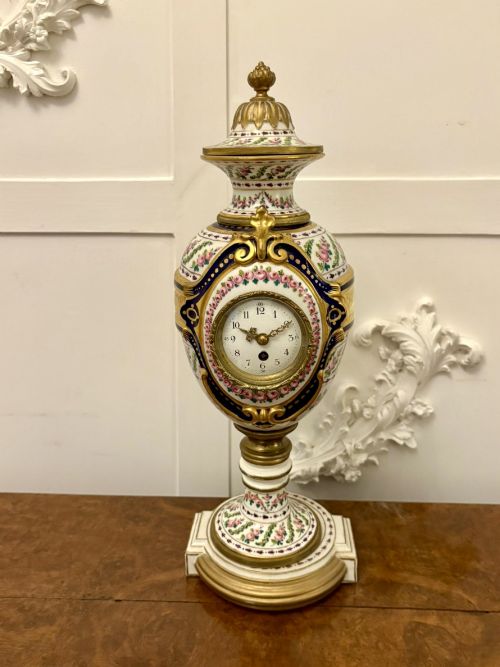
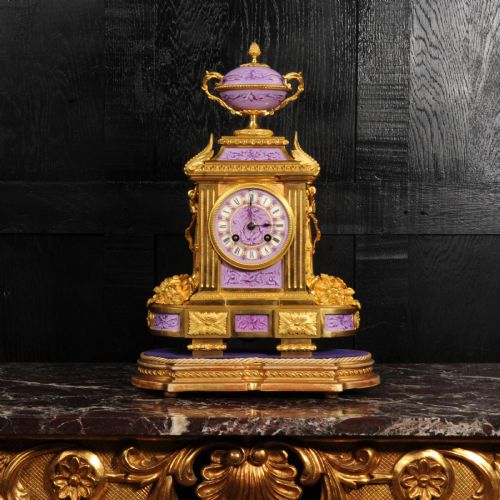
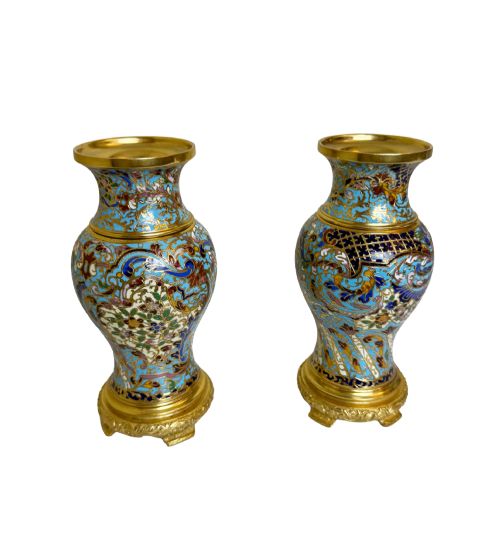
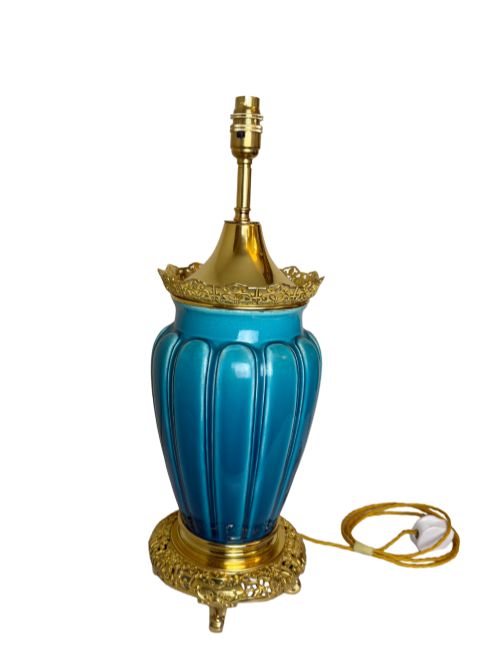
The materials paired with the gilt metal include white, blue, and turquoise porcelain, often decorated with hand-painted scenes or monochrome glazes. You also find rich red and yellow marble bases, champlevé enamel, and faience supporting the metalwork.
How they were made
The creation of these objects relied upon skilled bronze casting followed by the application of mercury gilding, a process known as ormolu, which imparts a deep and lasting golden lustre. Artisans shaped the bronze through lost-wax or sand-casting methods before chasing the surface details by hand to achieve crisp definition.
The metal mounts were then secured to turned marble plinths, glass vessels, or ceramic bodies using threaded screws, pins, and bespoke brass fittings. Porcelain components, frequently sourced from factories such as Sèvres or styled after them, were glazed, fired, and occasionally hand-painted before receiving their metal trims.
Materials span gilt bronze, ormolu, porcelain, marble, enamel, brass, bronze, and glass across various decorative forms.
What varies in quality
The distinction between standard production and exceptional work lies primarily in the crispness of the bronze chasing and the depth of the gilding. Finer examples display sharp relief in foliage and figurative mounts, whereas lesser pieces show softer, shallower casting details resulting from worn moulds.
The selection of secondary materials also dictates the standing of a piece, with heavy, finely veined marbles and unblemished, hand-painted porcelain commanding greater presence. Furthermore, the integration between the metal mounts and the ceramic or stone body reveals the care taken during initial assembly.
Achille Brocot·Casier
The Antique Ormolu Urns Glossary
- Ormolu
- Gilt bronze, formed by applying a mixture of gold and mercury to a bronze base and heating it to drive off the mercury. This technique creates a durable golden surface characteristic of fine decorative arts from the eighteenth and nineteenth centuries.
- Cassolette
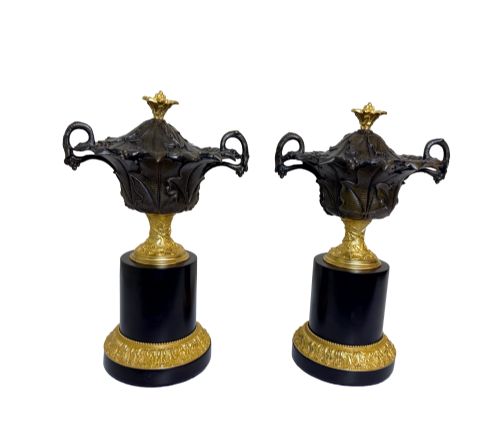
- A decorative vase or urn with a reversible lid that functions either as a closed vessel or as a candleholder. These dual-purpose objects often feature marble or porcelain bodies with ornate gilt bronze mounts.
- Garniture
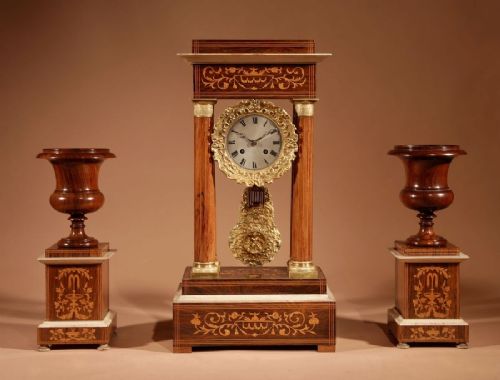
- A set of three or more matching ornamental objects designed to be displayed together on a mantelpiece or sideboard. They typically consist of a central clock or large urn flanked by smaller matching urns, candelabras, or vases.
- Champlevé
- An enamelling technique where troughs or cells are hollowed out of the metal surface and filled with vitreous enamel before firing. The resulting coloured patterns sit flush with the surrounding metal partitions.
- Grand Tour
- A nineteenth-century tradition of cultural travel across Europe that inspired the creation of small-scale bronze and marble replicas of classical antiquities. These souvenir pieces frequently utilised ormolu mounts to emulate museum-quality artefacts.
Antique Ormolu Urns: Frequently Asked Questions
What is ormolu?
Ormolu refers to gilded bronze decorative elements found on nineteenth-century furniture, clocks, and decorative vessels. The technique uses a mercury and gold amalgam fired onto the metal surface.
This historical process produces a distinct, warm golden tone that does not tarnish in the manner of ordinary brass. It remains a defining feature of French neoclassical and empire decorative arts.
How were urns used historically?
These decorative vessels served primarily as formal ornaments on mantelpieces, consoles, and pedestals within grand reception rooms. They demonstrated the owner's taste for classical antiquity and refined interior decoration.
Some designs incorporated removable lids to function as cassolettes for burning perfumes or holding candles during evening gatherings. Others formed the flanking components of large clock garnitures.
How do I identify French Empire style?
French Empire style relies upon strict symmetry, military motifs, and classical Greek and Roman architectural elements. You will frequently observe laurel wreaths, sphinxes, winged figures, and paw feet rendered in bronze.
This aesthetic flourished during the early nineteenth century under Napoleon, favouring bold geometric forms combined with rich mahogany, dark marbles, and bright ormolu mounts.
Are these pieces suitable for modern lighting?
Many antique urns and vases have been safely converted into table lamps by routing a cord through the centre without damaging the original metal or ceramic body. This adaptation allows nineteenth-century decorative objects to function as practical lighting in contemporary interiors.
Such conversions often retain the original gilt bronze mounts, porcelain bodies, and marble bases while integrating modern wiring and lamp fittings.