


Ormolu Decorative Vases
Ormolu decorative vases combine gilded bronze mounts with porcelain, marble, and glass, offering nineteenth-century French and neoclassical grandeur for display.
Ormolu Decorative Vases
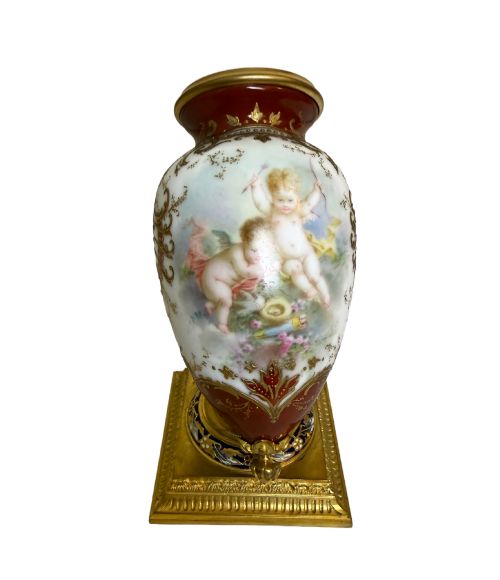
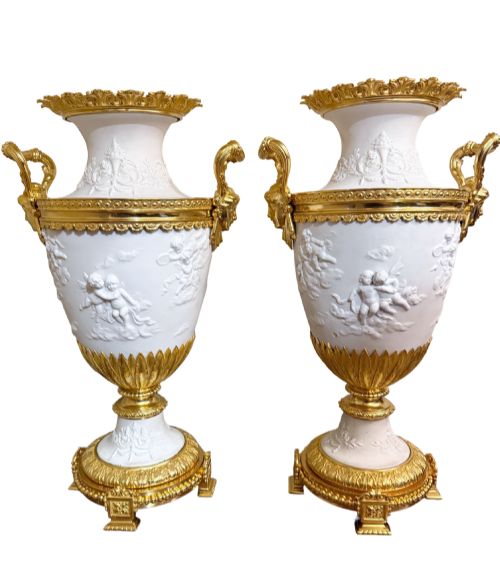
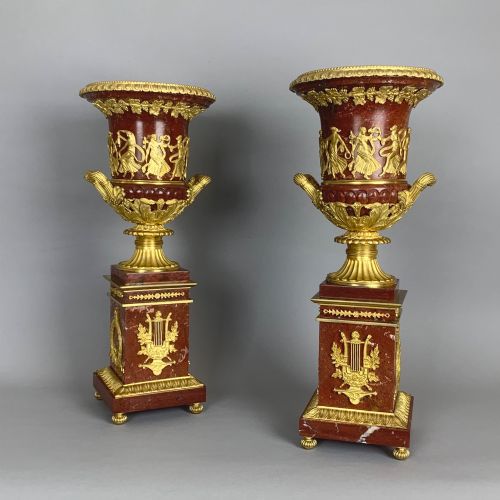
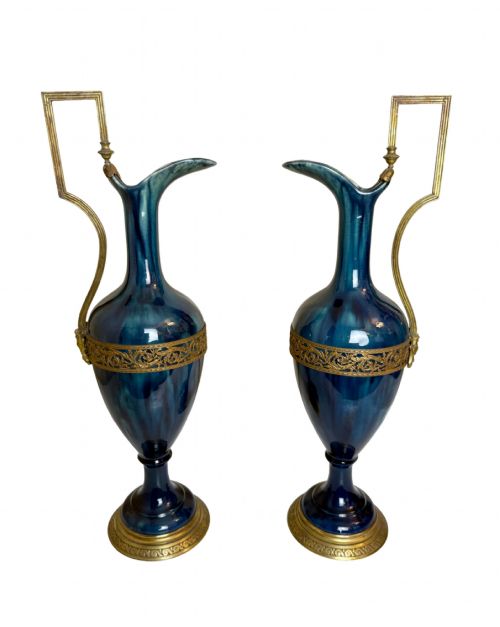
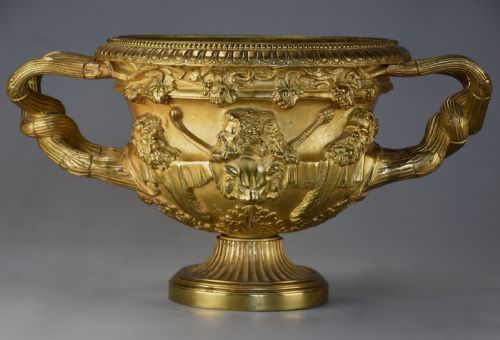
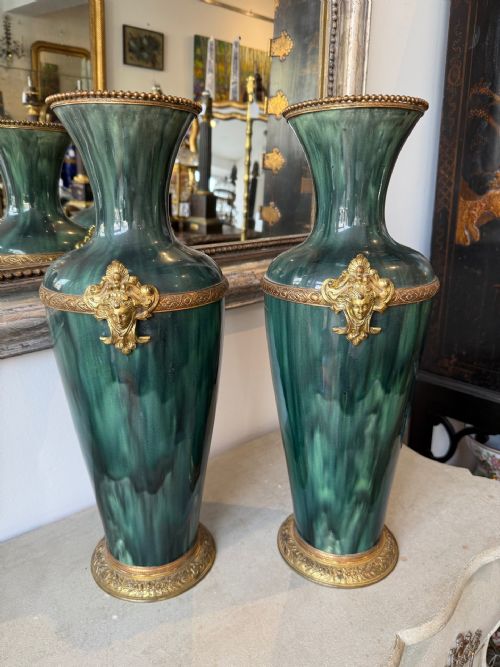
When searching for ormolu decorative vases, buyers encounter nineteenth-century pieces drawing heavily on French Empire, Rococo Revival, and Renaissance Revival styles. The selection commonly includes pairs of handled urns, lidded vessels, and cassolettes designed for prominent display on mantelpieces and tables.
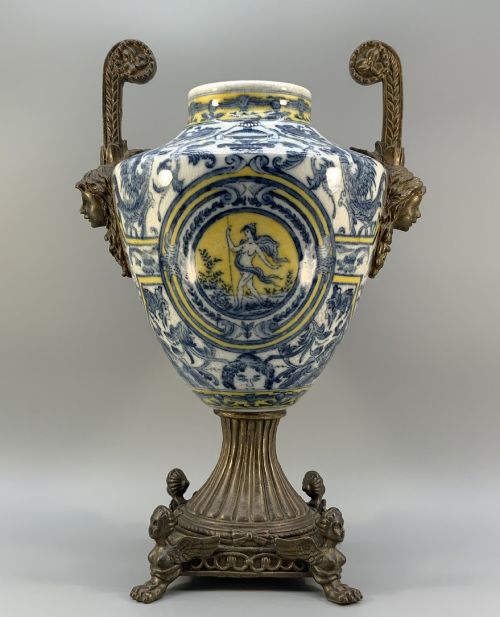
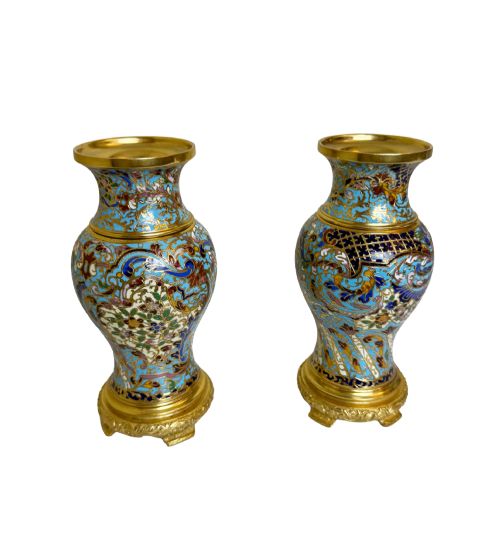
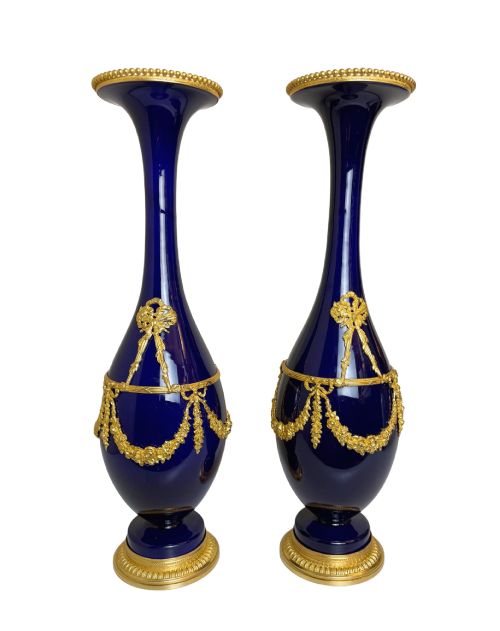
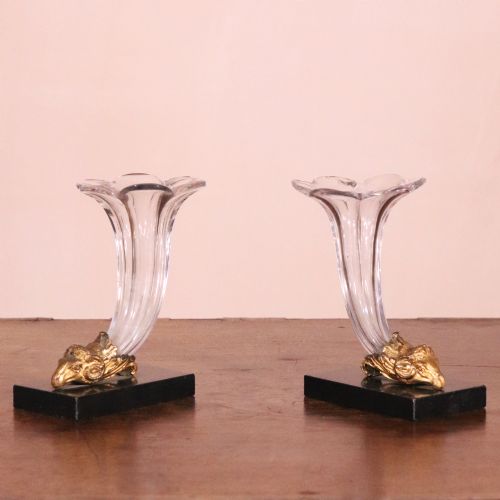
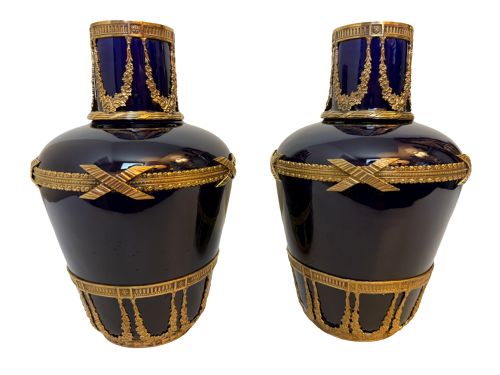
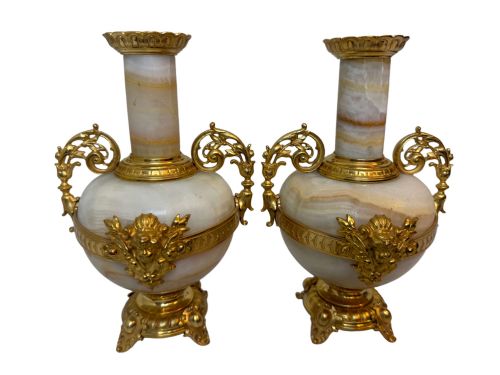
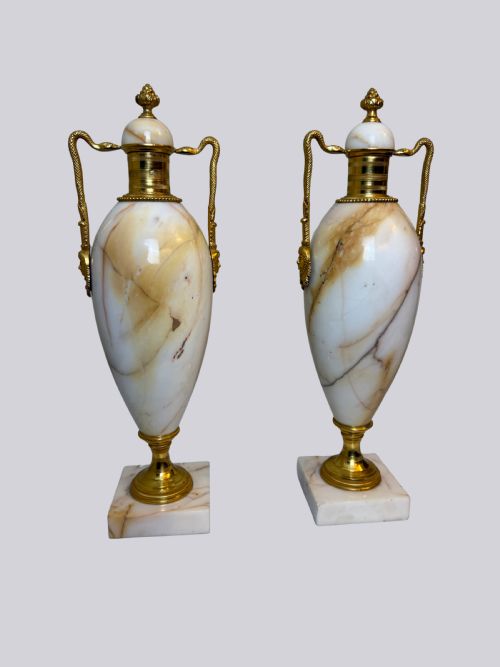
Many examples combine gilt bronze or ormolu mounts with bodies formed from Sevres-style porcelain, white onyx, green marble, or coloured glass. These works frequently incorporate classical motifs, grand tour themes, and champleve or cloisonne enamel details typical of the Victorian era.
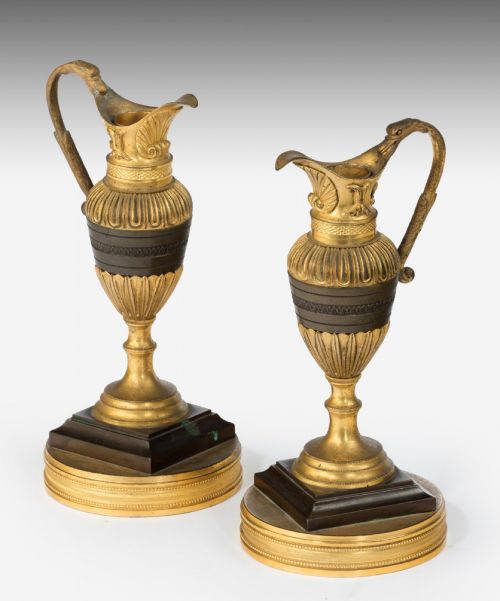
The objects span decorative vases, ewers, and amphora forms originating from workshops influenced by continental design. These items bridge decorative utility and sculptural presence, often appearing as matched pairs or garnitures.
How they were made
The manufacture relies on the union of cast bronze metalwork with bodies shaped from porcelain, glass, or natural stone such as marble and white onyx. Artisans cast the bronze components before applying mercury gilding or modern electroplating to achieve the distinctive ormolu surface.
Mounts, handles, and trim are meticulously chased and fitted to ceramic or stone vessels, securing decorative elements like classical figures, acanthus leaves, and beaded bezels. Enamelling techniques such as champleve and cloisonne introduce coloured vitreous pastes into recessed metal channels.
Listings feature nineteenth-century materials including gilt bronze, Sevres-style porcelain, white onyx, green marble, and coloured glass.
What varies in quality
Quality rests upon the crispness of the bronze chasing and the depth of the gilding on the ormolu mounts. Finer pieces display sharply defined botanical and figurative details rather than softened, generalised casting marks.
The selection of body materials also dictates distinction, separating standard ceramic vessels from hand-painted Sevres-style porcelain or figural marble and onyx bodies. Superior mounts fit snugly against the contours of the stone or glass without gaps.
Sevres·Meissen·Clodion
The Ormolu Decorative Vases Glossary
- Ormolu
- Gilt bronze produced by applying finely ground gold mercury amalgam to cast bronze. This technique creates a rich golden finish characteristic of nineteenth-century decorative hardware.
- Cassolette
- A dual-purpose vessel functioning as a vase or a perfume burner featuring a reversible lid. These items often incorporate marble or porcelain bodies with ornate ormolu mounts.
- Ewer
- A large jug with a wide spout and scrolled handle designed for pouring. In nineteenth-century decorative metalwork, these forms serve purely ornamental purposes.
- Garniture
- A set of matched ornamental vessels, typically comprising three or more pieces for a mantelpiece. These arrangements usually feature a central vase flanked by smaller matching urns or candelabra.
- Champleve
- An enamelling technique where troughs or cells are carved into the surface of the bronze and filled with enamel colours. The piece is then fired and polished flat.
Ormolu Decorative Vases: Frequently Asked Questions
What are ormolu decorative vases made of?
These pieces combine cast gilt bronze or ormolu mounts with bodies formed from porcelain, marble, onyx, glass, and enamel. Natural stones like green marble and white onyx provide heavy, contrasting plinths for the metallic trim.
Craftsmen joined these divergent materials using bespoke metal fittings, cast bezels, and threaded pins to secure handles, rims, and bases into cohesive decorative objects.
How were cassolettes used?
Cassolettes functioned as ornamental vessels with reversible lids designed to alternate between a standard vase appearance and a perfume burner. Pierced sections in the lid allowed scented smoke to escape when aromatics were warmed inside.
In nineteenth-century drawing rooms, these pieces stood on mantelpieces as decorative focal points rather than working fragrance dispensers.
How do I identify French Empire style?
French Empire style draws heavily on classical antiquity, featuring rigorous symmetry, military motifs, laurel wreaths, and mythological figures. The bronze mounts on these vases display disciplined geometric patterns and austere classical proportions.
This aesthetic contrasts with the later asymmetric curves and naturalistic flourishes seen in Rococo Revival interpretations from the same century.
Are these vases supplied as pairs?
Many examples on this page survive and are offered as matching pairs intended for symmetrical placement on furniture surfaces. Garnitures consisting of three or more coordinated pieces also appear frequently in nineteenth-century production.
Single vessels occur occasionally, particularly when derived from larger dispersed sets or grand tour souvenirs.