


French Bronze Garniture Set
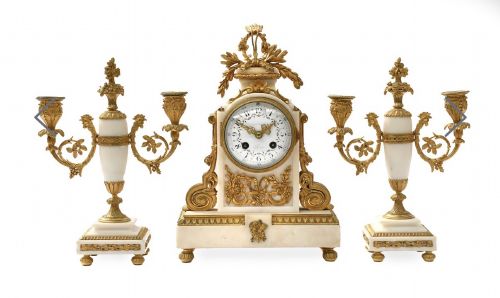
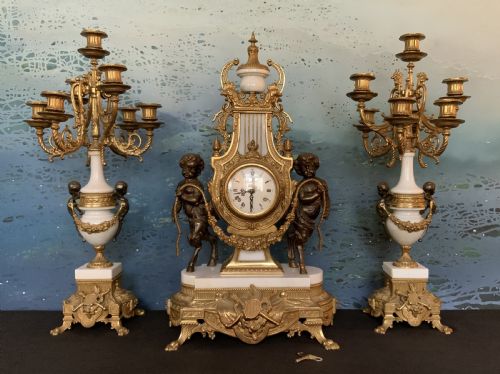
A french bronze garniture set anchors a grand chimneypiece with matching side pieces, bringing symmetrical presence to a room.
French Bronze Garniture Set
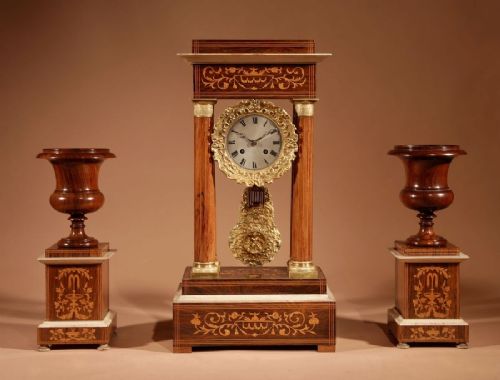
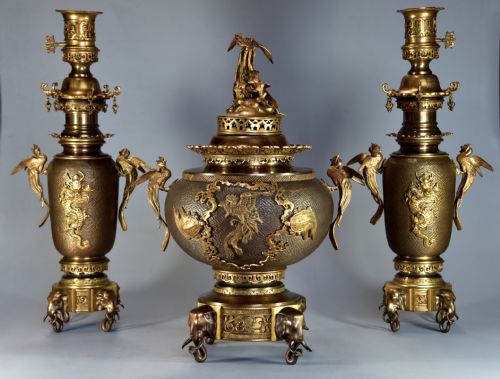
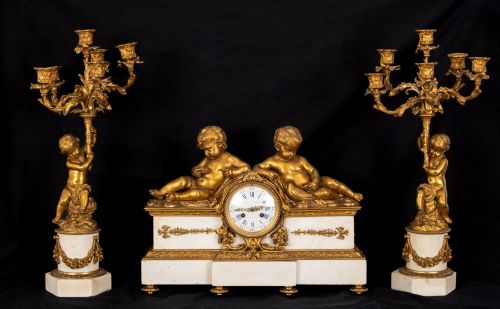
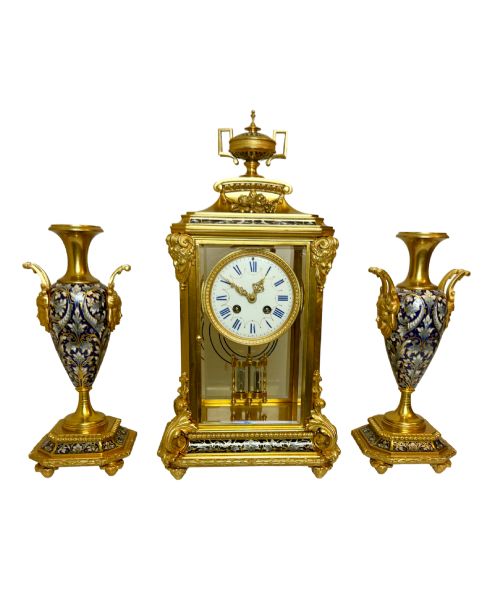
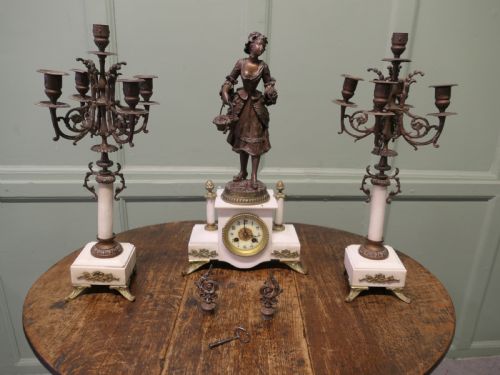
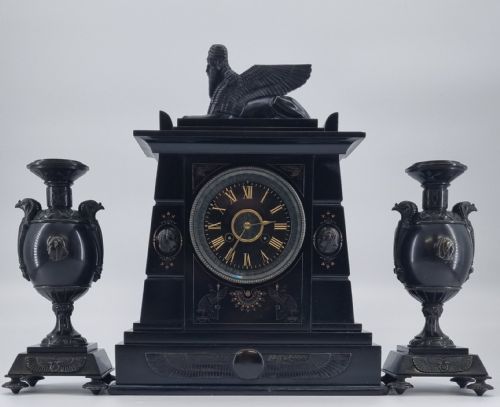
A french bronze garniture set comprises a central mantel clock accompanied by matching side ornaments such as candelabra, urns, or ewers. These three-piece arrangements emerged primarily in the nineteenth century, reflecting periods from Louis XVI Revival and French Empire to Art Deco.
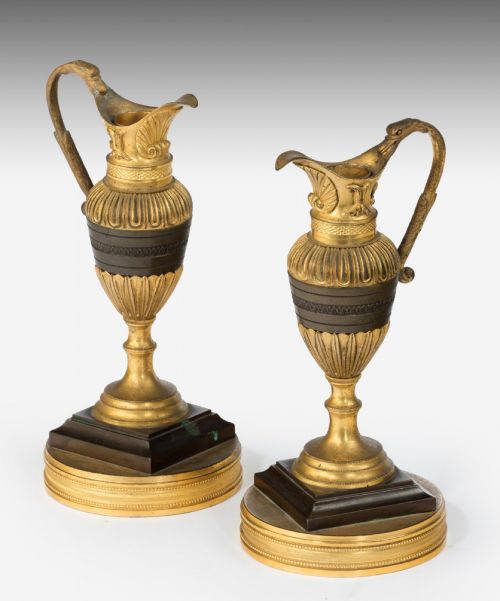
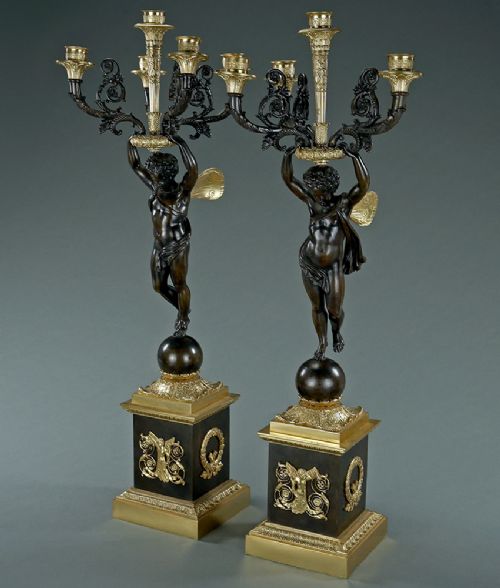
The central clock anchors the arrangement, flanked by symmetrical side pieces designed to balance a mantelpiece or console. Examples span portico designs, architectural marble cases, and sculptural themes featuring cherubs or greyhounds.
Materials and Construction
Foundries combined cast bronze and gilt ormolu with natural supports of white marble, onyx, and occasionally porcelain. Champleve enamel and patinated bronze added colour and textural contrast to the metalwork.
Movements were housed within heavy metal and stone cases, often protected beneath glass domes. Metal components utilised fire-gilding or applied patination, while stone elements were turned and polished to support the heavy bronze mounts.
Evaluating Craftsmanship
The crispness of the bronze casting and the depth of the chasing separate standard production from superior work. Finer sets exhibit carefully detailed relief work on foliage, figures, and mounts rather than soft, generalized contours.
The integration of materials dictates overall harmony, where the joinery between marble bases and bronze mounts fits flush. High-tier pieces maintain original mercury gilding or deep patination alongside intact enamel dials and well-finished movements.
Henry Dasson
The French Bronze Garniture Set Glossary
- Garniture
- A matching set of ornamental objects designed to be displayed together on a mantelpiece or sideboard.
- Ormolu
- Gilt bronze, created by applying a finely ground gold-mercury amalgam to a bronze base and heating it.
- Portico clock
- A mantel clock featuring a temple-like architectural case supported by four or more columns.
- Champleve
- An enamelling technique where troughs are dug into the metal surface and filled with vitreous paste before firing.
- Ewer
- A large jug with a wide spout, frequently produced in matched pairs as decorative vessels.
French Bronze Garniture Set: Frequently Asked Questions
What pieces make up a garniture set?
A standard set consists of a central mantel clock paired with two matching side pieces. These accompanying ornaments take the form of candelabra, urns, ewers, or vases.
Designed for symmetry, they stand on either side of the clock to create a unified display on a fireplace mantel or console table.
How do I date a French bronze clock set?
Dating relies on stylistic revival periods, structural materials, and manufacturing techniques recorded across the nineteenth and early twentieth centuries. Pieces incorporating white marble, ormolu, and neoclassical motifs typically point to the mid-to-late nineteenth century.
Later examples transition into Art Deco geometries and materials like onyx, while specific revival styles reference earlier French reigns such as Louis XVI.
How were these sets displayed originally?
They were placed centrally on marble or wooden mantelpieces in formal reception rooms, often positioned beneath glass domes to protect the delicate gilding and enamel dials.
The central clock provided the time while the flanking ornaments completed the decorative balance of the interior wall.
What is the difference between bronze and ormolu?
Bronze is an alloy of copper and tin used as the primary structural and sculptural metal for the clock cases and ornaments. Ormolu refers specifically to applied gold gilding on bronze surfaces.
Many sets combine patinated dark bronze with bright ormolu mounts to create visual contrast.