

French Bronze Candle Stand
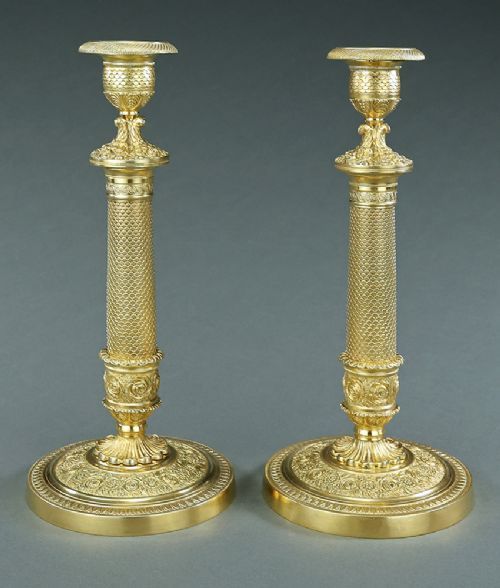
A french bronze candle stand brings heavy classical weight and polished gilding into a room.

French Bronze Candle Stand
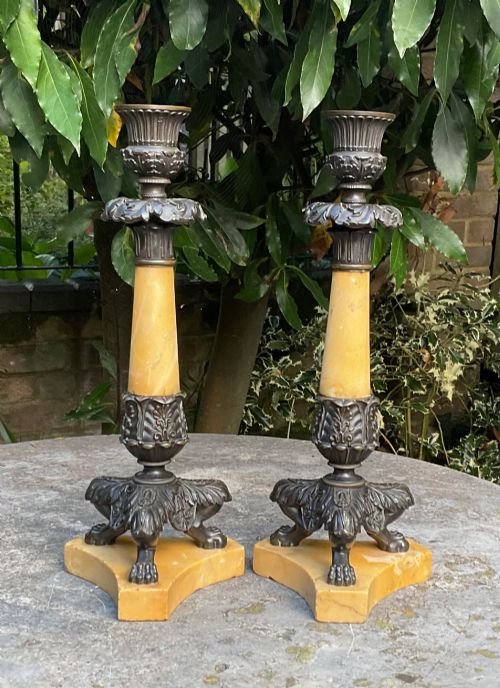
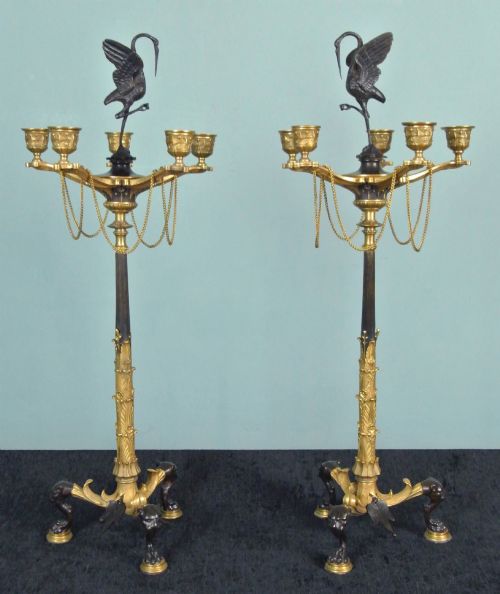
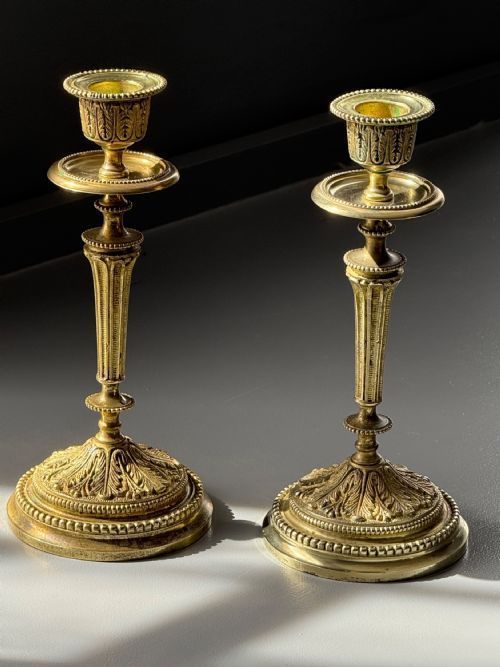
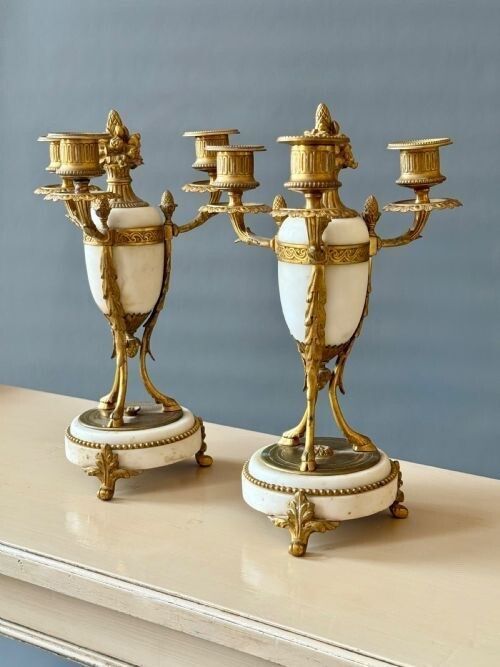
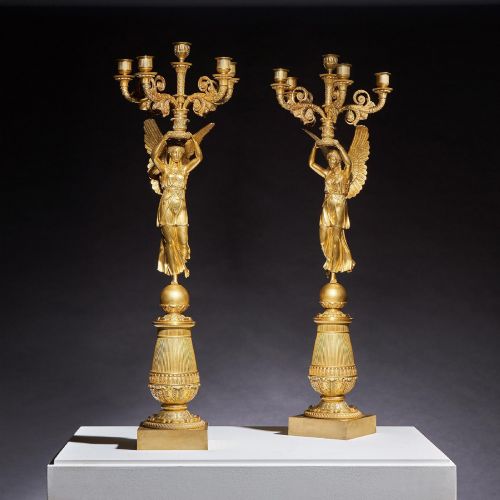
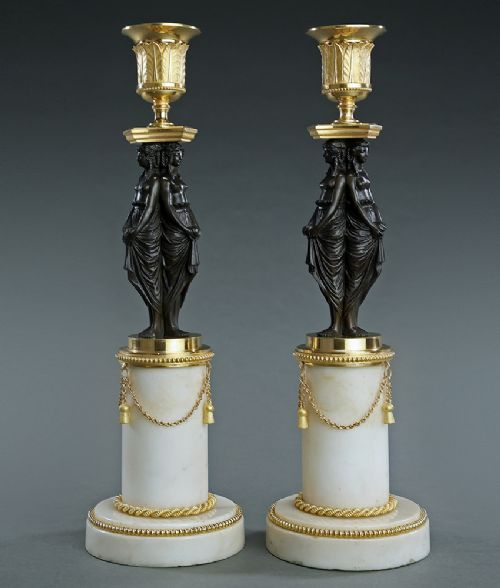
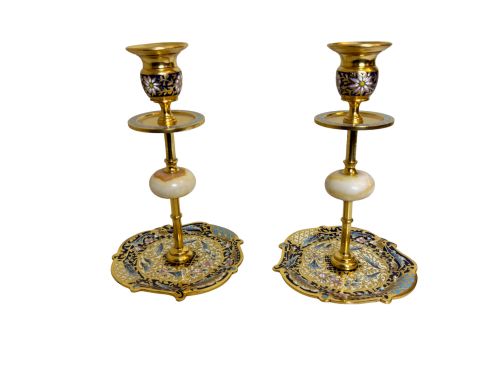
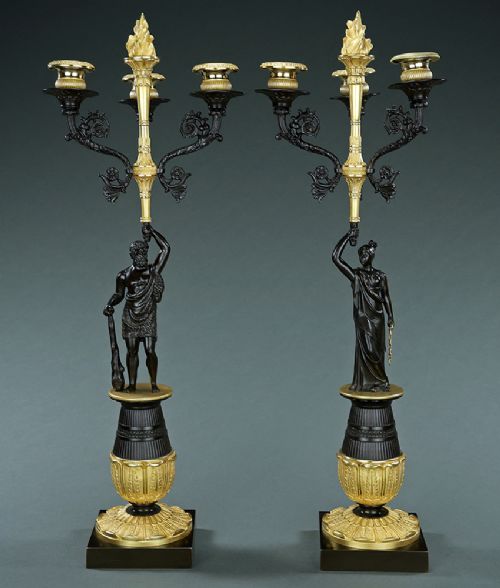
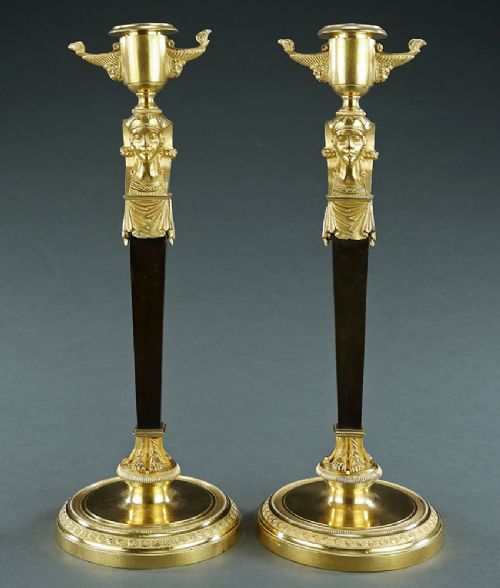
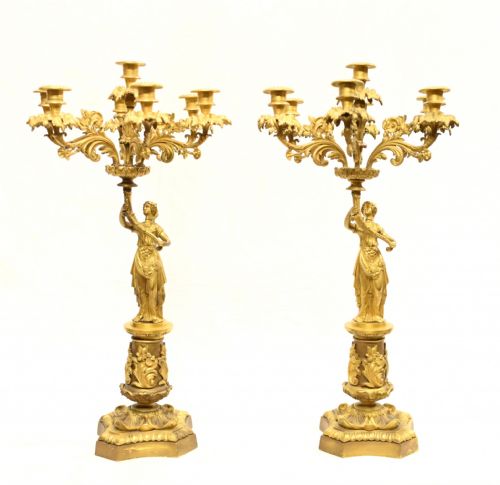
A french bronze candle stand covers pairs of candlesticks, multi-arm candelabra, and figural desk pieces originating from the eighteenth and nineteenth centuries. The pieces on this page lean heavily toward nineteenth-century French Empire, Louis XVI, and Regency styles, alongside Napoleon III and Rococo revivals.
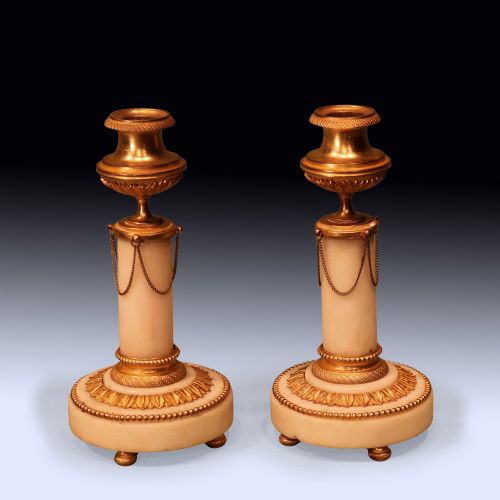
Buyers encounter patinated bronze, ormolu, and cast metal combined with white marble bases, onyx, or porcelain inserts. They serve both functional lighting and sculptural display upon mantelpieces, side tables, and desks.
Materials and Techniques
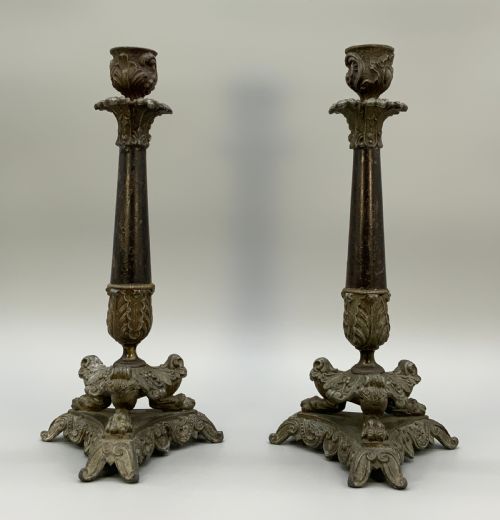
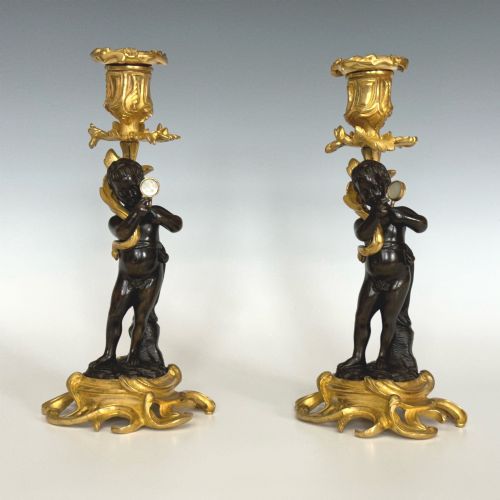
Foundry workers cast bronze and brass components, combining dark patinated surfaces with fire-gilded ormolu highlights to create sharp tonal contrast. Many models integrate white marble or onyx plinths, anchoring the heavy metal structures.
Chasing tools refined the raw castings by hand, adding crisp detail to acanthus leaves, figures, and fluted columns before assembly.
Listings feature eighteenth-century pieces alongside nineteenth-century Regency, Napoleon III, and Louis XVI revival models in bronze, ormolu, and marble.
Craftsmanship and Weight
The distinction between ordinary production and superior work lies in the crispness of the hand-chased surface details and the density of the cast metal. Stronger examples display deep, deliberate chiselling on foliate mounts and heavier bronze bodies that remain rigidly balanced.
Attribution to documented makers or specific periods through signatures, distinct patination, and high-grade fire gilding elevates a piece above standard nineteenth-century foundry output.
Pierre Philippe Thomire·Barbedienne·Abel Landry·Auguste Cain·Rabiat
The French Bronze Candle Stand Glossary
- Ormolu
- Finely ground high-carat gold applied to a bronze base using a mercury amalgam technique. This historic process creates a durable, warm metallic lustre.
- Patinated Bronze
- Bronze treated with chemical solutions to produce a dark brown, black, or greenish surface finish. It provides a quiet contrast to bright gilt metal.
- Candelabra
- A branched candlestick holding multiple candles on a single base. These often feature removable arms to convert into single sticks.
- Caryatid
- A sculpted female figure serving as an architectural support or column. They frequently appear on Empire period candle stands.
- Champleve
- Enamelwork where recessed cells are dug into a metal plate and filled with vitreous paste before firing. The technique adds colourful patterns to the bronze framework.
French Bronze Candle Stand: Frequently Asked Questions
How do I clean bronze and ormolu?
Dust gently with a soft dry brush to remove particles without disturbing the surface. Avoid chemical polishes or water, which strip historic gilding and damage patination.
Professional care is recommended if deeper cleaning becomes necessary to preserve the underlying metal.
Were these originally for candles or electricity?
Every piece on this page was manufactured for wax candles before the widespread adoption of domestic electricity. Many survive in their original structural state without drilled wiring channels.
Careful conversion by a specialist can adapt them for modern illumination while retaining the original components.
How do I tell Empire from Louis XVI style?
Empire style draws heavily on military triumphs, ancient Roman motifs, and heavy patinated bronze paired with bright ormolu. It feels heavier and more austere than earlier periods.
Louis XVI design leans toward neoclassical symmetry, slender fluted columns, ribbon twists, and lighter proportions.
Why do some stands feature marble bases?
Marble plinths provided structural stability and added visual weight to heavy bronze castings during the Regency and nineteenth-century periods. White marble also introduced a bright contrasting tone beneath dark patinated figures.
Carved stone bases helped elevate the candle cups to better illuminate dark interior spaces.