

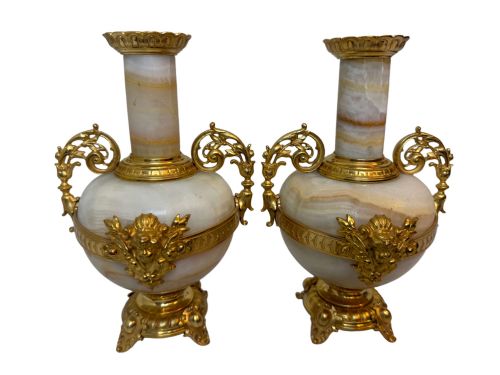


Classical Bronze Garniture
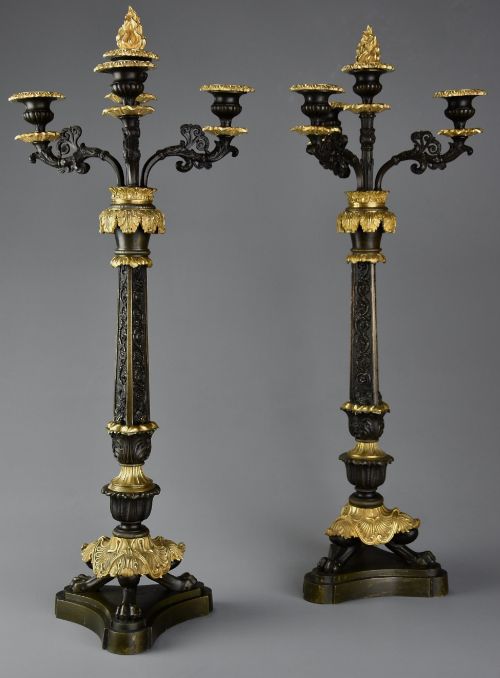
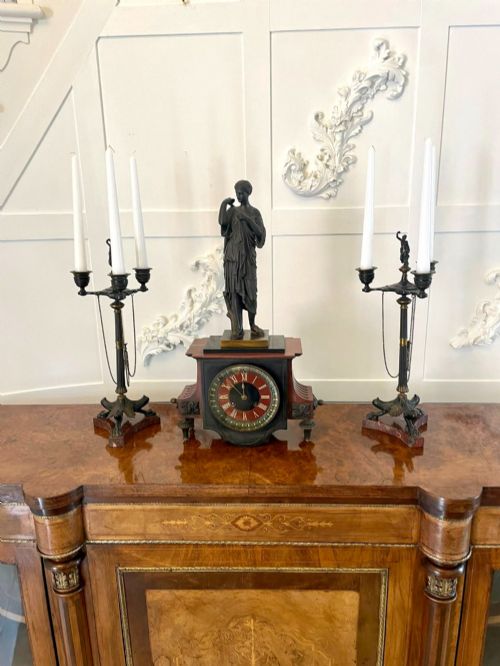
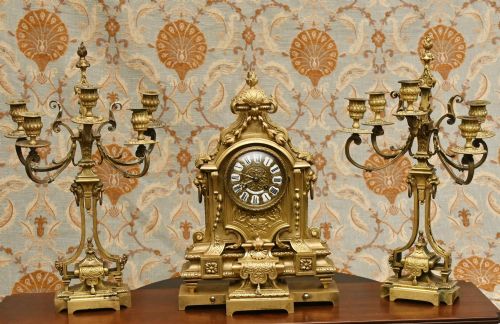
A classical bronze garniture brings architectural symmetry and cast metal weight to a mantelpiece, usually comprising a central clock flanked by matching urns or candelabra.

Classical Bronze Garniture
A classical bronze garniture groups matching decorative objects around a central timepiece, creating a balanced display for a drawing room mantel. Buyers searching for a classical bronze garniture seek matching sets designed to anchor a formal interior scheme.
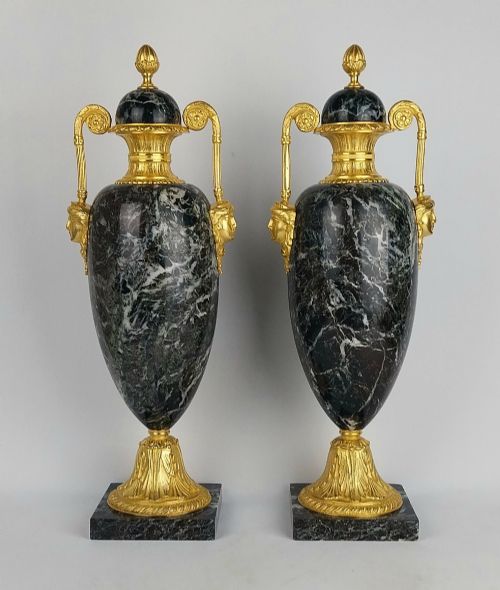
The pieces typically combine a striking mantel clock with paired side ornaments such as urns, candelabra or cassolettes. Most examples found here originate from nineteenth-century French workshops working in Louis XVI and Empire styles.
Sets often integrate contrasting materials alongside the cast metal, uniting stone bases and porcelain bodies into a single decorative programme. This tripartite arrangement creates a disciplined rhythm across a chimney piece or console.
How they were made
Foundry workers cast components in bronze or brass using traditional methods before applying mercury gilding or ormolu finishes to highlight relief details. These metal elements combine with turned marble, onyx or slate plinths that provide substantial weight and stable footings.
Casting allowed for crisp classical motifs like acanthus leaves, urns and human figures to be rendered in high relief. Stonework was laboriously shaped and polished to contrast with the warm, lustrous tones of the gilded metal mounts.
Classical Bronze Garniture Retail Price Guide 2026
Typical asking prices for classical bronze garniture among the pieces listed under this phrase on Sellingantiques today, from the lower quarter to the upper quarter. They describe what is for sale here now, not the wider market.
Listings feature nineteenth-century items incorporating white marble, siena marble, onyx, gilt bronze, ormolu and porcelain across classical revival styles.
What varies in quality
Quality rests in the crispness of the bronze churring and the depth of the gilding applied to the surface. Sharp, undercut casting distinguishes superior sets from softer, more generalized production pieces.
The selection of stone also dictates the grade of the piece, with dense white marble, siena marble or onyx bases showing superior mineral selection. Clock movements signed by known makers add further distinction to the set's overall pedigree.
A.D Mougin·H Luppens Paris·Deniere, Paris·Ferdinand Barbedienne
The Classical Bronze Garniture Glossary
- Garniture
- A set of matching ornamental objects designed to be displayed together on a mantelpiece or sideboard, typically comprising a clock flanked by two vases, urns or candelabra.
- Ormolu
- Finely ground high-carat gold mercury-gilded to a bronze object, producing a durable, warm metallic sheen characteristic of high-status French decorative arts.
- Cassolette
- A decorative vase or urn with a reversible lid that functions either as a closed vessel or as a candlestick holder.
- Empire Style
- A nineteenth-century neoclassical design movement drawing on ancient Roman, Greek and Egyptian motifs, characterised by formal symmetry and militaristic or imperial symbols.
- Bleu de Roi
- A deep, rich cobalt blue ceramic glaze developed at the Sèvres porcelain manufactory and frequently mounted with gilded bronze fittings.
Classical Bronze Garniture: Frequently Asked Questions
How do I care for marble and ormolu?
Dust surfaces regularly with a soft, dry cloth to prevent grime accumulation on the gilded bronze mounts. Avoid all liquid cleaners and commercial polishes, which can strip historic surface patinas.
Keep pieces away from direct heat sources and strong sunlight to protect delicate clock movements and stone stability. Gentle handling prevents damage to projecting cast elements like handles and floral swags.
Where should I place a garniture set?
These sets are traditionally proportioned for mantelpieces, large sideboards or deep console tables where the full composition can be viewed at eye level. The central clock anchors the arrangement, while the flanking urns or candelabra create outward visual balance.
Ensure the supporting furniture is sturdy enough to bear the combined weight of stone bases and heavy cast metal. Positioning them away from busy household traffic protects delicate protruding components from accidental knocks.
What is a garniture set used for?
A garniture provides a cohesive decorative scheme that unifies the mantelpiece with the broader neoclassical interior design of a room. The central clock serves a practical timekeeping function while the side pieces complete the balanced aesthetic.
Historically, these ensembles demonstrated the owner's taste and refinement to visitors in formal drawing rooms. Today, they function as focal points that introduce period character and architectural structure to a space.