

French Bedroom Accent Chairs
French bedroom accent chairs bring continental elegance to a sleeping space, offering both decorative presence and comfortable seating through carved frames and upholstered finishes.

French Bedroom Accent Chairs
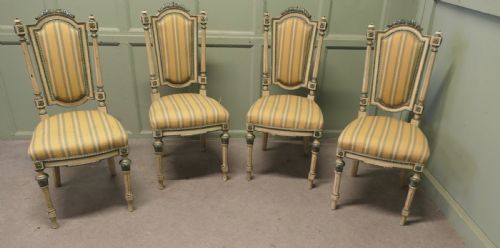
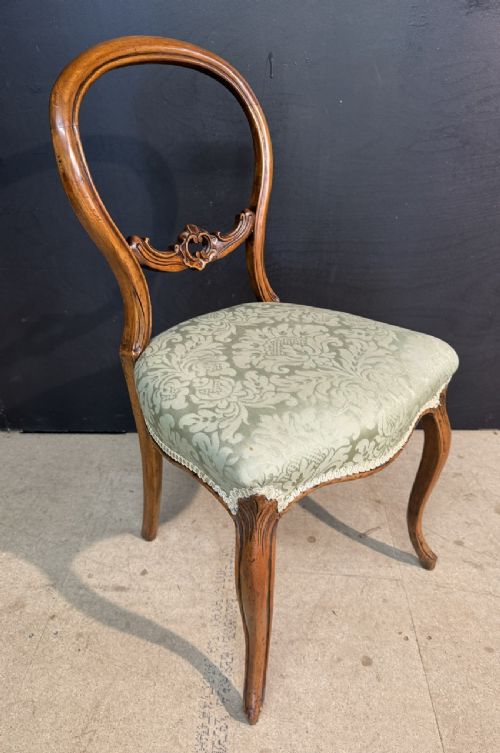
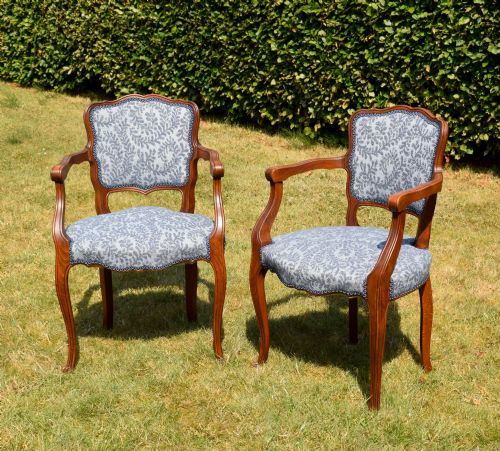
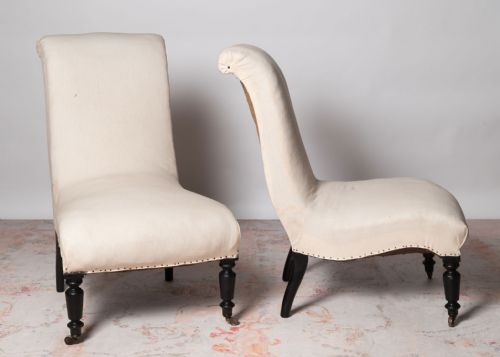
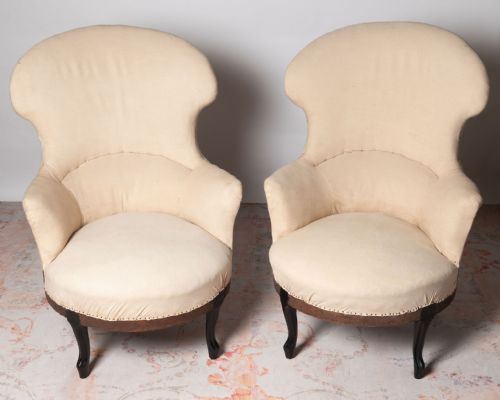
French bedroom accent chairs comprise a diverse selection of seating forms designed for private chambers and dressing rooms. Buyers searching this phrase encounter nineteenth-century pieces ranging from small slipper chairs and vanity seats to open armchairs and gilded salon chairs.
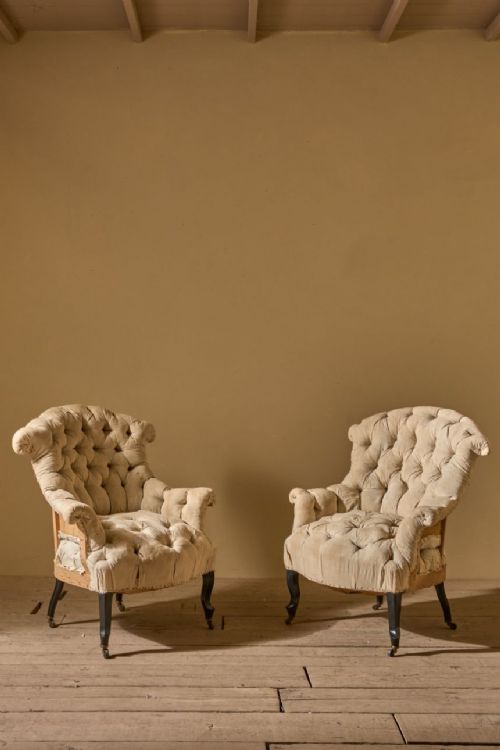
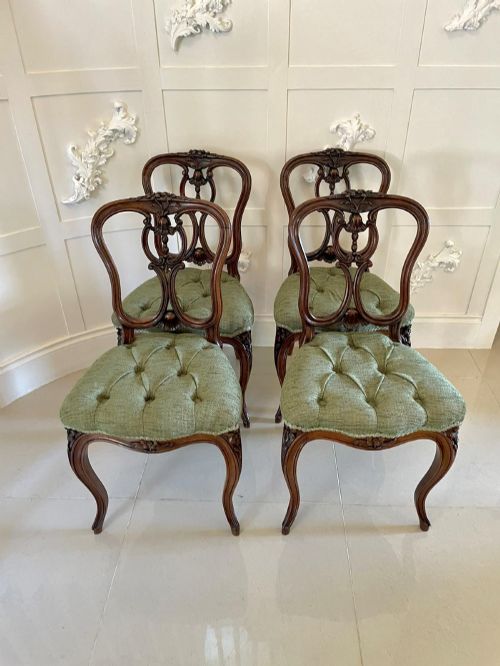
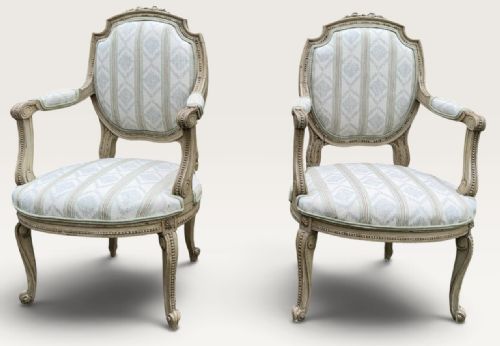
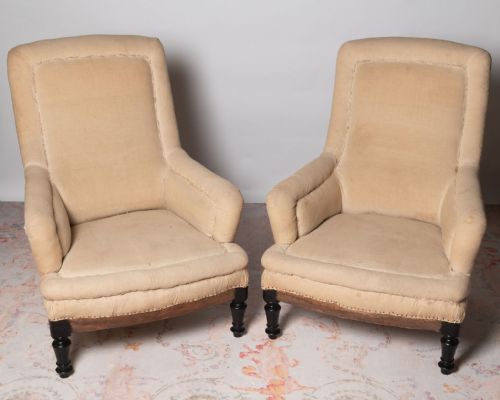
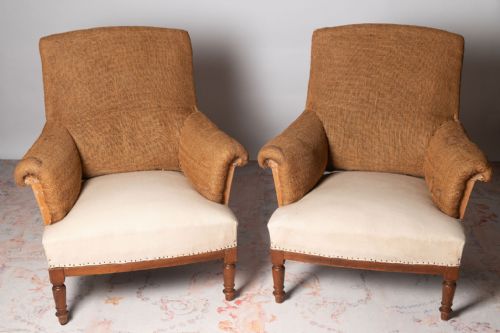
The selection on this page leans heavily toward nineteenth-century origins, incorporating revival designs influenced by the reigns of Louis the Fifteenth and Louis the Sixteenth alongside Napoleon the Third pieces. These items appear in various configurations, including pairs, sets of four, and individual chairs suited to dressing tables or bedroom corners.
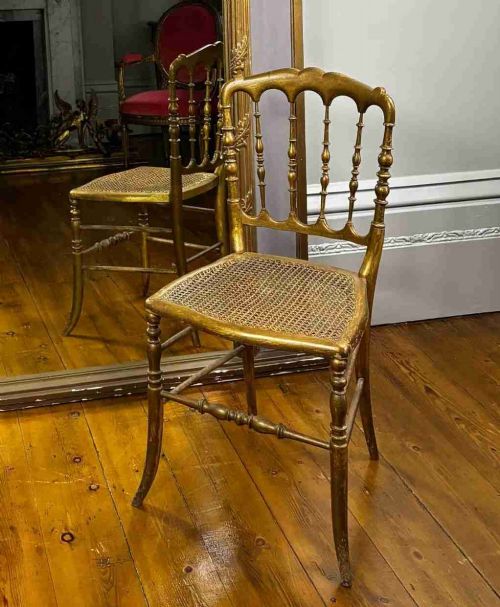
Forms span from low nursing chairs and slipper chairs designed for nineteenth-century domestic habits to grand giltwood fauteuils and walnut side chairs. Originators utilised regional French styles alongside Victorian interpretations to create seating with distinct cabriole legs and scroll backs.
How they were made
Construction relies upon traditional timber framing utilising walnut, beech, mahogany, and rosewood, shaped into curved rails and cabriole legs. Joinery methods of the period prioritised stability, often enhanced by hand-carved detailing directly into the wooden framework.
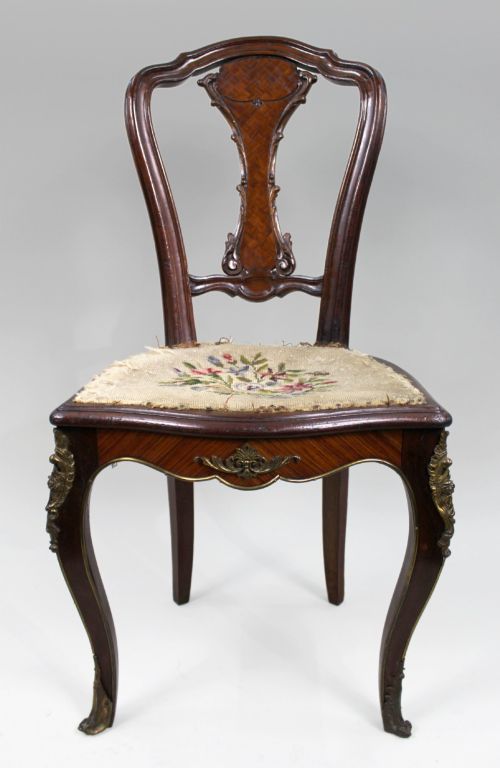
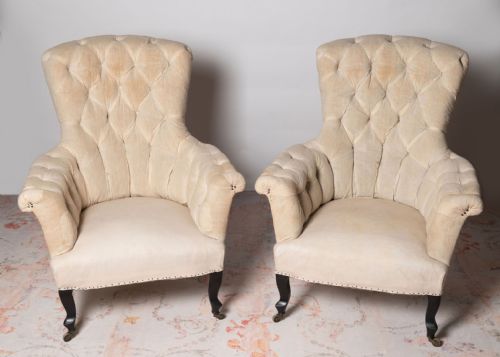
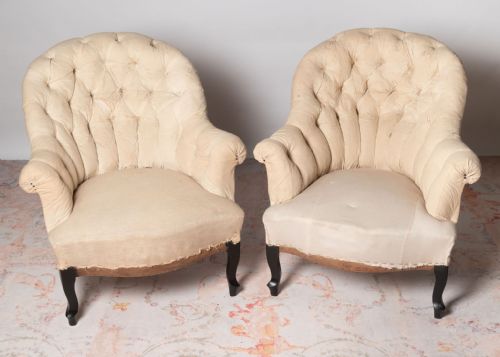
Surface treatments vary from original paint and polished brass to heavy gilding on giltwood frames and bronze or ormolu mounts. Upholstery techniques employ buttoned padding, needlepoint panels, and fabric coverings secured with traditional webbing and tacks.
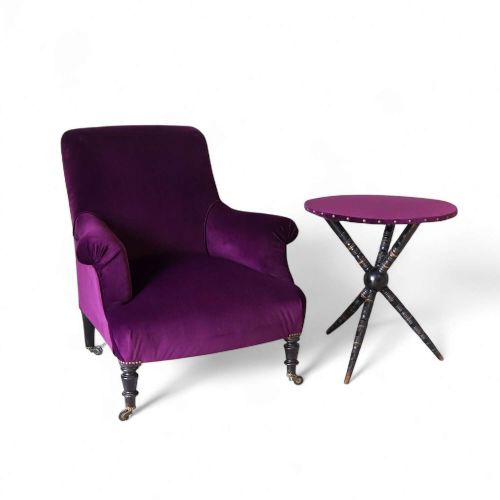
One chair even brings its own companion, listed alongside an Aesthetic Movement gypsy table in purple velvet.
What varies in quality
Quality rests upon the crispness of the hand-carved timber ornamentation and the integrity of the underlying frame construction. Pieces boasting detailed ormolu mounts, finely cast brass elements, or intact original paint finishes occupy the upper tier of the range.
Upholstery choices and the survival of period fabrics such as silk velvet or needlepoint panels influence the overall character of each piece. Frames retaining their original gilding or authentic walnut patination demonstrate superior craftsmanship compared to later alterations.
The French Bedroom Accent Chairs Glossary
- Fauteuil
- An open-framed armchair with upholstered back and seat, typically featuring exposed wooden arms. This form originated in seventeenth-century France and remained popular through subsequent revival periods.
- Giltwood
- Timber treated with gold leaf or gilt preparation to create a lustrous golden surface. This finish appears frequently on formal nineteenth-century salon and bedroom seating.
- Cabriole leg
- A furniture leg that curves outward at the knee and tapers inward toward the foot, often ending in a scroll or pad. The design mimics animal limbs and defines many eighteenth- and nineteenth-century seating styles.
- Ormolu
- Gilded bronze applied as decorative mounts to furniture frames. This technique adds metallic detail to mahogany and kingwood pieces from revival periods.
- Slipper chair
- A low-seated upholstered chair originally designed for bedrooms to assist with putting on shoes or garments. These pieces often feature fringe trim or shortened legs.
French Bedroom Accent Chairs: Frequently Asked Questions
What is a French bedroom accent chair?
A French bedroom accent chair is a decorative and functional seat originating from or styled after French furniture traditions, designed specifically for domestic sleeping quarters.
These pieces include low slipper chairs, vanity chairs, and open armchairs that add character and practical seating to a room.
How do I identify a Napoleon III chair?
Napoleon III chairs date from the mid to late nineteenth century during the Second French Empire and often feature exuberant upholstery and buttoned backs.
They frequently utilise giltwood, walnut, or exotic woods, sometimes incorporating decorative elements like ormolu mounts and plush velvet fabrics.
Where were these chairs used historically?
Historically, these seating forms inhabited private spaces such as bedrooms, dressing rooms, and intimate salons rather than formal public reception rooms.
Lower chairs accommodated dressing and grooming tasks, while salon chairs provided comfortable seating for conversation and leisure.