

French Gilt Seating
French gilt seating comprises gilded wooden chairs, armchairs, and settees designed to bring gilded warmth and classical proportion into a room.
French Gilt Seating
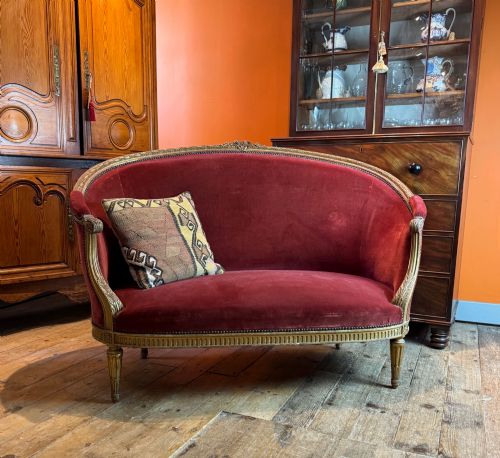
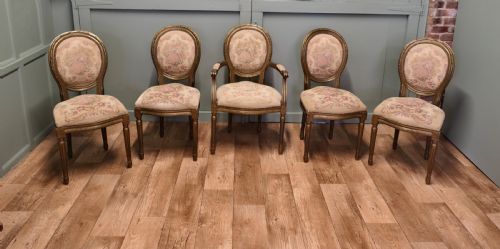
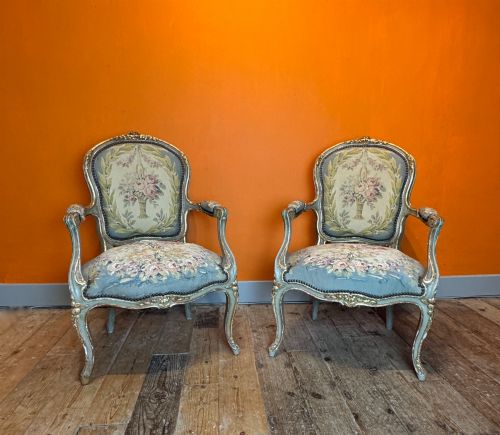
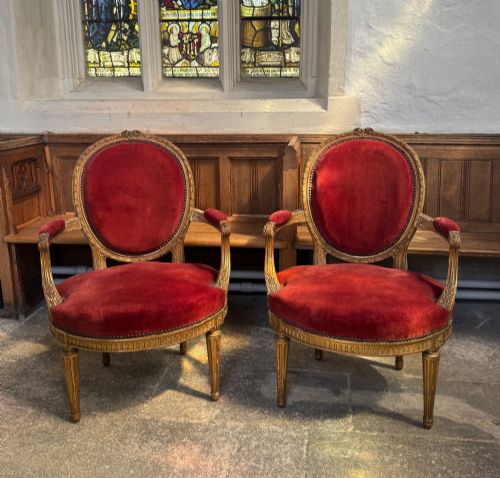
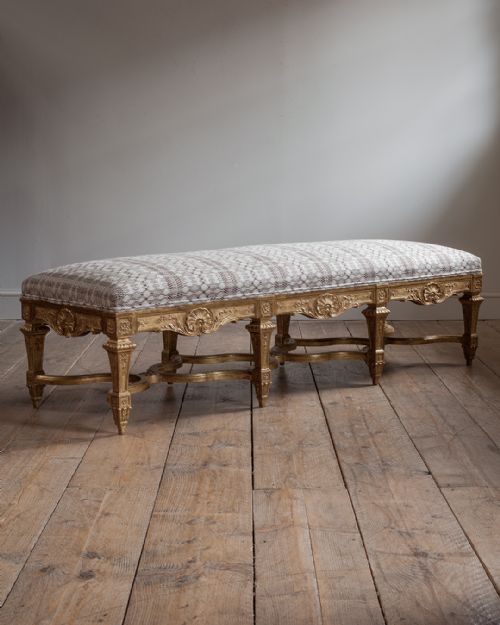
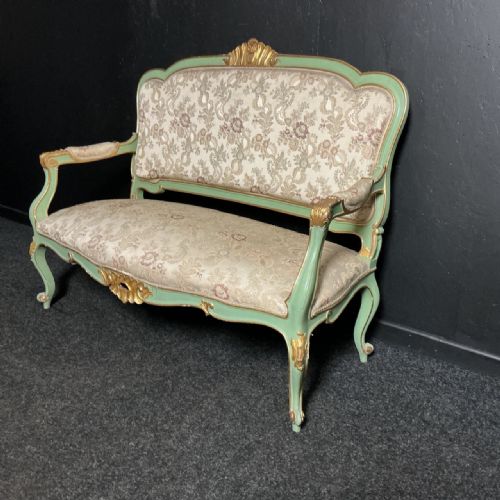
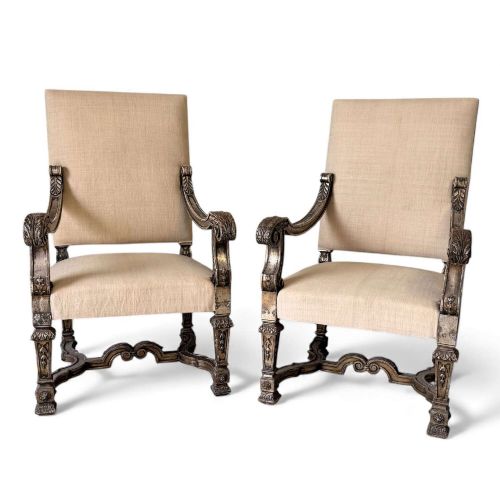
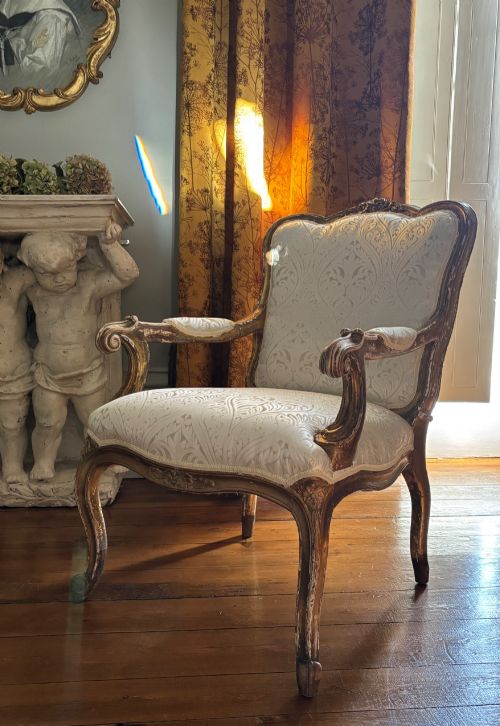
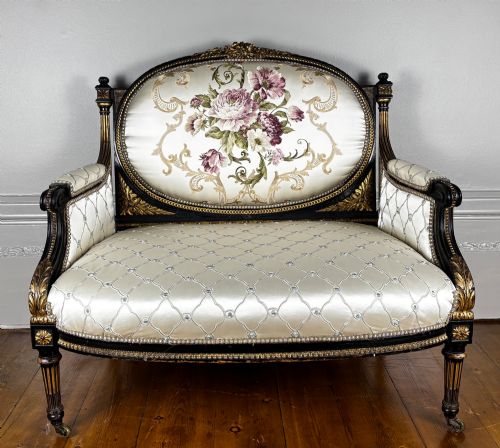
French gilt seating encompasses upholstered armchairs, settees, salon chairs, and stools predominantly emerging from the nineteenth century and drawing on earlier monarchical aesthetics. When searching for french gilt seating, buyers typically encounter open armchairs, framed in carved wood and finished with gold leaf or paint, alongside two-seat sofas and window benches.
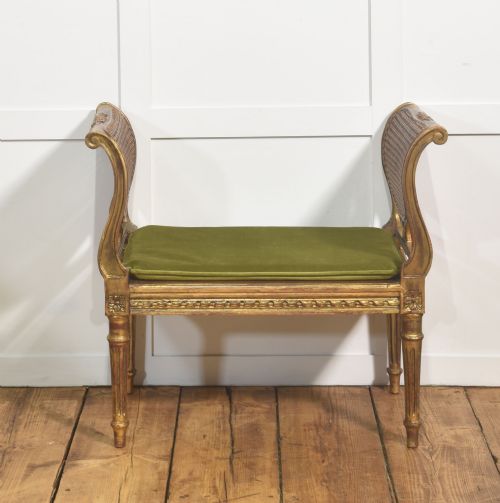
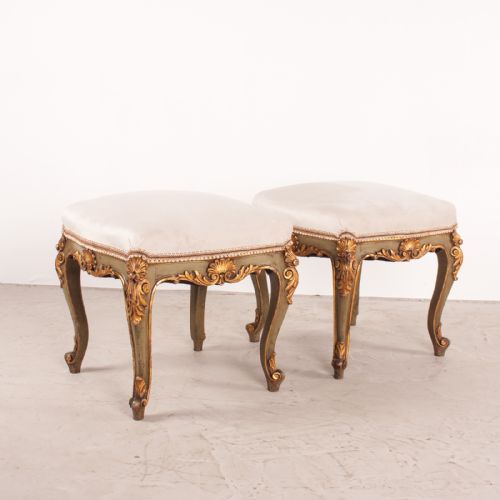
The aesthetic leans heavily into revival movements, notably Louis XVI style and Louis XV style, characterised by neoclassical symmetry, exposed giltwood frames, and decorative carved details. Alongside large armchairs, the selection includes smaller salon chairs, boudoir settees, and cane-backed window stools that suit intimate drawing rooms.
Originating largely from French workshops or continental makers working in the French taste, these pieces use traditional forms like the fauteuil and the canapé. The materials combine structural timbers with applied gold leaf, silk fabric, velvet, and tapestries to create seating intended for display as much as for comfort.
How they were made
Makers constructed the foundational frames from beech, mahogany, or general timber, shaping the wood with hand-carved motifs before applying surface finishes. Giltwood pieces received a delicate layer of gesso and bole, followed by gold leaf that was burnished to achieve a metallic sheen, while other items combined paint with parcel gilt highlights.
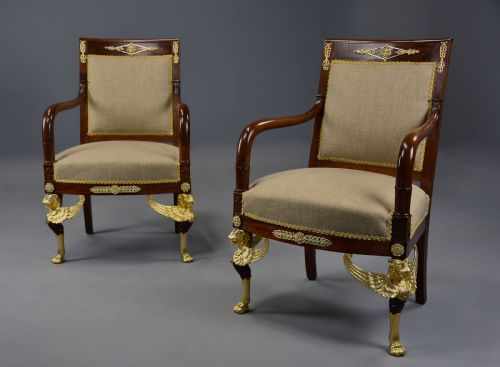
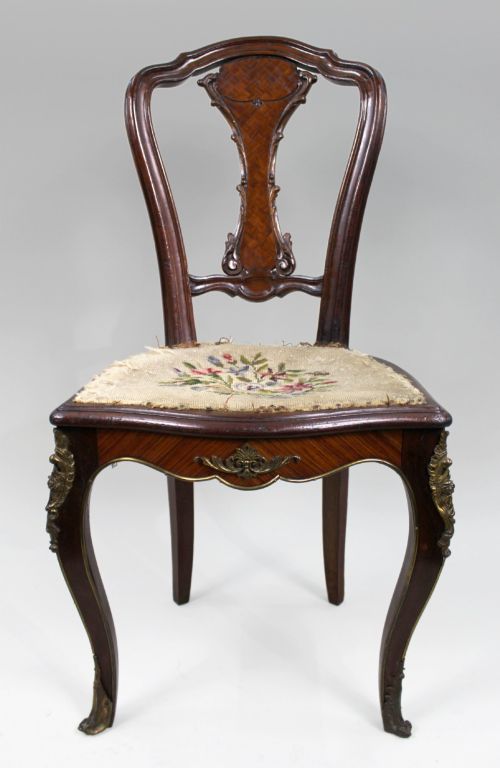
Upholstery techniques matched the formal requirements of the seating, employing traditional stuffing methods secured beneath fabrics such as silk, velvet, and tapestry. Structural enrichment often included ormolu mounts, brass details, and intricate parquetry or canework panels inserted into wooden frames.
Children join the salon elite through miniature gilt chairs designed specifically for pint-sized aristocracy.
What varies in quality
Quality rests principally in the depth and crispness of the wood carving upon the frame, where hand-tooled floral garlands and classical motifs outshine mechanical reproduction. The integrity of the original gilding, whether gold leaf or period paint, dictates the visual presence of the piece.
The choice and execution of upholstery materials, from heavy silk fabrics to hand-woven tapestry, indicate the original commission tier of the furniture. Structural harmony between the carved timber frame and the proportions of the seat separates standard commercial output from finer salon seating.
Etienne-Henri Dumaige·Blaise Maucuy
The French Gilt Seating Glossary
- Fauteuil
- An open-arm armchair with upholstered back and seat, typically featuring exposed carved wood framing. This form became a staple of French interior design throughout the eighteenth and nineteenth centuries.
- Giltwood
- Timber coated with gold leaf or powder over a prepared gesso ground. It provides the characteristic metallic brilliance seen on classical French furniture frames.
- Canape
- An ornamental sofa or settee featuring an upholstered back and seat supported by a carved wooden frame. Canapes match the stylistic vocabulary of concurrent armchair designs.
- Ormolu
- Cast bronze that has been mercury gilded, applied as decorative mounts to furniture. It adds contrasting metallic highlights to wood and parquetry surfaces.
- Parquetry
- Geometric patterns of inlaid wood veneers applied to furniture panels. This technique showcases timber grains on surfaces like side chairs and tables.
French Gilt Seating: Frequently Asked Questions
What is a fauteuil chair?
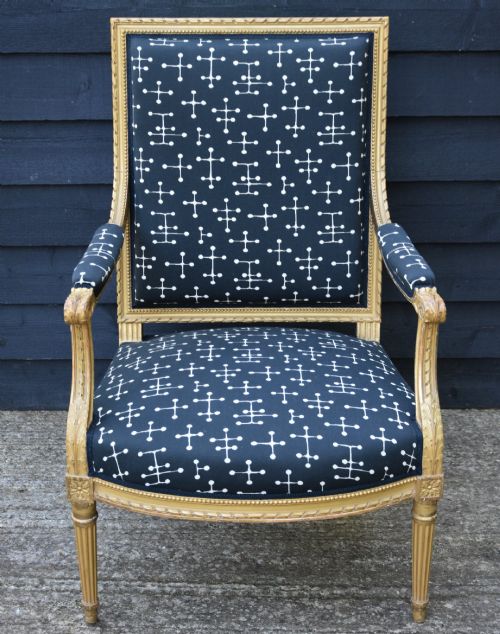
A fauteuil is an open-arm French armchair characterised by upholstered armrests and an exposed wooden frame. These chairs were designed for formal reception rooms.
They combine structural woodwork with decorative carving and soft upholstery, serving both practical seating and decorative display functions.
How do I identify Louis XVI style?
Louis XVI style pieces feature straight tapered legs, neoclassical symmetry, and geometric motifs such as fluting and ribbon twists. This contrasts with the curved lines of earlier rococo designs.
Look for architectural clarity and rectangular backrests framed in giltwood or painted finishes.
What distinguishes giltwood from painted gold?
Giltwood involves laying actual gold leaf over a prepared gesso and clay bole base, producing a warm, reflective metallic surface. Painted gold relies on metallic pigments mixed into a medium.
Gold leaf ages with a distinct soft patina, whereas painted surfaces tend to wear more uniformly over time.