




Gilt Armchair Set
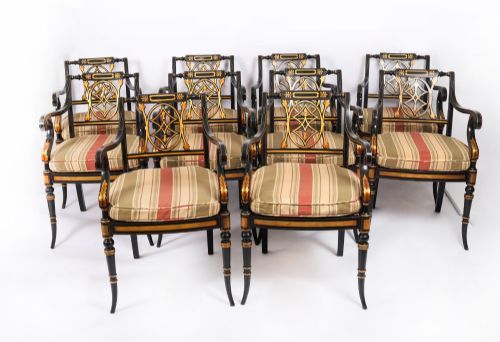
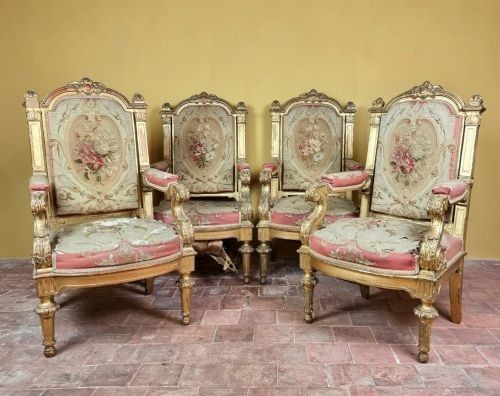
A gilt armchair set brings gilded timber and rich upholstery into a room, offering matching seats designed for formal reception spaces.
Gilt Armchair Set
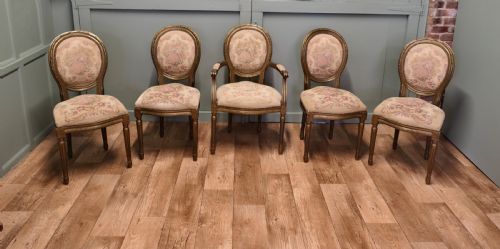
A gilt armchair set comprises matching seating units united by gilded finishes and upholstered frames, typically appearing as pairs, fours, or larger salon suites. When you search for a gilt armchair set, you encounter groupings created for grand interiors, ranging from pairs of bergères to five-piece suites.
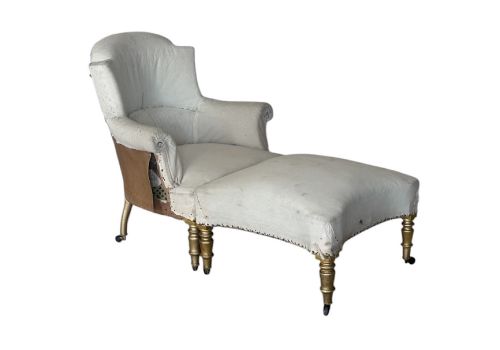
The pieces emerge predominantly from nineteenth-century workshops and subsequent revivals, reflecting classical French tastes such as Louis XVI style, Louis Philippe, and French Rococo. Alongside traditional armchairs and salon suites, related forms like dining chairs, lounge suites, and chaise longues occasionally join the grouping.
Makers drew on historical design vocabularies, producing suites that coordinate seating for drawing rooms and formal reception spaces. The configurations vary from matched sets of four armchairs to larger ensembles including stools or settees.
How they were made
Carpenters carved the structural frames from timbers like beech and mahogany, shaping cabriole legs, fluted columns, and crest rails before applying the surface decoration. Gilded timber and giltwood finishes relied on laying thin metal leaf over prepared grounds, creating a luminous surface that catches the light.
Upholsterers finished the interiors using traditional webbing and stuffing techniques, covering the sprung or padded seats in textiles such as velvet, damask, and tapestry. Lacquered treatments and painted highlights also appear on specific frames alongside standard gilding.
Gilt Armchair Set Retail Price Guide 2026
Typical asking prices for gilt armchair set among the pieces listed under this phrase on Sellingantiques today, from the lower quarter to the upper quarter. They describe what is for sale here now, not the wider market.
A gilt bronze fox inkwell depicts Mr Fox relaxing in his nightgown, proving that nineteenth-century desks demanded sartorial elegance.
What varies in quality
The refinement of the carved detail on the timber frame separates standard production from exceptional pieces, as skilled carvers achieved crisp acanthus leaves, deep moulding, and balanced proportions. Hand-applied gilding shows a softer, more nuanced brilliance compared to mechanical or later metallic paints.
The choice of original textile upholstery, whether heavy silk damask or fine tapestry needlepoint, indicates the original commission's status and budget. Frame stability and timber density also determine the longevity of the suite through decades of use.
The Gilt Armchair Set Glossary
- Bergère
- An enclosed upholstered armchair with closed sides padded and covered in fabric or cane. This form offers a deep, comfortable seat popular in nineteenth-century French drawing rooms.
- Giltwood
- Timber decorated with gold leaf applied over a prepared gesso ground. This material provides the characteristic metallic sheen seen on period frames.
- Damask
- A reversible figured fabric woven on a jacquard loom, typically featuring floral or architectural patterns. It serves as a traditional upholstery choice for formal salon seating.
- Salon Suite
- A matched group of seating furniture designed for a formal reception room, usually comprising a settee and several armchairs. These suites ensure a unified decorative scheme.
- Louis XVI Style
- A neoclassical design aesthetic characterised by straight lines, fluted legs, and geometric symmetry. This style heavily influenced nineteenth-century revival seating.
Gilt Armchair Set: Frequently Asked Questions
How do I clean giltwood frames?
Dust the gilded surfaces gently with a soft, dry brush to remove particles without disturbing the delicate gold leaf.
Avoid liquid cleaners, water, and chemical polishes, as moisture strips historical gilding from the timber underneath.
Can I mix different chair styles?
Sticking to a unified period aesthetic, such as matching Louis XVI revival pieces, maintains visual harmony in a room.
Contrasting styles require careful balance in scale and finish to avoid clashing within the same seating arrangement.
Where were these suites used?
Original owners placed these suites in formal drawing rooms, parlours, and chateaux for entertaining guests.
Today, they function as statement seating in living rooms, bedrooms, and reception halls.
How do I identify a revival piece?
Nineteenth-century revival pieces often display machine-assisted joinery alongside hand-carved details, reflecting industrial era production methods.
Examining the timber type and the wear patterns on the gilding helps distinguish original eighteenth-century work from later nineteenth-century interpretations.