

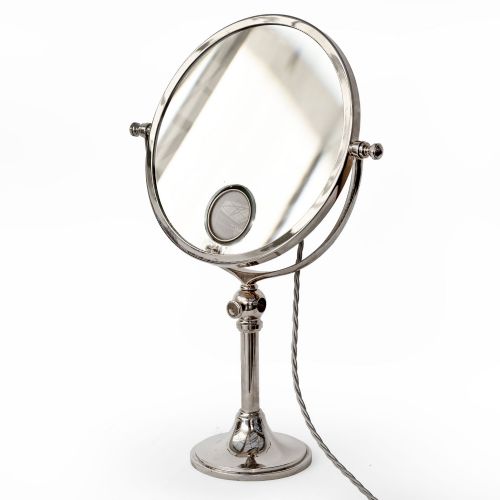
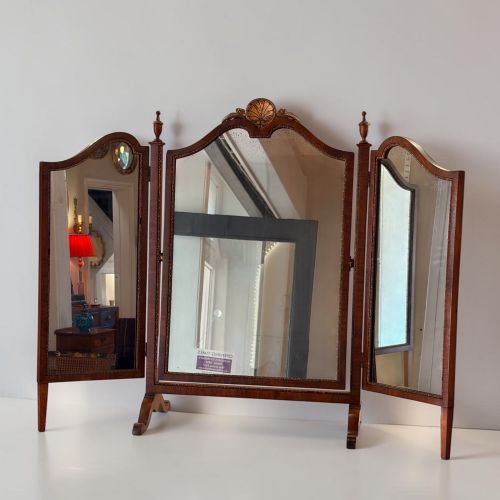
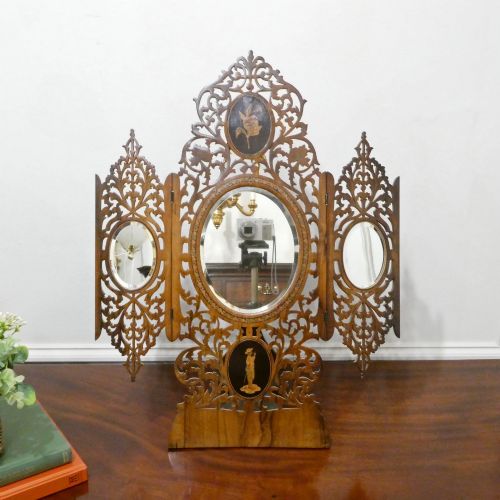
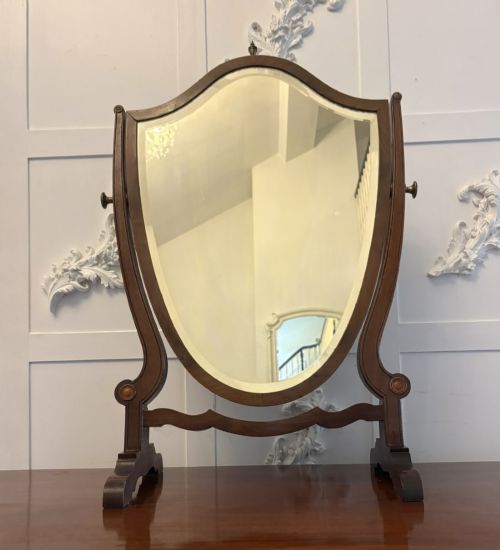


Freestanding Tabletop Mirror
These freestanding tabletop mirror pieces offer a practical surface reflection, bringing period character to a dressing surface.
Freestanding Tabletop Mirror
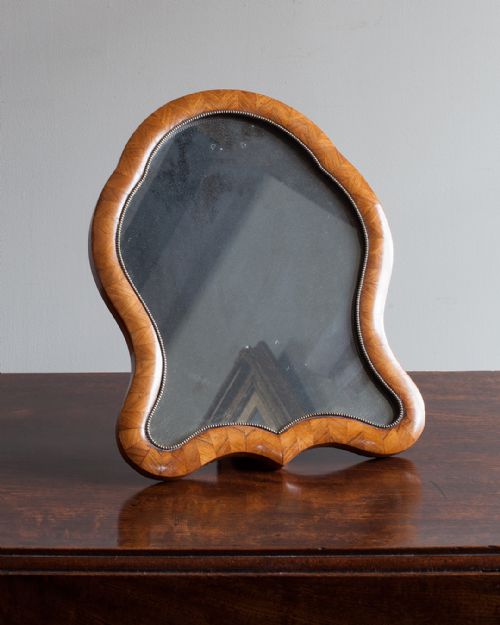
A freestanding tabletop mirror sits upon a chest, table, or dressing surface to provide a portable reflection. When you search for a freestanding tabletop mirror, you encounter designs shaped across the nineteenth and twentieth centuries.
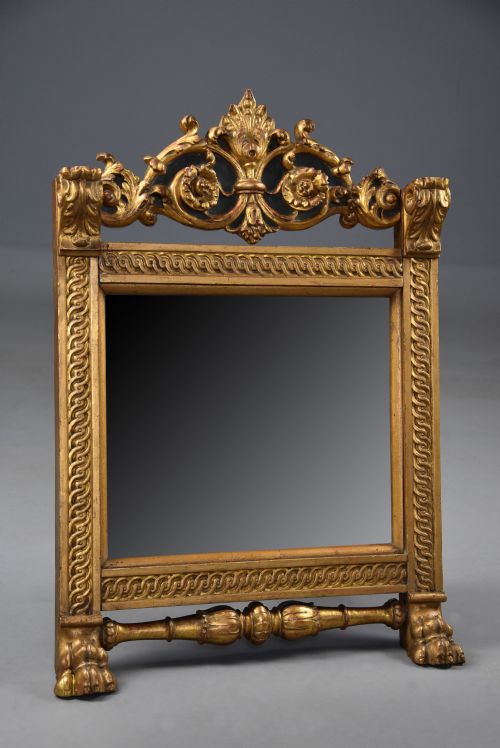
The selections span Victorian, Edwardian, and Art Deco eras, alongside revival styles like French Rococo and Renaissance. Mahogany and walnut dominate the wooden frames, accompanied by brass, silver plate, and oak.
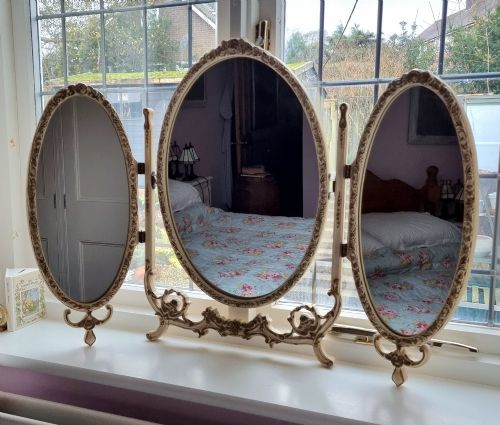
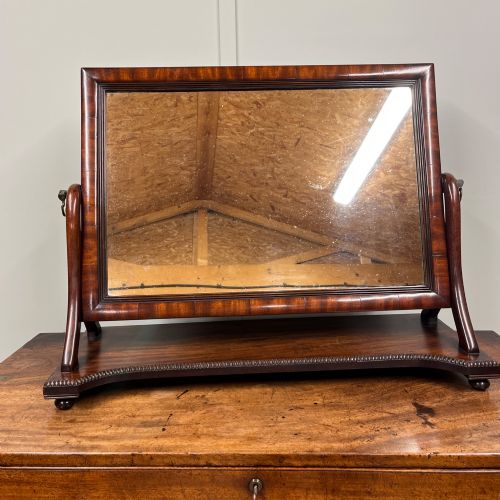
Forms range from simple swivel toilet mirrors to triptych setups and easel-backed vanity pieces. You are most likely to meet mahogany dressing mirrors from the Victorian period on this page.
What varies in quality
The calibre of timber selection and depth of cabinetmaking distinguish finer examples from standard output. Richly figured grain and precise joint construction elevate certain tables over plain utility items.
The weight and casting quality of brass fittings, hinges, and easel supports indicate the original tier of production. Intricate hand-carved ornamentation reflects superior workshop skill compared to mass-produced simpler moulding.
Freestanding Tabletop Mirror Retail Price Guide 2026
Typical asking prices for freestanding tabletop mirror among the pieces listed under this phrase on Sellingantiques today, from the lower quarter to the upper quarter. They describe what is for sale here now, not the wider market.
Several mirrors include hidden compartments within their base boxes, originally designed for stashing small morning trinkets out of sight.
WMF·Whytock & Reid
The Freestanding Tabletop Mirror Glossary
- Toilet mirror
- A small mirror designed to sit on a dressing table or washstand. These often feature small drawers incorporated into the base plinth.
- Cheval mirror
- A full-length glass frame that swings within upright floor-standing pillars, though smaller tabletop variants adapt this pivoting mechanism for surface use.
- Triptych
- A three-panel mirror arrangement where hinged side wings adjust the angle of reflection. This format appears frequently in Edwardian and Art Deco designs.
- Easel back
- A hinged rear strut that props the mirror upright at an angle. It allows the glass to remain stable on a flat tabletop without fixed frame supports.
- Giltwood
- Timber coated with a thin layer of gold leaf or gesso paint. Late nineteenth-century revival styles frequently utilise this finish for ornate decorative impact.
Freestanding Tabletop Mirror: Frequently Asked Questions
How do I clean the glass?
Use a gentle cloth with mild glass cleaner applied to the cloth rather than sprayed directly onto the frame. This prevents moisture from seeping behind the antique silvering.
Avoid harsh chemical ammonia products that can degrade older glass plates and damage surrounding wood or plated metal surfaces.
Where should I place it?
Position the piece on a sturdy chest of drawers, sideboard, or dressing table where it receives natural ambient light. Ensure the surface is level to prevent unnecessary strain on the pivoting frame.
Keep the mirror away from direct, harsh sunlight to protect polished wood veneers and prevent fading of the timber finish over time.
How do I tighten loose pivots?
Locate the screw caps or tension nuts situated on the side upright supports where the mirror swings. Gently adjust them using a properly sized screwdriver to restore desired resistance.
Take care not to over-tighten the metal fittings, as excessive pressure can crack the surrounding wooden frame or damage the pivoting brackets.
Can the mirror glass be replaced?
Original glass plates often show age spots and foxing which contribute to historical character. Replacement is possible but generally discouraged unless the glass is completely broken.
If replacement is necessary, consult a specialist restorer to source thin plate glass that matches the original thickness and bevel profile.