






Flame Mahogany Vanity Mirror
A flame mahogany vanity mirror brings warmth and striking grain patterns to a dressing space through centuries of traditional cabinetmaking.
Flame Mahogany Vanity Mirror
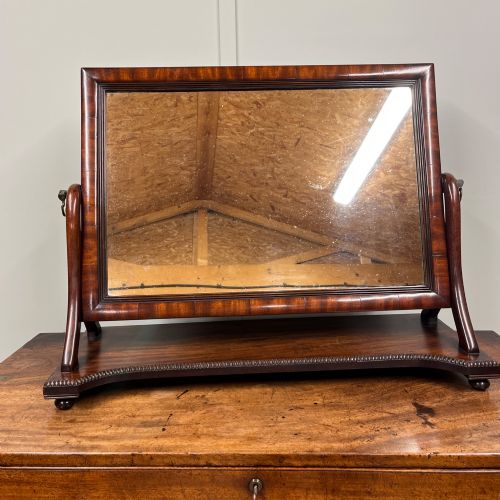
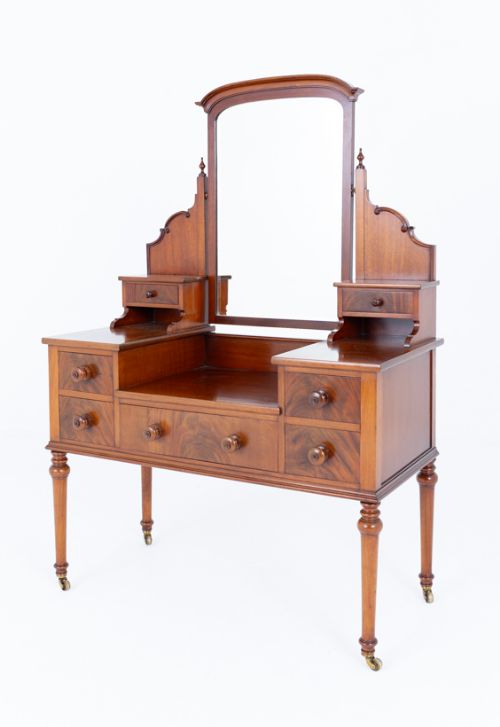
A flame mahogany vanity mirror is typically encountered as a tabletop swing mirror supported by uprights above a small base or drawer unit. The pieces listed under this search phrase span the Georgian, Regency, and Victorian periods, often taking the form of dressing mirrors, toilet mirrors, or larger platform mirrors.
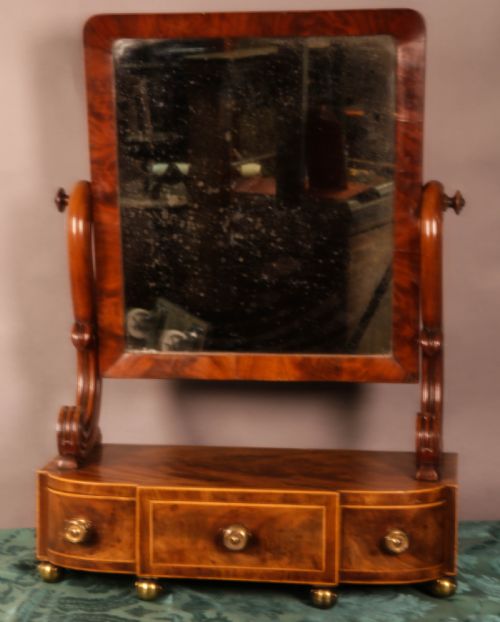
Makers designed these objects to sit atop dressing tables or chests of drawers, offering adjustable angles for grooming and personal care. The surviving examples range from simple swivel formats to elaborate items with serpentine or bow-fronted three-drawer bases.
Victorian and 19th-century interpretations dominate the selection, alongside earlier Georgian iterations featuring oval or rectangular glass plates. Structural variations include barrel-fronted frames, console combinations, and supports resting on squashed bun feet.
Distinctions in quality
Quality rests in the intensity and symmetry of the flame mahogany veneer selection across the main visual surfaces of the base and mirror frame. Finer examples display careful book-matching of the grain and precise dovetail joinery within the drawers.
Flame Mahogany Vanity Mirror Retail Price Guide 2026
Typical asking prices for flame mahogany vanity mirror among the pieces listed under this phrase on Sellingantiques today, from the lower quarter to the upper quarter. They describe what is for sale here now, not the wider market.
Several Victorian mirrors rest on squashed bun feet, giving dignified dressing furniture a surprisingly rotund foundation.
The Flame Mahogany Vanity Mirror Glossary
- Flame mahogany
- A veneer figure cut from the branch junction of the mahogany tree, creating a feathery, flame-like pattern. This prized wood selection defines the visual appeal of luxury furniture.
- Toilet mirror
- A smaller tabletop dressing mirror designed to sit on a chest or table rather than stand on the floor. These pieces frequently incorporate small drawers in the base.
- Swing mirror
- A glass plate hung on pivots between two upright arms, allowing the user to tilt the reflection angle. The mechanism relies on threaded brass screws or pins.
- Serpentine
- A curved line that undulates outward and inward in a gentle S-shape, seen on the front edges of mirror bases. This shaping demands advanced woodworking skill.
- Biedermeier
- A Central European style spanning the 19th century focused on clean lines, utilitarian comfort, and domestic warmth. Decoration relies on the natural grain of woods like mahogany rather than heavy carving.
Flame Mahogany Vanity Mirror: Frequently Asked Questions
How do I date a flame mahogany mirror?
Dating relies on combining the structural form, foot style, and timber characteristics recorded across Georgian and Victorian periods.
Earlier 18th-century pieces often show simpler oval plates and delicate serpentine bases, while mid-19th-century examples introduce heavier proportions, platform bases, and robust turned supports.
Were these mirrors made to stand alone?
Most antique vanity mirrors were built as tabletop accessories rather than standalone furnishings. They required placement upon a sturdy surface such as a dressing table, chest of drawers, or vanity.
Some iterations formed part of larger console or duchess dressing table suites rather than operating as independent items.
What is flame mahogany?
Flame mahogany is a highly figured wood veneer derived from the intersection where a tree branch meets the main trunk. The resulting grain creates rippling, flame-like patterns that catch the light.
Cabinetmakers reserved this prized material for the primary display surfaces of high-status furniture.
How do I maintain the mirror glass?
Original antique mirror plates often exhibit foxing, which is dark spotting caused by the degradation of the backing over time. Cleaning should involve gentle wiping with a soft, dry cloth without harsh chemical sprays that might seep behind the frame.
Preserving the original glass and silvering maintains the historical integrity of the piece.
Can I adjust the mirror angle?
The swing mechanism uses brass pivots or screw caps inserted through the upright supports into the sides of the mirror frame. Tightening or loosening these fittings allows the user to alter the tilt of the glass.
Original brass hardware should be handled with care to protect the surrounding wood.