
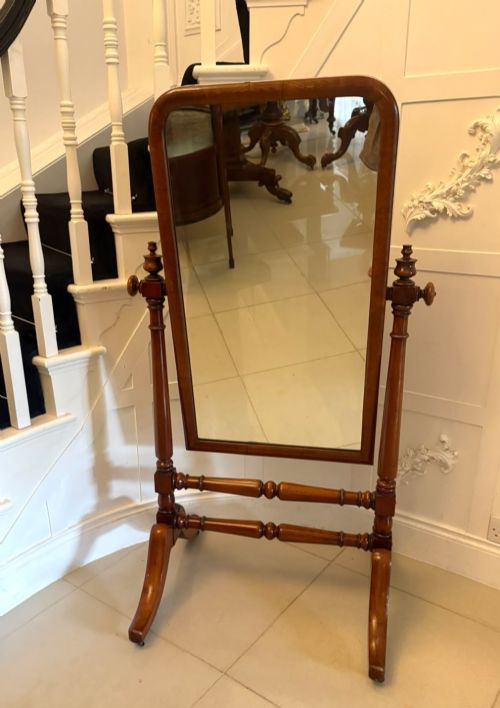
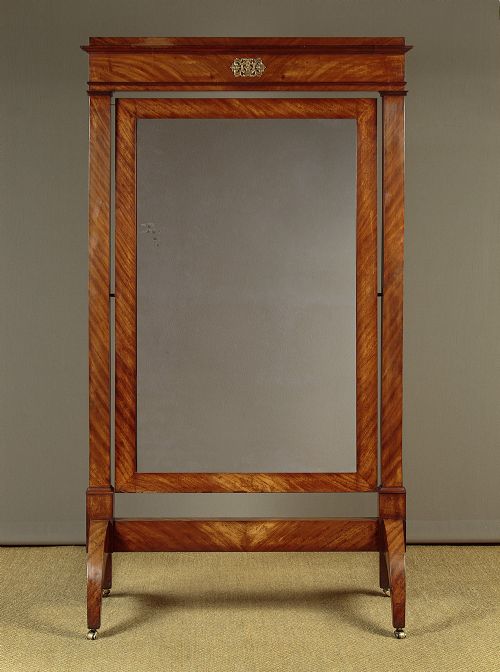
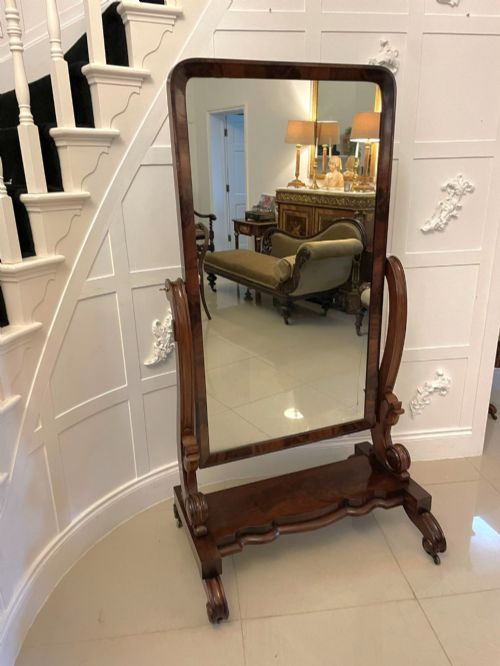
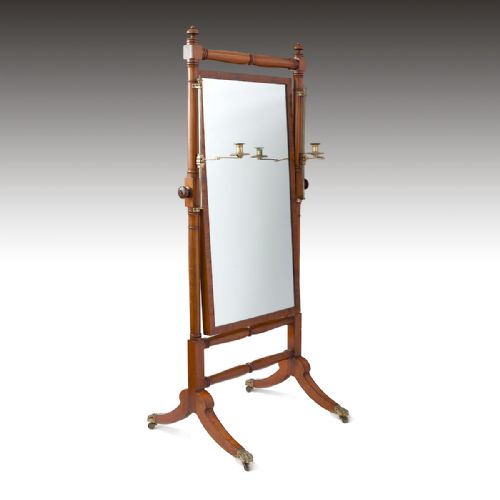
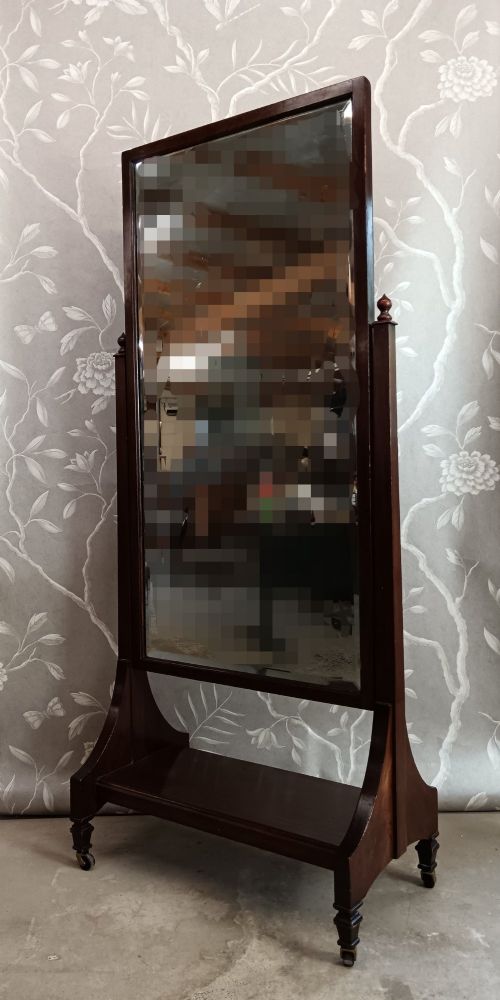


Freestanding Dressing Glass
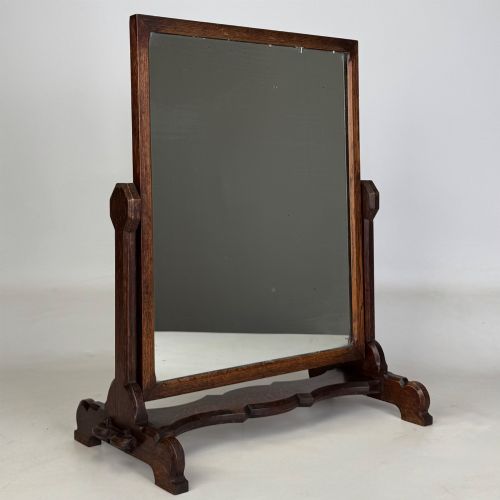
A freestanding dressing glass is a pivot-mounted mirror designed to sit on a table or stand on the floor for personal grooming.
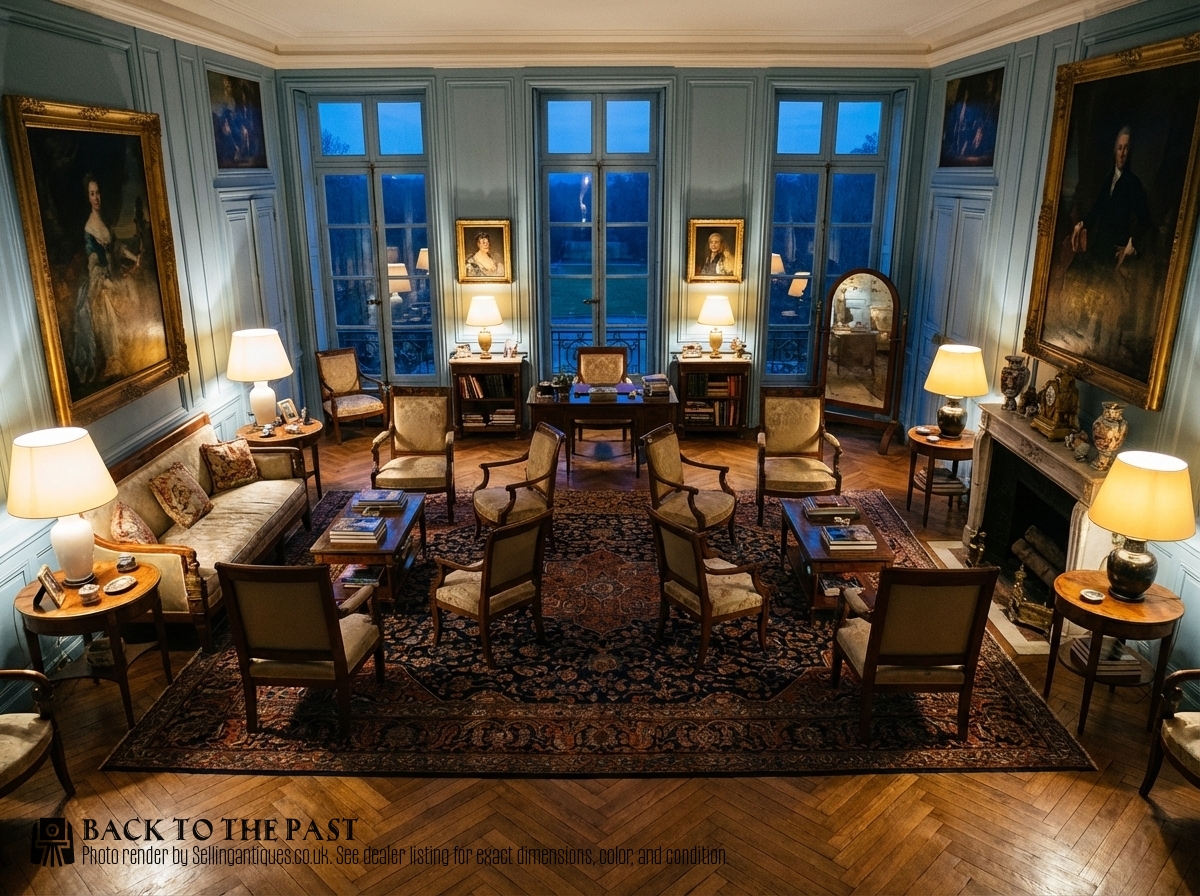
Freestanding Dressing Glass
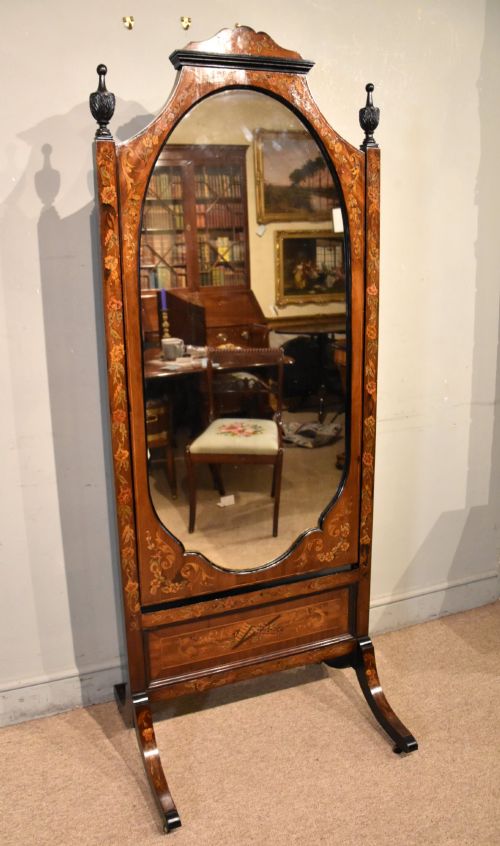
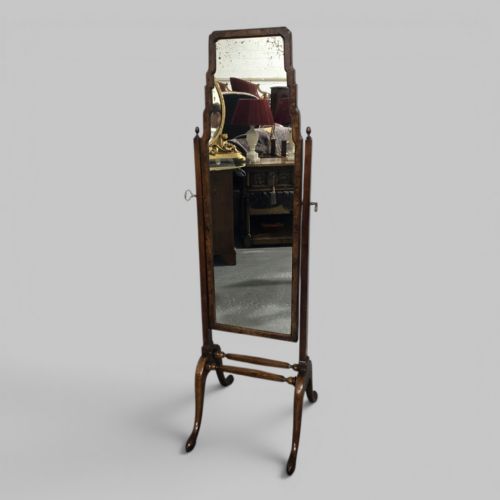
When you search for a freestanding dressing glass, you encounter a variety of swing mirrors and cheval glasses designed for personal grooming and bedroom use.
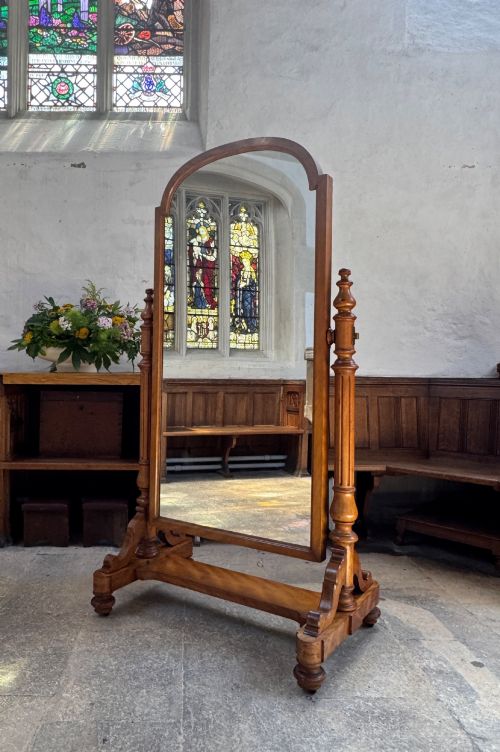
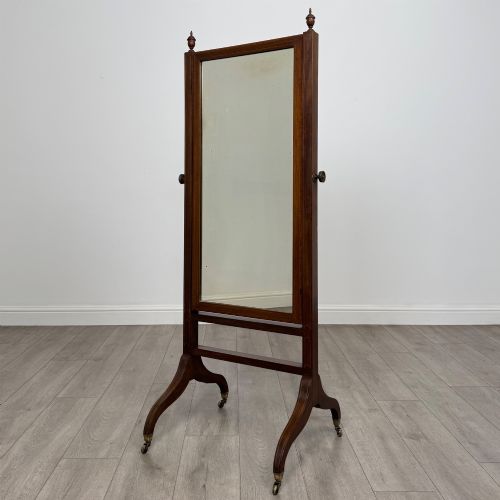
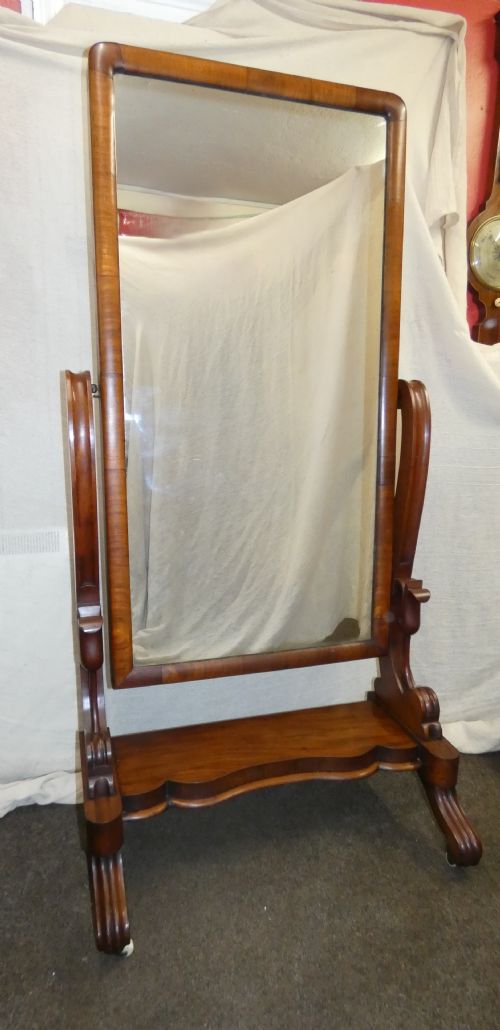
The pieces appearing on this page span several eras, including the Regency, Victorian, and Edwardian periods, with the Victorian mahogany cheval mirror being the version you are most likely to meet.
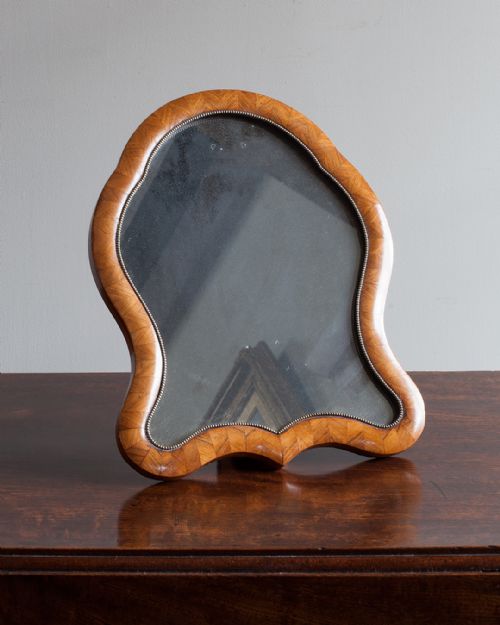
Forms range from smaller table mirrors and adjustable shaving mirrors to large floor-standing cheval glasses and triptych dressing table mirrors.
How they were made
Cabinet makers utilised dense timbers such as mahogany, walnut, satinwood, and oak, often highlighting flame mahogany veneers or intricate inlay work.
Metal components in brass were incorporated for pivot mechanisms, candle holders, and framing details, allowing the glass frame to tilt securely.
The listings here feature timber frames in mahogany, walnut, satinwood, and oak, alongside brass fittings and mirror glass.
What varies in quality
The distinction between standard examples and the finest pieces lies in the selection of figured timber, the weight and finish of the brass mounts, and the integrity of the frame construction.
Subtleties in the turning of upright supports and the hand-finished quality of the mirror plate itself separate regional workshop production from pieces attributed to finer makers.
Gillow
The Freestanding Dressing Glass Glossary
- Cheval mirror
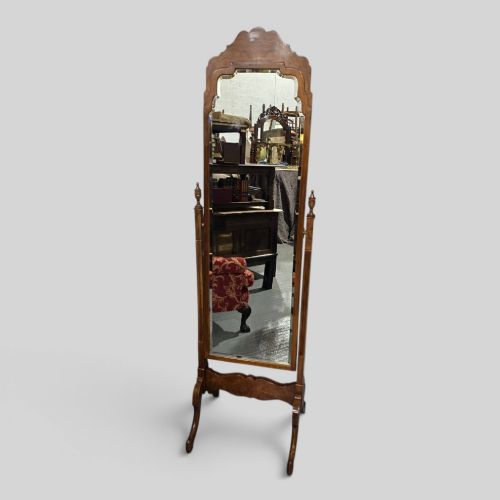
- A large floor-standing dressing glass mounted on a frame that permits the mirror plate to swing freely. The term derives from the French word for horse, referencing the four-legged frame.
- Toilet mirror
- A smaller dressing glass designed to sit upon a dressing table or chest of drawers. These often feature small drawer bases for storage.
- Swing mirror
- Any mirror plate hung on horizontal pivots within upright supports, allowing the angle of reflection to be adjusted.
- Triptych mirror
- A three-panel dressing table mirror where the outer wings fold inward. This configuration provides multiple angles of sight for grooming.
- Flame mahogany
- A veneer cut from the fork of the mahogany tree where the branches join the trunk, producing a distinctive flickering flame pattern.
Freestanding Dressing Glass: Frequently Asked Questions
What is a freestanding dressing glass?
A freestanding dressing glass is a mirror mounted on pivots within a frame, allowing the user to adjust its angle for grooming. These pieces range from small table-top toilet mirrors to full-length floor-standing cheval glasses.
They serve both a practical function and a decorative role in bedrooms and dressing rooms, often incorporating small drawers or brass candle sconces.
How do I date a dressing glass?
Dating a dressing glass involves examining the timber species, construction joints, mirror glass characteristics, and stylistic details. Regency and Victorian pieces often display distinct turning on the upright supports and different veneer thicknesses.
Cabinet-making techniques evolved from hand-cut dovetails in earlier periods to machine assistance by the Edwardian era, helping to establish an approximate age.
Where were these mirrors placed?
Historically, smaller toilet mirrors sat atop dedicated dressing tables, chests of drawers, or washstands in bedrooms. Larger cheval mirrors stood directly on the floor in dressing rooms or chambers.
Their mobility allowed them to be positioned near windows to capture natural light before artificial lighting was common.
Are the mirror plates original?
Many older dressing glasses retain their original silvered mirror glass, which often exhibits minor foxing, speckling, or ageing spots. Replacing a mirror plate was a common maintenance task over the centuries.
Examining the backboards and the method of securing the glass helps determine whether the plate dates from the same period as the frame.