



Antique Tilt Dressing Mirror
An antique tilt dressing mirror offers a practical swing plate mounted in a frame, bringing period elegance to any room.
Antique Tilt Dressing Mirror
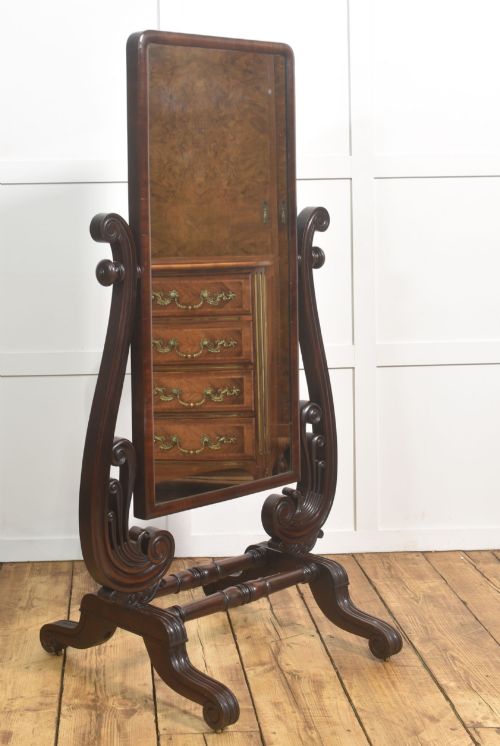
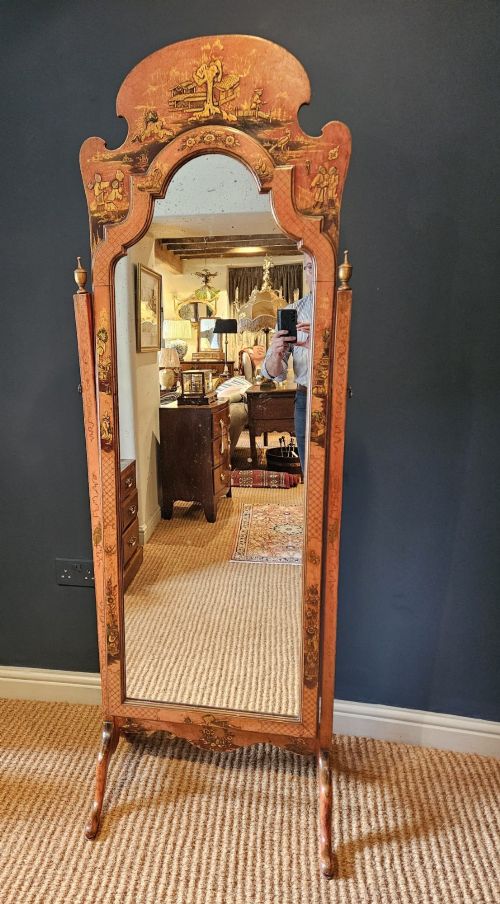
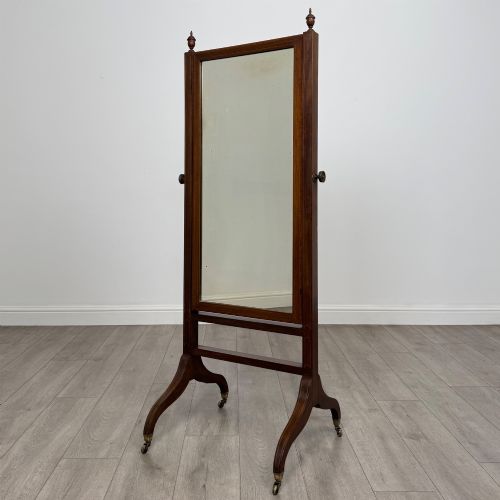
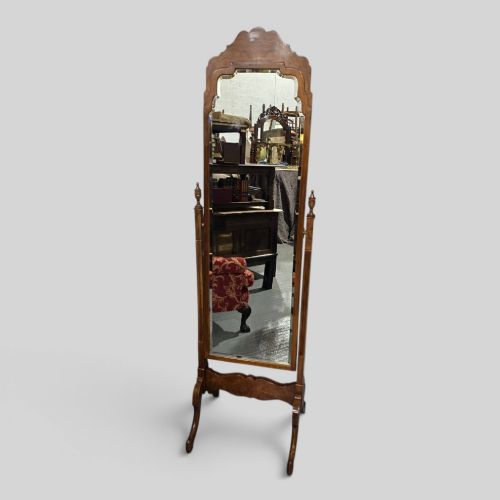
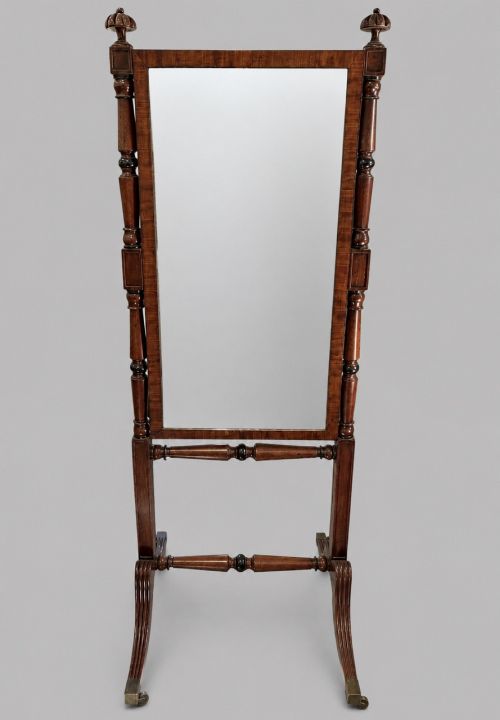
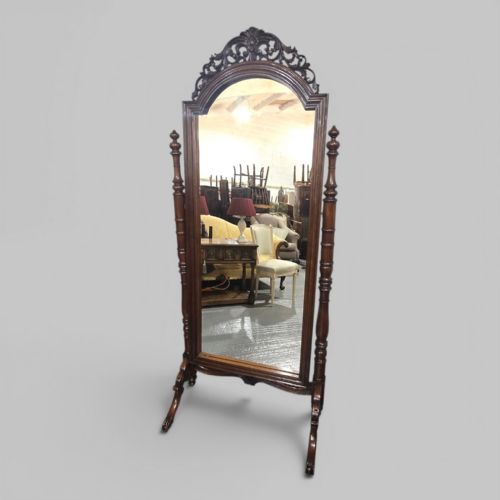
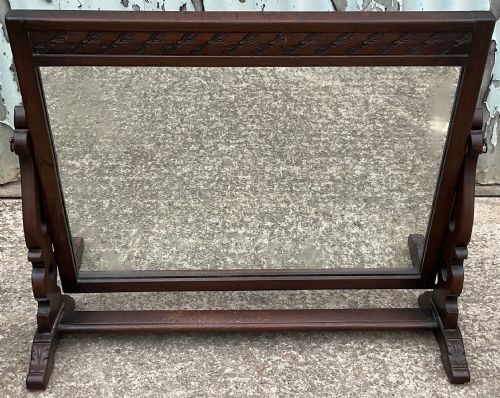
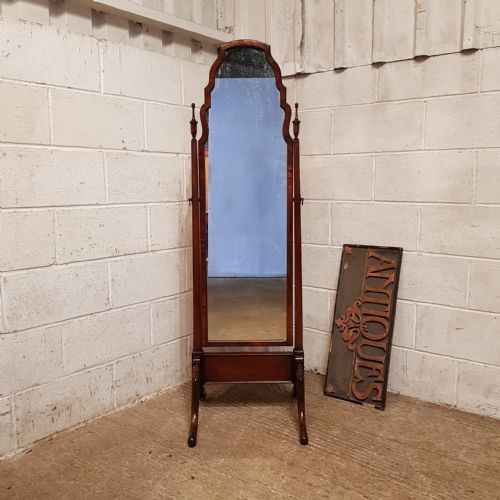
When you search for an antique tilt dressing mirror, you look at floor-standing cheval mirrors and tabletop toilet glasses designed to pivot on side pins. These pieces allow a person to adjust the angle of the glass for checking attire or grooming.
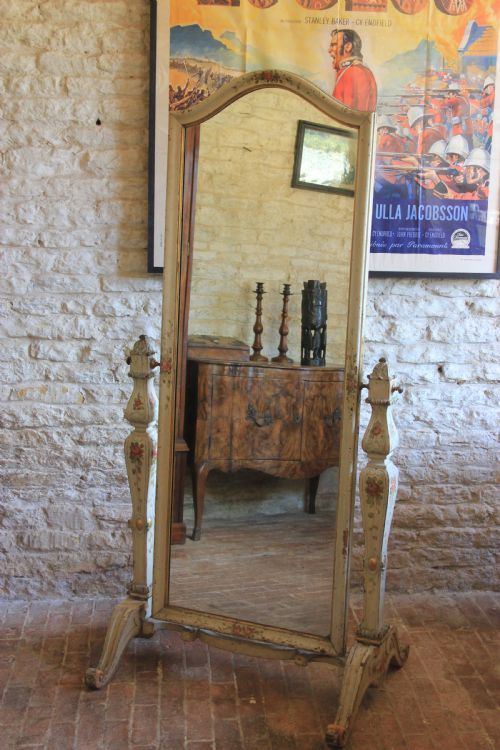
Mahogany frames dominate the selection across the nineteenth century, Victorian, and Edwardian periods. You also find walnut, burr walnut, oak, brass, and lacquered wood examples shaped in Regency, French Empire, Chinoiserie, and Art Deco styles.
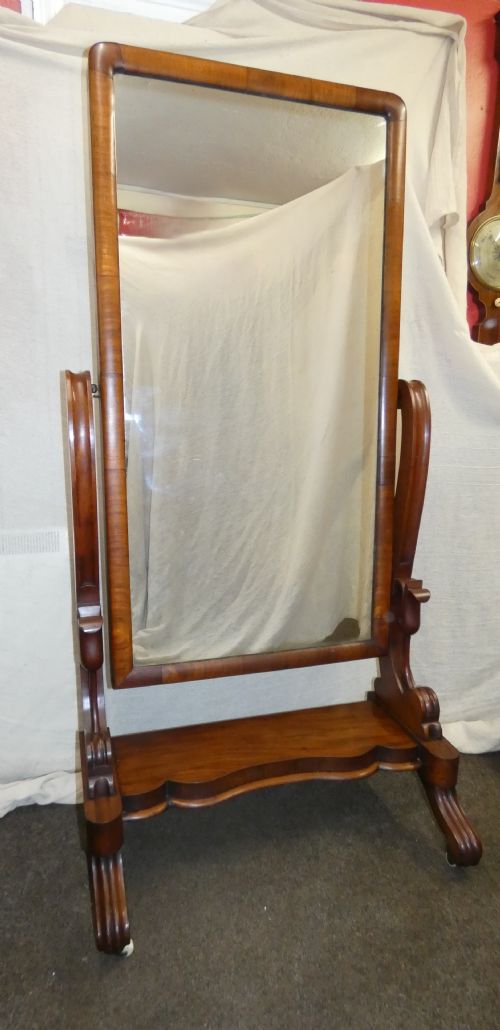
The format ranges from large full-length floor mirrors supported by sturdy uprights to compact toilet mirrors meant for placing on top of a chest or dressing table. Each type serves the primary function of reflecting the viewer while adding architectural presence to the room.
Materials and construction
Cabinetmakers constructed the frames primarily from dense timber such as mahogany, walnut, and oak, often selecting flame veneers or incorporating marquetry inlay. Brass fittings, including pivot screws, sabots, and castors, support the movement and mobility of the larger floor-standing pieces.
The mirror glass sits within a pivoting frame connected to side uprights by metal pins or screw knobs. This mechanism allows the glass to tilt smoothly forward and back without slipping from the chosen angle.
Quality factors in design
The finesse of the timber selection and the carving on the frame dictate the grade of the piece. Fine examples display well-figured flame mahogany or burr walnut veneers paired with crisp brass mounts and substantial sabots.
Proportion and stability separate standard utility mirrors from exceptional ones. A well-designed frame stands firmly on its base, whether supported by sabre legs, a box base, or scrolling uprights, ensuring the heavy glass tilts securely.
Waring and Gillow
The Antique Tilt Dressing Mirror Glossary
- Cheval mirror
- A large floor-standing dressing mirror supported by a frame with four legs or a solid base. The glass swings freely between two upright posts.
- Toilet mirror
- A smaller dressing mirror designed to sit on top of a table or chest of drawers. These often feature a box base fitted with small storage drawers.
- Sabots
- Protective brass sockets fitted over the feet of furniture legs. They frequently appear on Regency and nineteenth-century frames alongside castors.
- Flame mahogany
- A decorative wood veneer showing a distinctive flickering flame pattern. Cabinetmakers used this on prominent surfaces of high-status dressing mirrors.
- Tilt action
- The pivoting mechanism that lets the mirror glass rotate on horizontal side axes. It relies on threaded brass pins or knobs to hold the glass at the preferred angle.
Antique Tilt Dressing Mirror: Frequently Asked Questions
What is a cheval mirror?
A cheval mirror is a full-length dressing glass mounted inside a vertical wooden frame that stands directly on the floor. The glass pivots on side pins so the user can tilt it to any angle.
These tall mirrors became popular for bedroom dressing during the Georgian and Victorian periods, offering a complete view of an outfit.
How do I use a tilt dressing mirror?
You adjust the angle of the glass by gently pushing or pulling the top or bottom of the frame. The side pivot screws can be tightened to hold the mirror steady at your chosen inclination.
Tabletop versions sit on dressing tables or chests, while floor-standing cheval versions stand independently in the room.
Where should I place a tilt mirror?
These mirrors suit bedrooms, dressing rooms, and hallways where you check your appearance before leaving the house. Floor-standing models need enough clearance around the base to allow the frame to tilt freely.
Tabletop versions require a sturdy surface like a heavy chest of drawers or a dedicated dressing table to support their weight safely.
How do I date an antique mirror?
You date these pieces by examining the wood type, framing style, and turning of the uprights. Regency examples often feature sabre legs and brass sabots, while Edwardian pieces may show inlaid decoration and lighter mahogany.
Construction methods, such as the type of screws used in the tilt mechanism and the backing boards, also provide clues to the period of manufacture.