

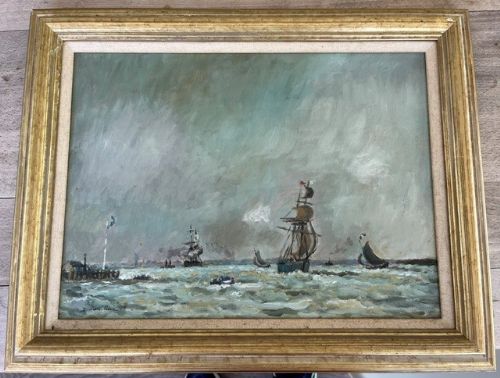


Framed Ship Picture
A framed ship picture brings maritime history onto the wall through detailed oils, delicate watercolours and textured woolwork.
Framed Ship Picture
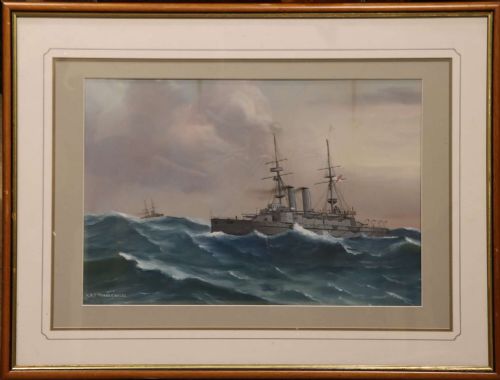
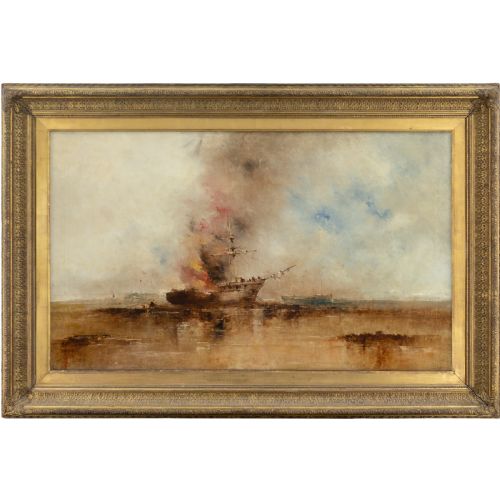
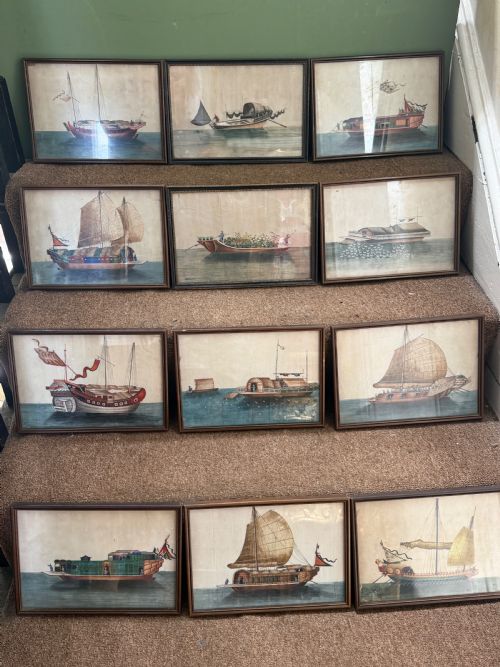
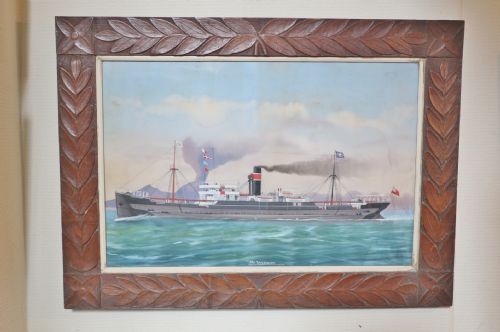
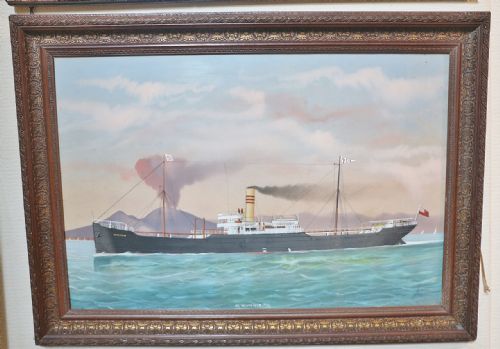
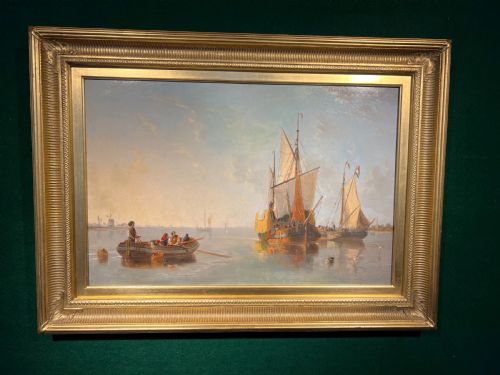
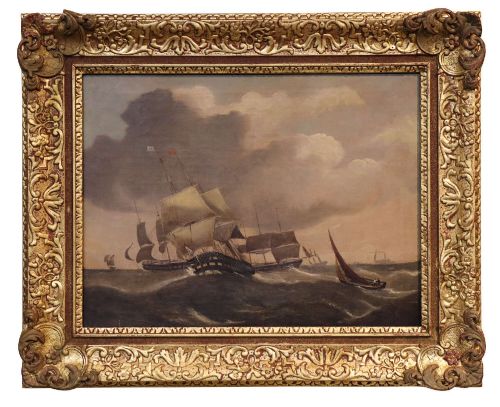
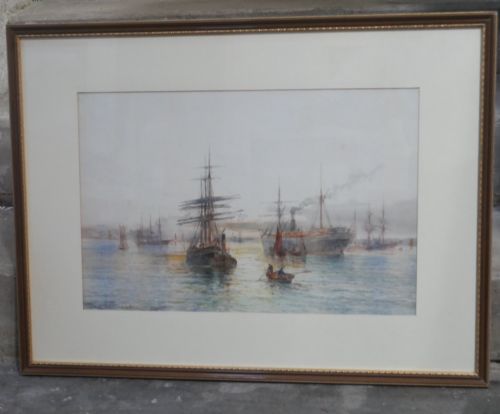
A framed ship picture encompasses a range of maritime works, including nineteenth-century oil paintings, watercolours and gouache studies. These pieces document naval vessels, coastal scenes and merchant ships across various periods from the Georgian era through to the mid-twentieth century.
The most common examples on this page are Victorian and Edwardian watercolours and oil paintings depicting named vessels, harbours and open seas. Works often capture specific historical vessels, steamships and sailing ships against coastal backdrops.
Materials and construction
Paintings in this category rely primarily on oil on canvas or delicate watercolour and gouache on paper, framed under glass where appropriate. Supports range from stretched canvas and wooden boards to card and heavy paper.
Frames frequently utilise gilt wood, gold leaf and original oak to complement the maritime subject matter. Hand-enamelled polychrome decoration and reverse glass techniques also appear among the mounting methods.
Sailors immortalised their floating homes in wool when paint was scarce, stitching every single wave by hand.
Distinctions in quality
Quality in a framed ship picture rests upon the precision of the maritime draughtsmanship and the artist's ability to render rigging, hull forms and water realistically. Named vessels with documented histories often display a higher degree of observational detail.
The integrity of the original frame, whether gilt wood or oak, contributes significantly to the overall preservation and character of the piece. Contemporary framing can alter the aesthetic weight compared to period housings.
John Wilson Carmichael·Charles William Wyllie·Vincenzo D’Esposito·Thomas Bush Hardy·William Langley
The Framed Ship Picture Glossary
- Gouache
- An opaque watercolour paint that dries to a matte finish, frequently utilised for sharp detail in maritime depictions. It allows artists to build bright highlights on hulls and cresting waves.
- Woolie
- A traditional embroidery created by nineteenth-century sailors using coloured wool threads to depict ships at sea. These textile works often feature textured stitching for sails and water.
- Gilt wood
- Wood carved and coated with a thin layer of gold leaf or metallic paint for decorative framing. This finish was common for nineteenth-century display pieces.
- Reverse glass painting
- An artistic technique where the image is painted directly onto the back of a glass panel to be viewed from the front. This method imparts a distinct glossy surface to the finished picture.
Framed Ship Picture: Frequently Asked Questions
How do I identify the ship in a painting?
Many maritime works include legible inscriptions on the mount, canvas or reverse detailing the vessel's name and launch year. Signal flags and specific riggings can also offer clues to researchers.
Naval archives and historical shipping registries often hold records of commissioned paintings, particularly for named steamships and naval vessels.
How should I hang maritime watercolours?
Watercolours are sensitive to direct sunlight and high humidity due to the paper and pigment composition. Displaying them away from bright windows preserves the original tones.
Ensuring stable indoor temperatures protects both the paper support and the period wooden or gilt frame.
Are these paintings contemporary or antique?
The works listed span from the Georgian period through the Victorian and Edwardian eras into the mid-twentieth century. Most examples date from the nineteenth and early twentieth centuries.
Dates are typically verified through signatures, stylistic clues and framing materials characteristic of specific decades.