


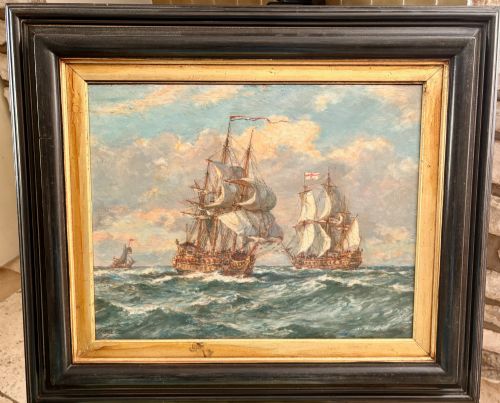
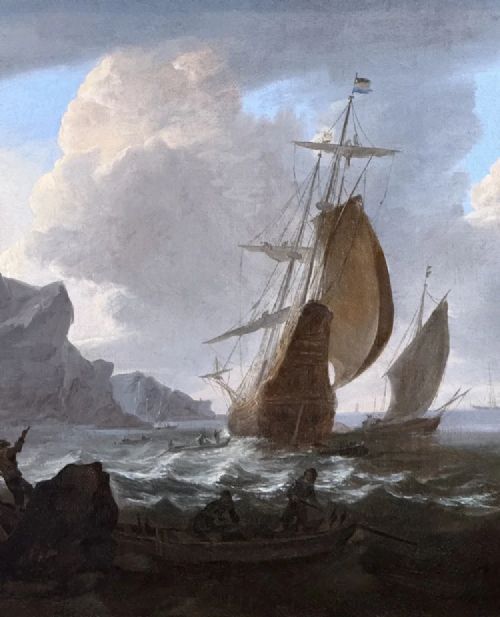
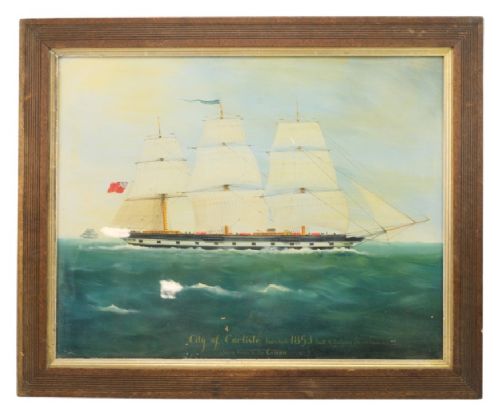
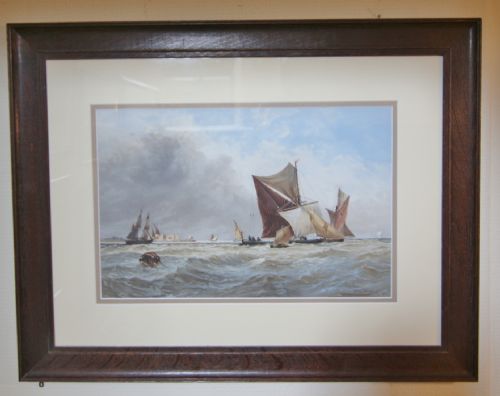
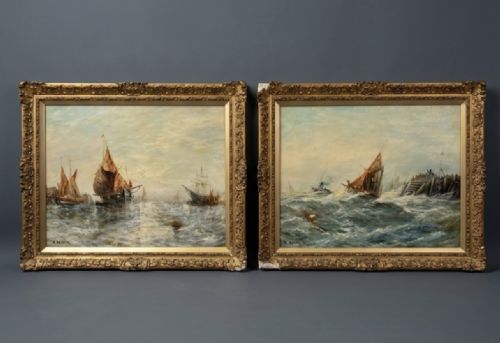
Framed Sailing Ship Artwork
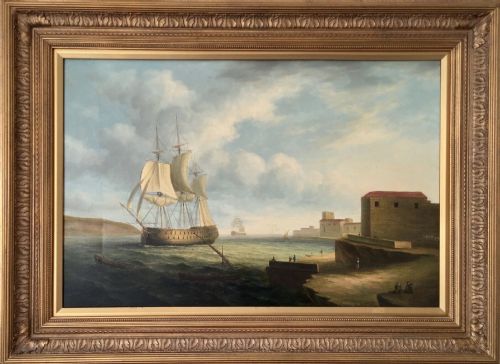
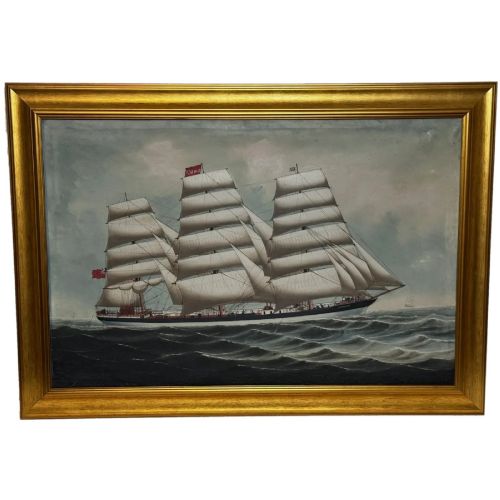
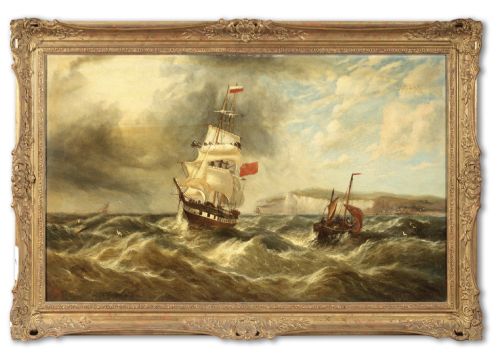
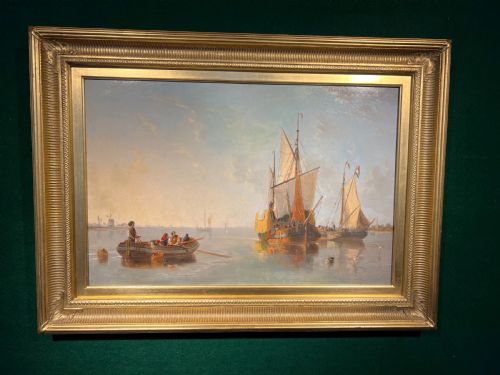
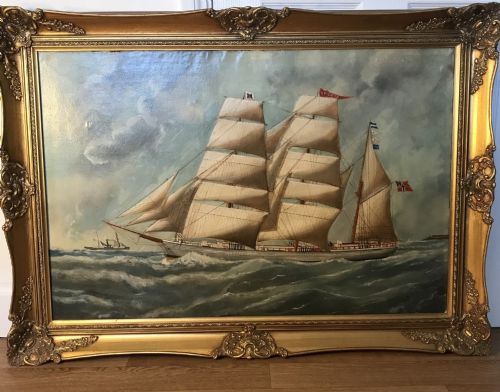
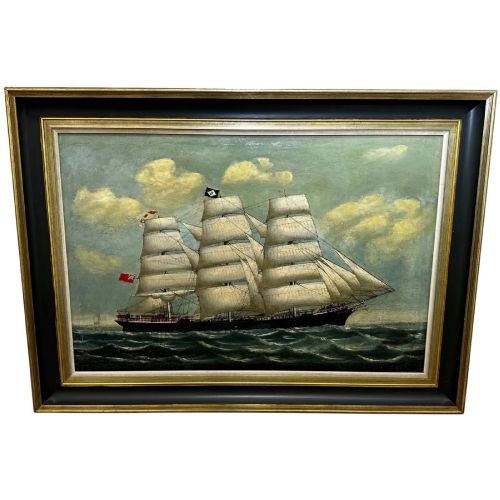
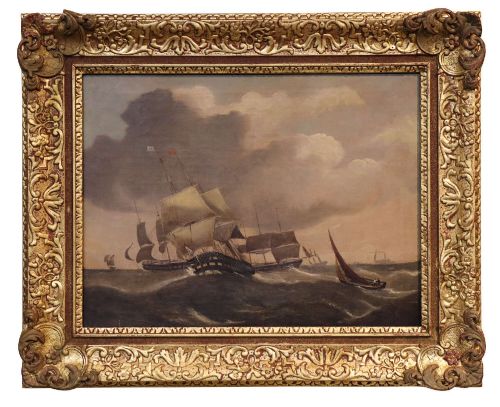
Framed sailing ship artwork captures maritime history through detailed depictions of vessels navigating open waters.
Framed Sailing Ship Artwork
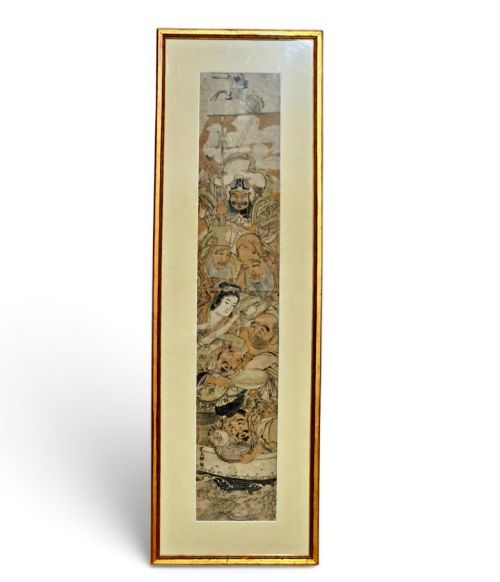
Framed sailing ship artwork encompasses visual representations of maritime vessels, ranging from detailed merchant ships to dramatic battle scenes in heavy seas. Buyers exploring this category encounter a variety of forms, including oil paintings on canvas or board, watercolours, and woodblock prints.
The selection on this page draws heavily from nineteenth-century maritime traditions, alongside Edwardian and mid-century interpretations. Pieces often depict specific historical vessels, coastal harbours, or quiet anchorages rendered by named artists and anonymous hands alike.
Materials and construction
Artists working within this tradition relied primarily on oil paint applied to canvas, panel, or board, as well as watercolour on paper. These mediums allowed creators to capture the shifting light on water, the texture of billowing sails, and the atmospheric conditions of coastal storms.
Framing forms an integral part of the physical object, with many works housed in period wooden frames, occasionally gilt, which protect the paper or canvas beneath glass or in the open air.
Several depictions feature the Takarabune, where the Seven Lucky Gods sail together toward shore bearing treasures.
Evaluating quality in marine art
Quality in these works rests upon the artist's command of maritime architecture and atmospheric perspective. Superior pieces demonstrate an accurate understanding of rigging, hull construction, and the interaction of wind upon water, rather than merely decorative repetition.
The handling of the medium further distinguishes finer examples, where confident brushwork or delicate watercolour washes convey movement and depth. Condition also plays a role, with well-preserved surfaces retaining their original colour harmony and structural integrity.
Katsukawa Shunshō·Reginald Arthur Borstel·Charles Edward Dixon·John Rose Miles·Bernard Gribble·Bonaventura Peeters·John Wilson Carmichael·Lai Fong·Abraham Hulk I·Charles William Adderton·William Frederick Settle·Ernest Dade·Thomas Bush Hardy·Daniel Sherrin·George Shaw·Dion Pears
The Framed Sailing Ship Artwork Glossary
- Barque
- A sailing vessel with three or more masts, having the fore and mainmasts square-rigged and the mizzenmast fore-and-aft rigged. This rig was common for long-distance cargo transport during the nineteenth century.
- Galleon
- A large, multi-decked sailing ship used primarily by European nations from the sixteenth to eighteenth centuries for trade and war. They are easily recognised by their high forecastles and sterncastles.
- Seascape
- A work of art depicting the sea, coastal views, or ships operating in marine environments. These compositions focus heavily on water, weather, and light.
- Watercolour
- A painting method in which the paints are made of pigments suspended in a water-based solution. On paper, this technique creates translucent washes suited for capturing misty coastal air.
- Woodblock print
- A technique for printing text, images or patterns used widely in East Asian art. The design is carved into a block of wood, inked, and transferred to paper.
Framed Sailing Ship Artwork: Frequently Asked Questions
What periods do these artworks come from?
The pieces span multiple centuries, with a strong concentration of works originating from the nineteenth century and the Edwardian era. Later examples extend into the mid-twentieth century.
Creators utilised traditional oil and watercolour techniques across these eras to document both contemporary shipping and historical naval events.
How do I care for framed marine art?
Protect these works by hanging them away from direct sunlight and steady sources of heat, which can damage canvas and paper over time. Maintaining a stable indoor environment prevents warping in both the wooden frames and the supports.
Dust wooden frames gently with a dry cloth and avoid using liquid cleaners on exposed canvas or antique paper.
What subjects are commonly depicted?
Common subjects include three-masted schooners, merchant barques, warships engaged in battle, and quiet coastal harbours. Many compositions capture ships navigating rough seas or at anchor near recognisable ports.
Artists also recorded specific historic vessels and everyday maritime commerce along major shipping routes.
How do I identify a watercolour from an oil painting?
Watercolour paintings are executed on paper, usually displayed beneath glass, displaying translucent washes of colour where the texture of the paper remains visible. Oil paintings utilise thicker paint applied to canvas, wood panels, or board, often possessing a distinct surface texture or sheen.
Examining the surface closely under good lighting reveals the distinct medium and support used by the artist.