


Antique Ship Artwork Pair
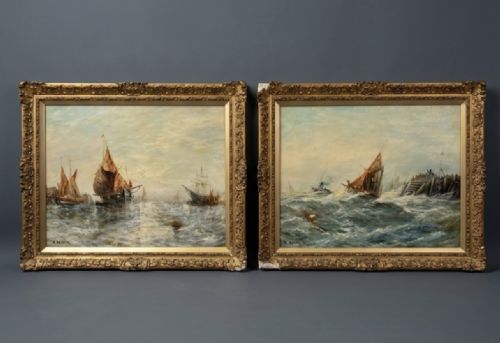
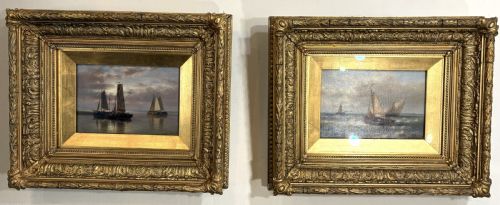
An antique ship artwork pair brings the drama of the open water and historic harbours directly into a room.
Antique Ship Artwork Pair
An antique ship artwork pair consists of two matching pictures capturing maritime subjects, seascapes, or coastal scenes created during the nineteenth century or the Edwardian era. These companion pieces often depict bustling harbour traffic, coastal trading vessels, or dramatic open sea encounters under painted skies.
The versions most commonly met on this page are oil paintings executed on canvas or board, housed within their original giltwood or gilt frames. Artists of the period frequently composed these pairs as balanced counterparts, contrasting calm coastal anchorages with heavier weather out on the channel.
Materials and construction
These works are painted in oil upon prepared canvas or rigid board, building up the textures of rolling seas and billowing canvas sails with layered pigment. Painters utilised traditional brushes and palette knives to capture the play of light upon water and the dense atmosphere of nineteenth-century maritime hubs.
The surrounding frames are constructed from wood, frequently enriched with gold leaf or gilt finishes that complement the warm tones within the marine scenes. Protective glass often shields works on paper such as nineteenth-century watercolour marine paintings, preserving the delicate pigments from atmospheric degradation.
Listings span the nineteenth century and the Edwardian era, employing oil paint on canvas or board alongside watercolour on paper.
What separates the finer examples
Quality in these pairs rests upon the confidence of the brushwork and the accuracy with which maritime architecture and rigging are rendered. A superior pair demonstrates a keen understanding of coastal topography, tidal movement, and atmospheric perspective rather than relying on formulaic repetition.
The integrity of the original framing significantly influences the standing of a pair, as matching giltwood surrounds designed specifically for the canvases complete the composition. Cohesion between the two panels is paramount, ensuring that the palette, scale, and subject matter complement each other without feeling disjointed.
Abraham Hulk I·Thomas Bush Hardy·Ebeneezer Colls·John James Wilson·Hubert Thornley·Francis Moltino
The Antique Ship Artwork Pair Glossary
- Giltwood
- Wood carved and coated with gold leaf or a gold-coloured finish to create a decorative frame. This traditional treatment adds warmth and reflects light onto the surface of the painting.
- Oil on canvas
- Pigment mixed with drying oil applied to a stretched woven fabric support. This medium allows for rich blending and textured impasto suited to depicting turbulent seas.
- Oil on board
- Pigment applied to a rigid wooden or composition panel rather than flexible canvas. This stable support was frequently utilised by nineteenth-century painters for smaller cabinet-sized works.
- Maritime painting
- Artwork depicting ships, boats, naval engagements, or coastal views. These pieces document the commercial and leisure vessels of the nineteenth and early twentieth centuries.
Antique Ship Artwork Pair: Frequently Asked Questions
Why were marine paintings created as pairs?
Artists and patrons favoured pairs to create a balanced display across a wall, often showing contrasting weather conditions or complementary viewpoints of a specific coastline.
This format allowed painters to explore different times of day or varying nautical activities within a single unified purchase.
How do I identify a nineteenth-century frame?
Nineteenth-century frames generally feature heavy timber construction ornamented with moulded plaster or gesso decorative details finished in gold leaf.
Examining the reverse reveals aged wood, traditional fixings, and historical labels that correspond to the period of the artwork.
Where should I hang a ship painting pair?
These companion pieces suit traditional drawing rooms, studies, or hallways where their balanced compositions can be viewed together at eye level.
Placing them away from direct sunlight and excessive moisture protects both the oil pigment and the delicate gilt frames.
What subjects feature in these maritime scenes?
The artworks document working vessels such as Thames barges and barques alongside named locations like Portsmouth Harbour, Scarborough, and the Medway.
Artists captured the daily maritime trade and coastal life that sustained nineteenth-century ports before the dominance of steam.