



Traditional British Seascape Paintings
Traditional British seascape paintings capture coastal villages, harbours and maritime shipping across the nineteenth and twentieth centuries.
Traditional British Seascape Paintings
Traditional british seascape paintings record coastal life, fishing boats and harbours through the nineteenth and twentieth centuries. These works span periods from the Georgian maritime era through the Victorian period and into Edwardian and later twentieth-century styles.
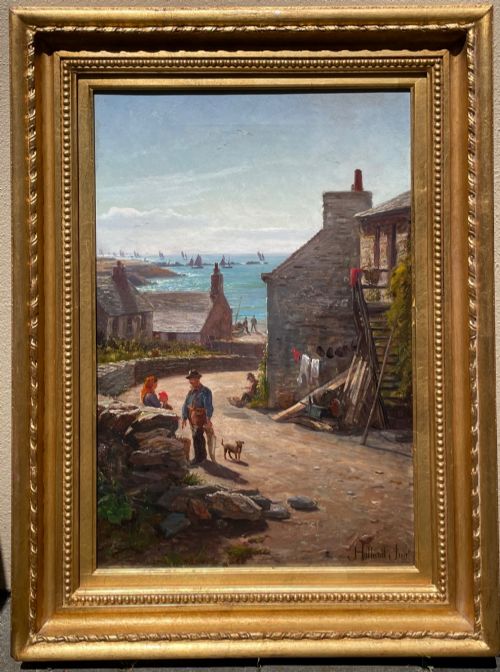
Subjects range from busy Cornish fishing ports like St Ives to quiet coastal inlets and shipping on the Thames near Tower Bridge. The most frequent pieces on this page are oil paintings on canvas and watercolours on paper.
Artists record specific locations including Morecombe Bay, Scarborough, Portsmouth Harbour and the Isle of Man. Works appear both as single paintings and as paired marine scenes.
What varies in quality
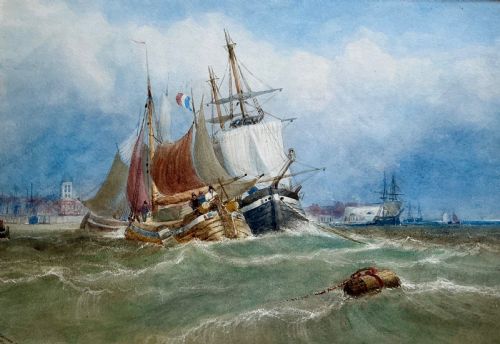
Quality rests in the handling of light, atmosphere and coastal movement by the artist. Stronger works convey the motion of water and the detail of rigging with conviction.
The sensitivity of the palette and the preservation of the paint or watercolour surface distinguish the finest examples. Original framing also contributes to the integrity of a piece.
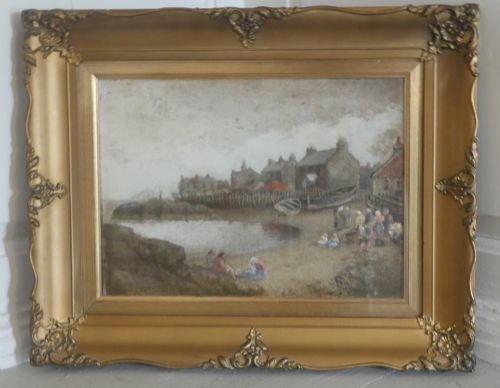
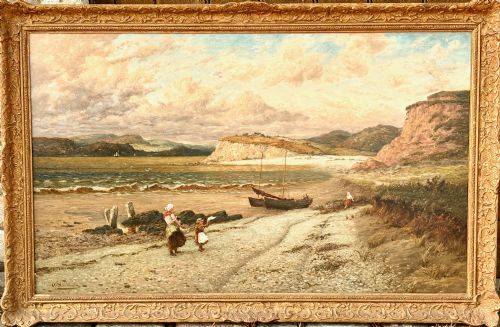
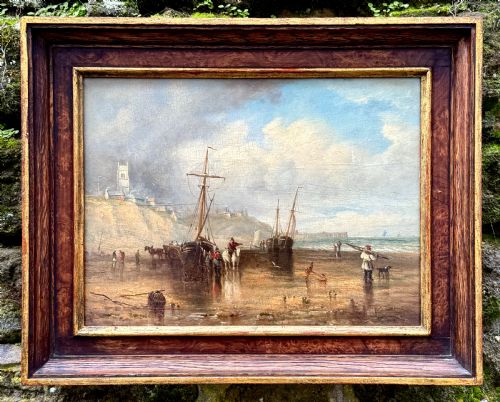
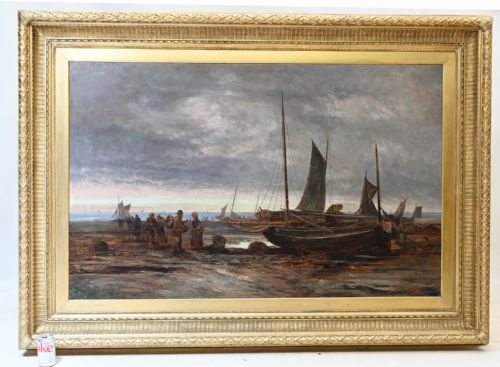
Fisher folk share the beach with working vessels in several Victorian scenes, capturing everyday coastal life.
Edward Mills·William Banks Fortescue·Thomas Creswick·John Holland·Henry Barlow Carter·Stanley Leader·John McDougal·George Henry Knight·Thomas Rose Miles·Owen Bowen·Herbert James·William Edward Webb·Walter Holmes·George Smith·John James Wilson·Edward Fletcher·William Shayer·James Aitken·J De Breanski·Joseph West
The Traditional British Seascape Paintings Glossary
- Giltwood
- Carved wood finished with a thin layer of gold leaf. Frames of this material are frequently found surrounding nineteenth-century oil paintings.
- Watercolour
- A paint consisting of water-soluble pigments used on paper. It allows for transparent washes that suit coastal skies and water.
- Canvas
- A heavy woven fabric stretched across a wooden frame to serve as a support for oil paint. It provides a durable surface for large maritime compositions.
- Maritime art
- Works depicting ships, harbours and the sea. This genre encompasses both calm coastal views and dramatic shipping scenes.
Traditional British Seascape Paintings: Frequently Asked Questions
How do I identify a Victorian seascape?
Victorian marine art often focuses on detailed coastal scenes, fishing vessels and shipping activity executed in oil on canvas or watercolour.
Subject matter typically highlights British ports, beaches and maritime commerce from the middle to the late nineteenth century.
Where were these coastal scenes painted?
Artists travelled around the British coastline to paint working harbours, beaches and estuaries from Cornwall to Scotland.
Common locations include St Ives, Scarborough, the Isle of Man and the Thames near London.
What is the difference between oil and watercolour?
Oil paintings use pigment suspended in drying oils on canvas, offering rich colour depth and textured brushwork. Watercolours use water-soluble pigments on paper, creating translucent effects suited to coastal light.
Watercolours are typically displayed behind glass for protection.
How should I display a marine painting?
Keep paintings away from direct sunlight and damp environments to protect the canvas, paper and giltwood frames. Ensure watercolours under glass are placed in stable indoor conditions.
Allow adequate wall space for larger works, particularly nineteenth-century oils.