
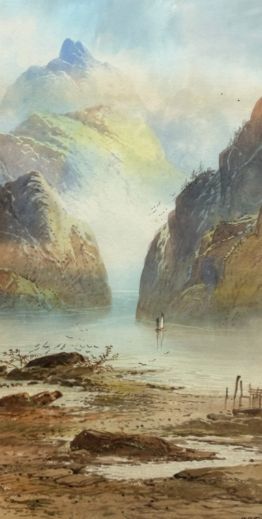
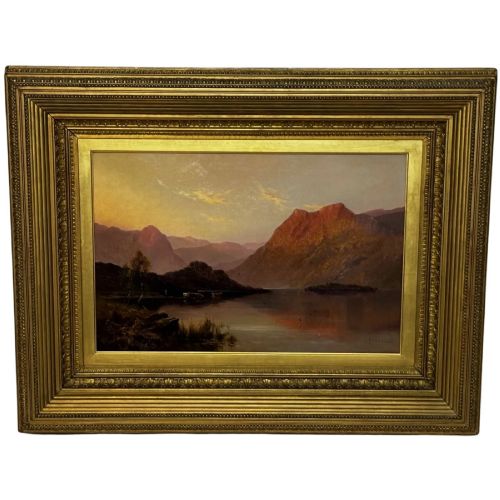
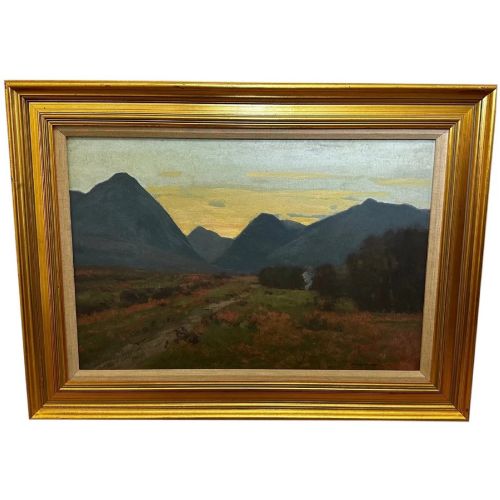
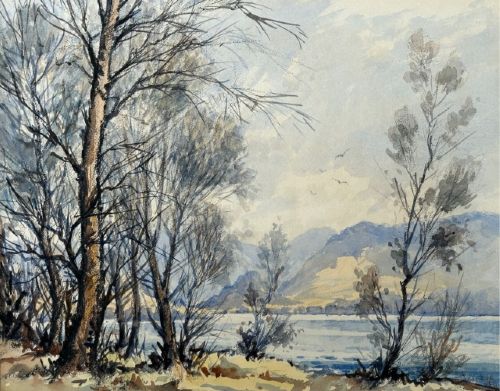
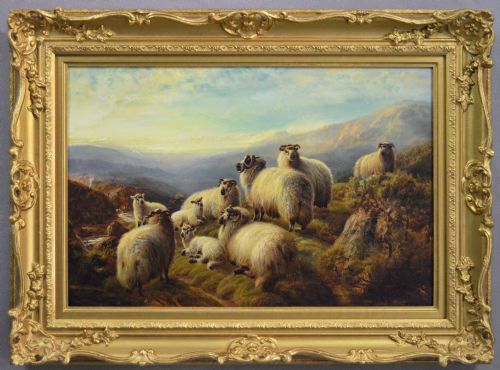
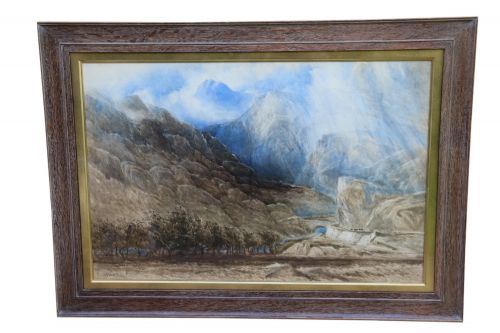


Framed Mountain Landscape Picture
A framed mountain landscape picture brings distant peaks and highland loughs indoors, capturing the quiet pull of wild terrain.
Framed Mountain Landscape Picture
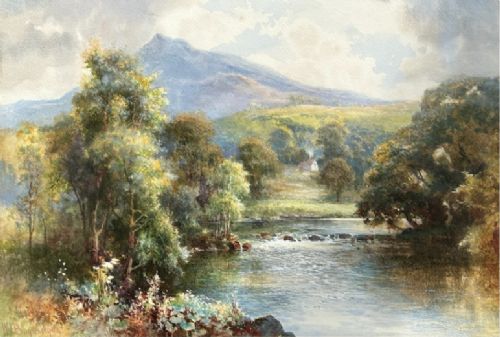
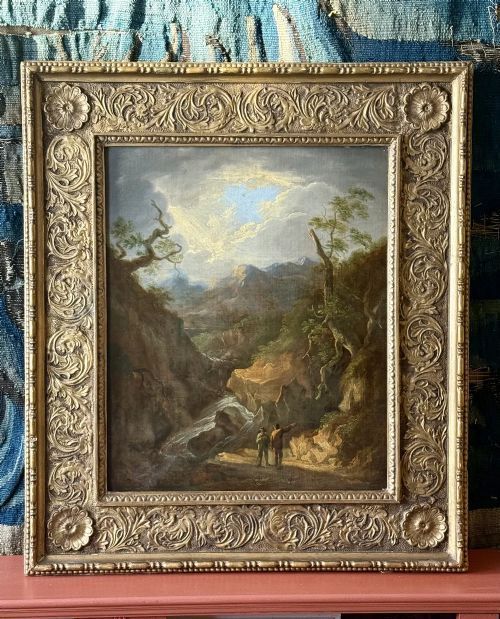
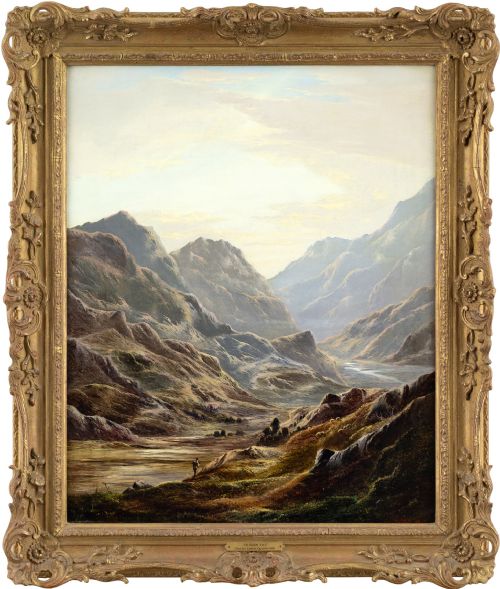
A framed mountain landscape picture depicts high terrain, lakes, and valleys, drawing primarily from nineteenth-century and twentieth-century British and continental subjects.
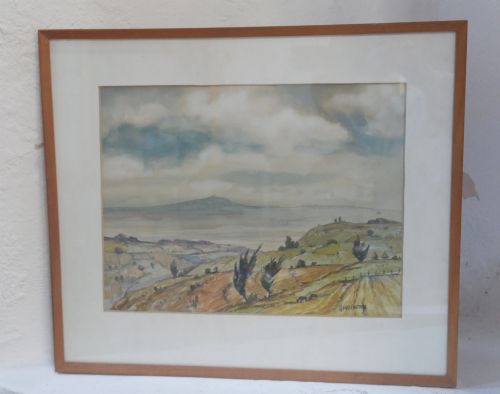
The most common examples on this page are oils on canvas and watercolours on paper, capturing locations from the Scottish Highlands to the Alps.
Works range from intimate watercolours to large oil paintings housed in period wooden frames.
How they were made
Artists applied oil paint to canvas or board, and watercolour to paper, utilising wood and glass for protection and display.
Makers enclosed these artworks in carved or moulded giltwood and gesso frames, often retaining their original presentation.
Listings feature works spanning the nineteenth and twentieth centuries, using oil, watercolour, pen-and-ink, and gouache.
What varies in quality
Atmospheric depth and brushwork control separate routine topographical records from accomplished artistic interpretations of mountain light and weather.
The integrity of the original frame and the preservation of the underlying paper or canvas surface dictate the overall condition and visual impact.
William Henry Earp·Alfred Fontville de Breanski Jr·George Houston·Robert Leslie Howey·William Joseph Boyes·Benjamin Barker of Bath·Charles Leslie·Robert Watson·Henry Martin Pope·William George Tennick·Frank Hider·Giulio Cecchini·Walter J Watson·C Caldwell·John Douglas Perrett·Edward Horace Thompson·Stanley Orchart·James H Hulse·George Turner·Alfred de Breanski·Hirst Walker·Frederick Richard Lee·Thomas Sidney Cooper·AJ Thornton·Gustave De Brianski
The Framed Mountain Landscape Picture Glossary
- Giltwood
- Wood carved and coated with gold leaf or metallic paint. This finish was standard for substantial nineteenth-century frames.
- Gesso
- A plaster-like mixture applied to wooden frames before gilding. It provides a smooth base for intricate moulded decoration.
- Watercolour
- A paint consisting of pigment suspended in a water-based solution. It is traditionally applied to paper to create translucent washes.
- Oil on Canvas
- Pigment mixed with drying oil applied to a stretched cloth support. This technique allows for rich texture and deep colour blending.
Framed Mountain Landscape Picture: Frequently Asked Questions
How do I date a mountain landscape?
Examine the materials, stretcher construction, and framing style. Victorian examples often feature heavy giltwood, while mid-twentieth-century pieces lean towards simpler wooden mounts.
Signatures, artist registry records, and paper watermarks offer precise chronological markers for dating works accurately.
Where should I hang these paintings?
Display these works away from direct sunlight to protect watercolours and oils from fading. Stable wall environments prevent damage to canvas tension and frame gesso.
Pairing them with traditional or eclectic room decor highlights the natural tones of highland and alpine scenery.
Are watercolours as durable as oils?
Watercolours require glass protection to shield the paper from moisture and atmospheric pollutants. Oils on canvas present a more resilient surface over decades.
Both mediums survive well when kept in dry conditions with minimal temperature fluctuations.
How do I distinguish regional British schools?
Scottish landscapes often focus on misty lochs and highland cattle, whereas Welsh scenes frequently capture steep slate passes and rivers. Lake District depictions highlight distinct Cumbrian crags and meres.
Brushwork and regional lighting choices help attribute unsigned works to specific topographical traditions.