




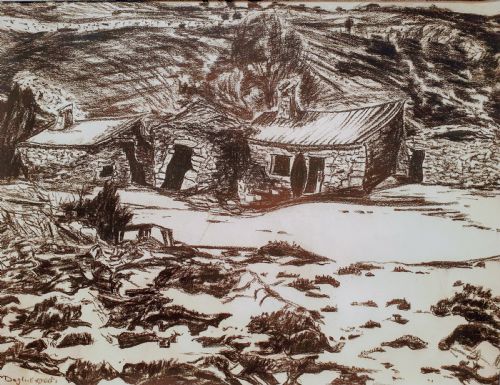
Farmhouse Landscape Artwork
Farmhouse landscape artwork captures rural life and agricultural scenes, offering buyers a window into pastoral history through oil and watercolour.
Farmhouse Landscape Artwork
Farmhouse landscape artwork depicts rural properties, farmyards, and agricultural scenes across various periods from the nineteenth century to the mid-twentieth century. These pieces record working farms, cottages, and country life through paintings and works on paper.
The selections available here lean heavily toward British and French provincial traditions. You will encounter works spanning Victorian pastoral styles through to mid-century impressionism and modernist interpretations.
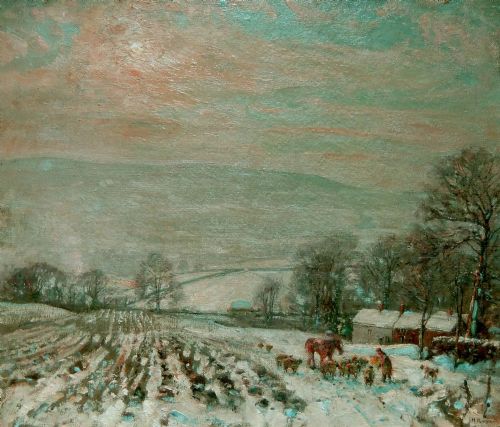
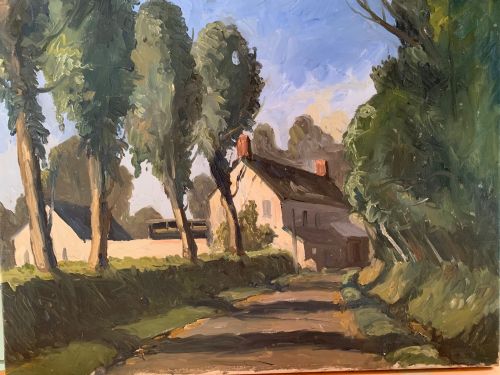
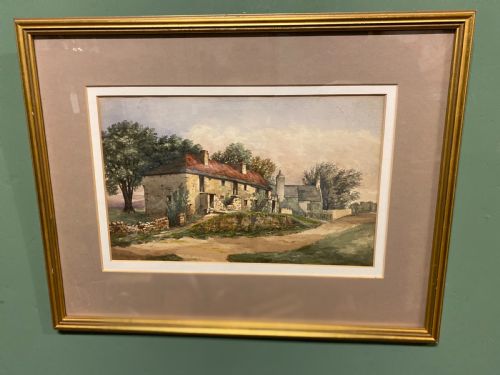
Common subjects include farmyards, working horses, country cottages, and southern French farmhouses surrounded by olive trees or purple hills. These depictions range from detailed nineteenth-century watercolours to bolder twentieth-century oils on canvas and board.
Materials and Techniques
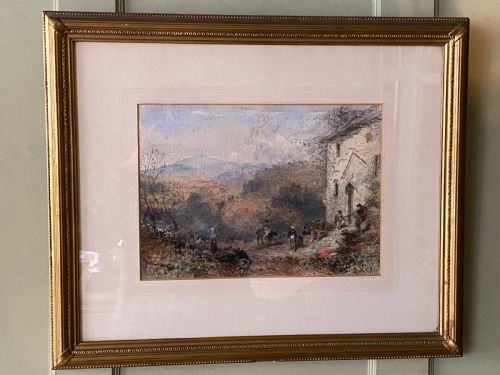
Artists working in this genre relied predominantly on oil paint applied to canvas, board, or wood panels, alongside watercolours and charcoal on paper. Oil mediums allowed for rich textures in depicting rustic walls, foliage, and skies, while watercolours offered a lighter touch for delicate pastoral views.
Framing forms an integral part of these pieces, with many surviving in period wooden frames, occasionally gilt. The support materials reflect the working methods of their respective eras, from nineteenth-century canvas stretched over wooden frames to mid-century boards.
Listings feature works spanning from eighteen-sixty to nineteen-sixty, executed in oil paint, watercolour, and charcoal on canvas, paper, and wood.
Assessing Quality and Execution
Quality in these rural scenes rests upon the artist's handling of light, atmosphere, and composition. Stronger works convey the palpable dampness of a winter feeding yard or the specific warmth of a southern French afternoon through confident brushwork.
The distinction between standard decorative pieces and finer works lies in the subtlety of the colour palette and the assurance of the drawing. A more accomplished painting captures the structural reality of barns and cottages without resorting to formulaic repetition.
Herbert Royle·Raimond Louis Lecourt·John Atkinson·Majorie Hoare·Owen Bowen·Georgina Lara
The Farmhouse Landscape Artwork Glossary
- Oil on Canvas
- Pigment mixed with drying oil applied to a woven fabric stretched across a wooden frame. This method became standard for durable, textured paintings from the nineteenth century onwards.
- Watercolour Painting
- Pigments suspended in a water-soluble vehicle applied to paper. It provides transparent washes of colour suited to lighter atmospheric effects.
- British Impressionism
- A painting style influenced by the French movement but adapted by British artists to local light and landscapes. It focuses on loose brushwork and capturing transient visual impressions.
- Gilt Wood
- Wood that has been coated with a thin layer of gold leaf or metallic powder. It frequently adorns period frames to enhance the presentation of the artwork.
Farmhouse Landscape Artwork: Frequently Asked Questions
What periods do these artworks cover?
The pieces span from the nineteenth century through to the mid-twentieth century, capturing shifts in artistic approach from Victorian pastoralism to mid-century impressionism.
Buyers will find Victorian works alongside early twentieth-century British and French pieces up to the nineteen-sixties.
How should I frame an antique watercolour?
Watercolours require conservation framing behind glass to protect the paper and pigments from ultraviolet light and atmospheric moisture.
Using acid-free mounts prevents yellowing and preserves the integrity of the paper over time.
Where were these rural scenes painted?
The locations split primarily between British countryside settings and French provincial regions such as Normandy and Corsica.
Artists sought out working farms, cottages, and agricultural valleys to record traditional rural life.
What is the difference between oil on canvas and oil on board?
Oil on canvas utilises a flexible woven fabric stretched on a wooden frame, providing slight give and a textured surface. Oil on board uses a rigid wooden support, which offers a smoother ground for the paint layers.