
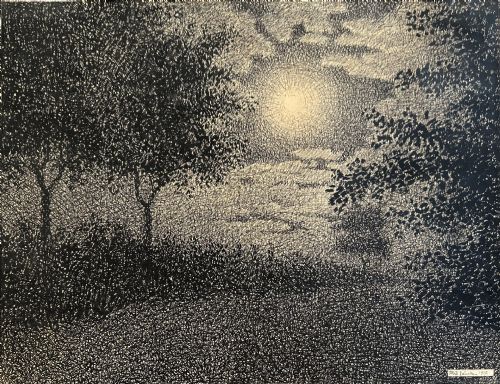


Black Ink Artwork
Black ink artwork encompasses diverse works on paper, capturing spirited landscapes, character studies, and intricate silhouettes from the eighteenth century onward.
Black Ink Artwork
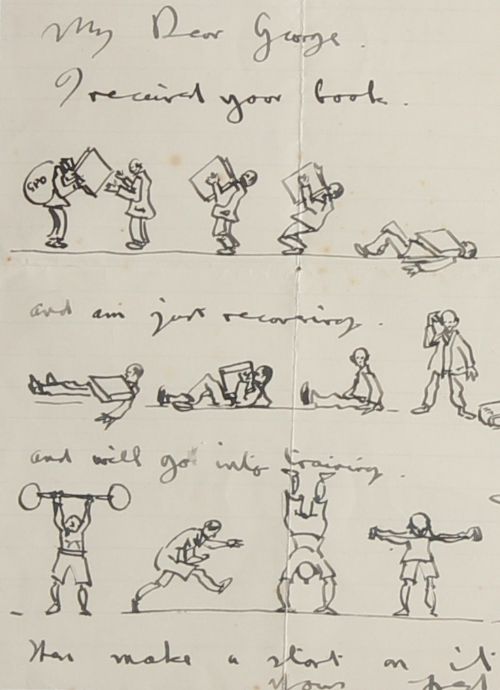
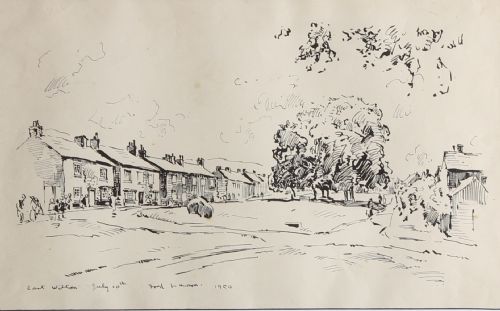
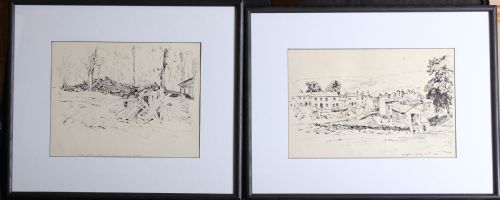
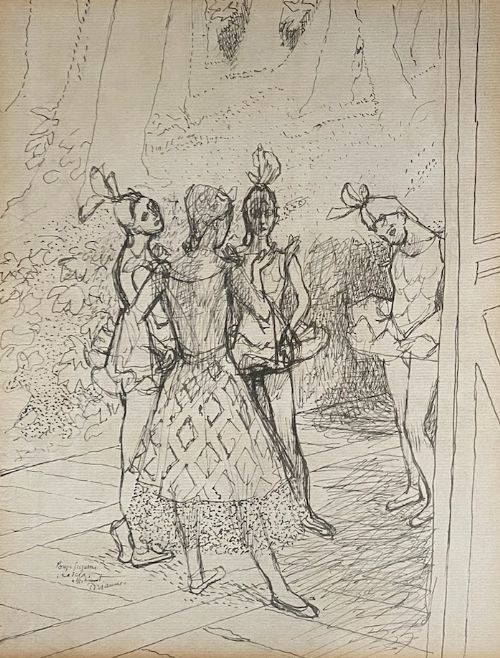
Black ink artwork spans original drawings, detailed etchings, and delicate silhouettes produced across several centuries. Pieces range from nineteenth-century architectural studies to mid-century British landscapes and character sketches.
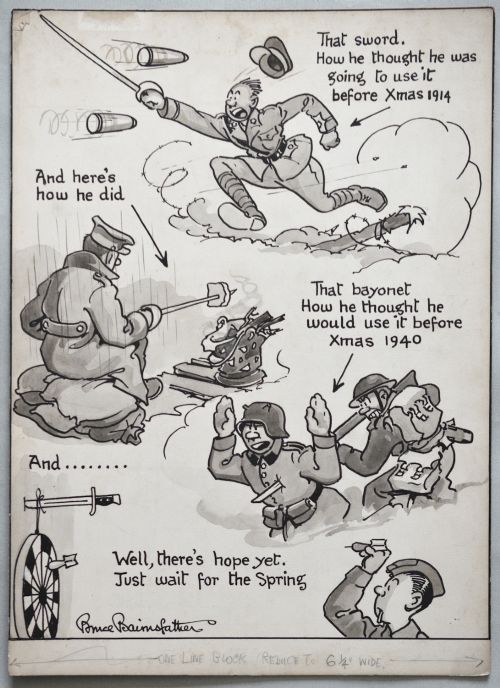
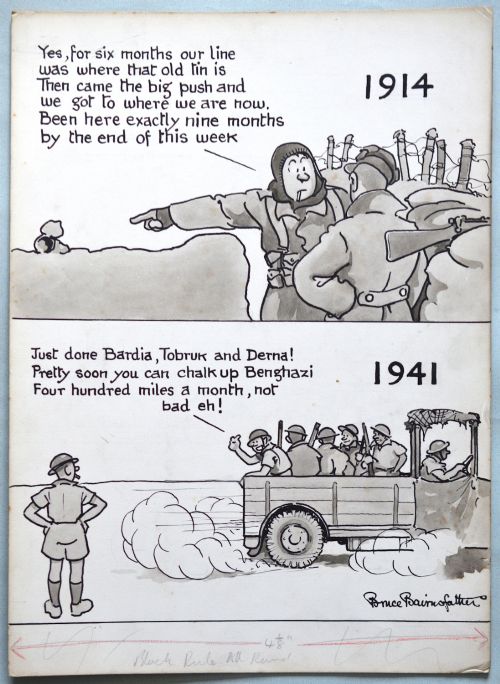
Buyers encounter framed drawings, original illustrations, and prints executed with distinct linear precision. The selection includes works by named artists alongside notable examples from various twentieth-century British and continental schools.
How They Were Made
Makers utilised ink applied to paper or panel, frequently combining wash and watercolour to build tonal depth. Etchings and drypoints rely on metal plates incised directly or via acid bites, yielding sharp, permanent impressions.
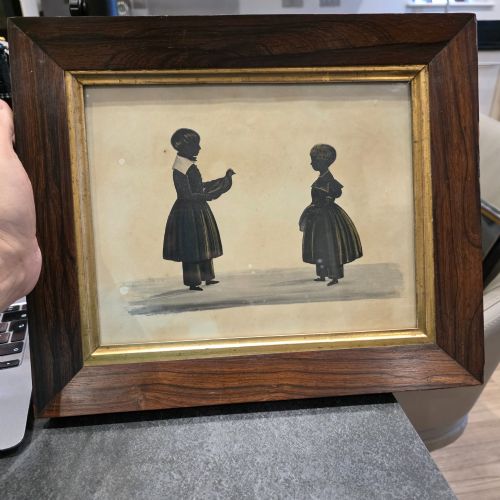
Framing materials incorporate traditional wood and rosewood mouldings, often protecting the delicate surfaces beneath glass. Gold leaf accents occasionally highlight specific prints or drawings.
Listings feature paper, ink, and glass components, spanning periods from the eighteenth century through to the mid-twentieth century.
What Varies in Quality
Quality rests upon the sureness of the draughtsmanship and the clarity of the ink or plate impression. Masterful line work commands attention, whereas hesitant strokes diminish the impact of a drawing.
The preservation of the paper support and the presence of original framing significantly influence the overall character of a piece. Faded pigments or heavy foxing alter the visual balance intended by the maker.
Fred Lawson·Bruce Bairnsfather·Herbert Dicksee·Augustus Edwin John·Richard Leech
The Black Ink Artwork Glossary
- Etchings
- Prints produced by using acid to cut into the unprotected parts of a metal plate to hold the ink. This technique allows for fine, fluid lines comparable to a pen drawing.
- Wash
- A technique where diluted ink or watercolour is applied in broad, smooth layers to create tonal gradations and shadow. It often complements sharper pen-and-ink linework in landscapes.
- Drypoint
- A printmaking process where an artist scratches directly into a metal plate with a sharp needle, raising a burr that produces rich, velvety lines when inked.
- Silhouette
- A portrait or scene cut from dark paper or painted in solid black profile, popular during the eighteenth and nineteenth centuries. They capture likenesses through outline alone.
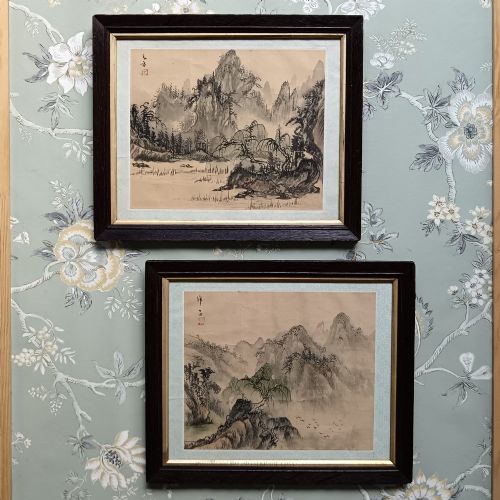
- Silk Paintings
- Artworks rendered directly onto woven silk fabric using specialised inks or paints, frequently seen in traditional East Asian decorative pieces.
Black Ink Artwork: Frequently Asked Questions
How do I care for ink artwork?
Keep works on paper away from direct sunlight to prevent the ink and paper from fading over time. Stable indoor humidity levels protect the paper support and wooden frames.
Ensure pieces are glazed properly to shield the delicate medium from airborne pollutants and moisture. Professional framing using acid-free materials safeguards the longevity of older drawings.
What periods do these pieces span?
The collection ranges from eighteenth-century architectural engravings and drawings up to mid-twentieth-century modernist and British school works. Nineteenth-century silhouettes and Victorian studies also feature prominently.
Each period brings distinct stylistic approaches, from neoclassical precision to the looser linework of the mid-century modern era.
Are these works original or prints?
The selection includes both unique handmade items and multiples such as etchings and lithographs. Original ink drawings and watercolours are one-off creations directly from the artist's hand.
Etchings and drypoints are printed from plates created by the artist, representing original printmaking techniques rather than modern reproductions.