


Black Ink Landscape
A black ink landscape brings the quiet structure of pen and watercolour work into a room.
Black Ink Landscape
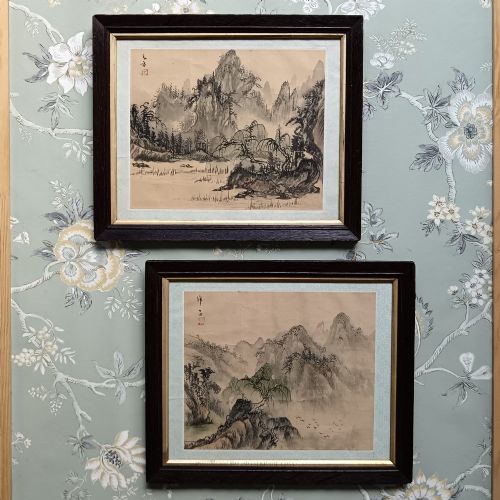
A black ink landscape uses precise line work combined with washes to depict natural scenes, spanning periods from the eighteenth century to the mid-twentieth century. Buyers searching for a black ink landscape encounter works ranging from traditional Chinese silk paintings to Scottish Arts and Crafts pieces and mid-century British watercolours.
The format is predominantly works on paper, drawings, and original paintings framed in wood and glass. Many examples originate from named artists working within specific regional British schools or traditional eastern workshops.
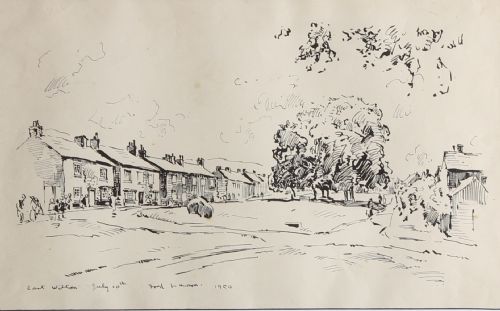
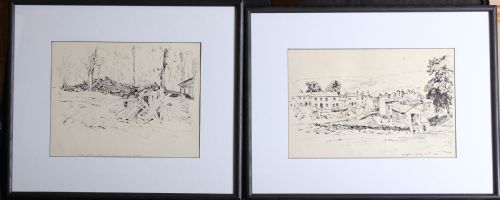
The most common pieces on this page are twentieth-century British drawings, often featuring named locations and architectural landmarks executed in ink and watercolour on paper.
Materials and methods
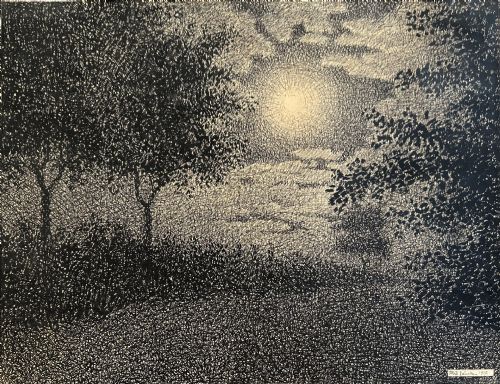
Artists create these works using ink, pencil, and watercolour applied directly to paper, silk, or occasionally panel. The combination of fine pen lines with fluid washes allows for sharp architectural detail alongside atmospheric shading.
Framing materials typically involve wood and glass, protecting the delicate works on paper from environmental damage while preserving the original appearance of the piece.
Several drawings record specific local spots with such precision that you can trace the exact hilltops.
Assessing quality
Quality rests upon the sureness of the pen line and the balance between ink definition and watercolour wash. Stronger pieces display confident draughtsmanship that captures the structure of trees, buildings, and terrain without relying on heavy overworking.
The integrity of the original frame and the preservation of the paper or silk surface distinguish finer examples. Works that retain crisp ink work and clean paper support show superior material longevity.
Fred Lawson·Richard Leech
The Black Ink Landscape Glossary
- Shan Shui
- Traditional Chinese landscape painting style featuring natural scenery such as mountains, rivers, and waterfalls, typically rendered in ink on silk or paper.
- Wash
- A technique where diluted ink or watercolour is applied in broad, flat or graduated layers to create tone and atmosphere behind linear pen work.
- Pen-and-ink
- A drawing method using black or brown ink applied with a nib to paper, prized for its permanence and sharp linear contrast.
- Panel
- A flat piece of wood used as a rigid support for drawing or painting, seen in eighteenth-century works.
- Arts and Crafts
- A design movement valuing handcraftsmanship, traditional materials, and local vernacular subjects, reflected in early twentieth-century British works.
Black Ink Landscape: Frequently Asked Questions
What is a black ink landscape?
A black ink landscape is an original drawing, painting, or work on paper that uses dark ink line work to depict natural scenery, hills, and rural buildings. These pieces range from traditional Chinese silk paintings to twentieth-century British watercolours.
They rely primarily on pen and ink techniques, often augmented with watercolour washes on paper or silk supports housed behind glass in wooden frames.
How should I display works on paper?
Works on paper require careful placement away from direct sunlight to prevent the ink and watercolour pigments from fading over time. Maintaining stable indoor humidity protects both the paper support and the original wooden frame.
Using conservation glass during framing helps filter ultraviolet light while allowing the fine details of the pen work to remain clearly visible.
How do I date these drawings?
Dating relies on stylistic evidence, artist attribution, framing materials, and inscriptions on the paper or reverse of the panel. Twentieth-century British works often carry signature styles or specific regional subject matter typical of their decade.
Earlier eighteenth-century examples display distinct paper textures and handwriting styles that separate them from later mid-century modernist or traditional Asian pieces.
Are these works unique?
Every piece listed under this category is an original work of art rather than a modern reproduction or print. Artists executed each drawing by hand using pen, ink, and watercolour.
This means individual brushstrokes, pen pressures, and paper characteristics vary completely from one piece to the next.