



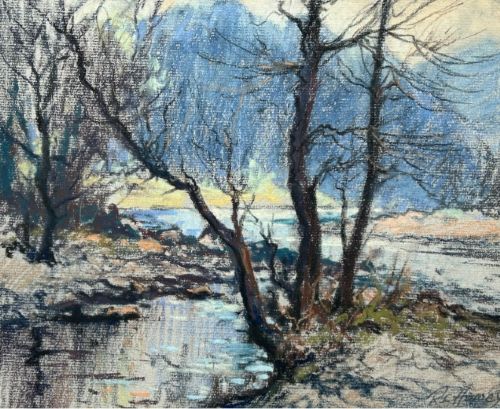
Antique English Landscape
These antique English landscape works capture rural valleys, coastal waters and country figures through the eyes of Victorian and Edwardian painters.
Antique English Landscape
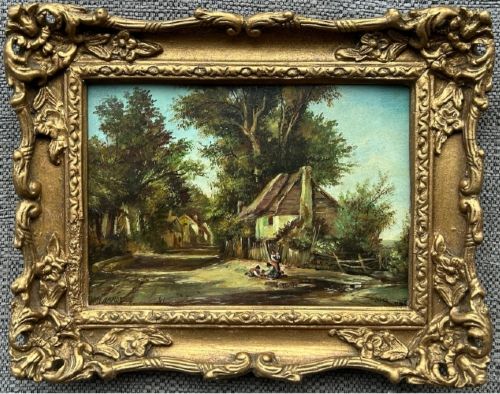
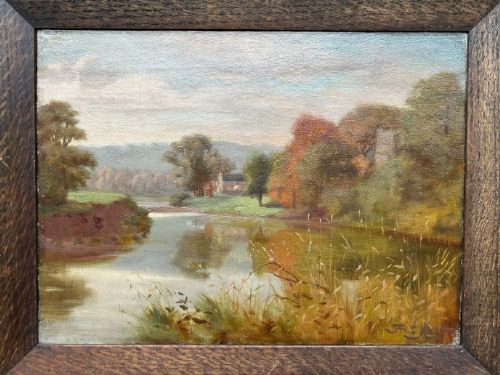
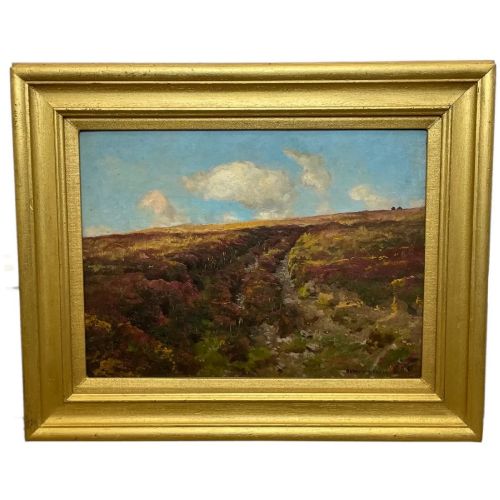
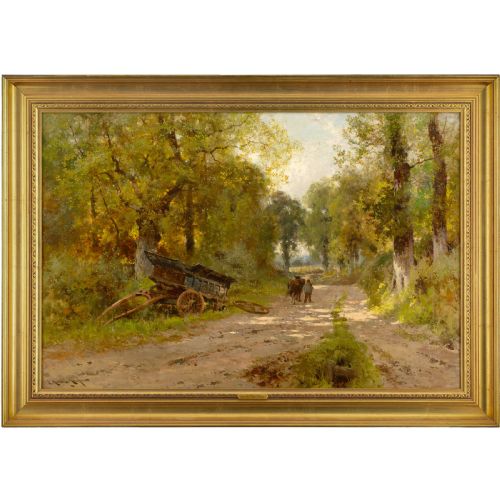
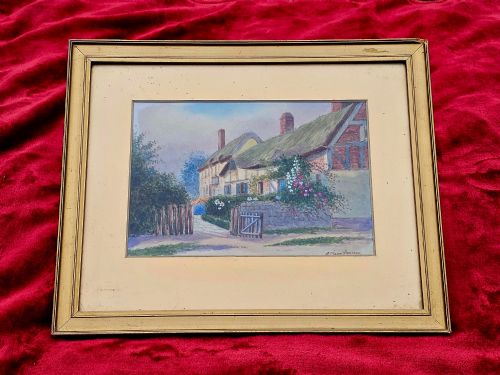
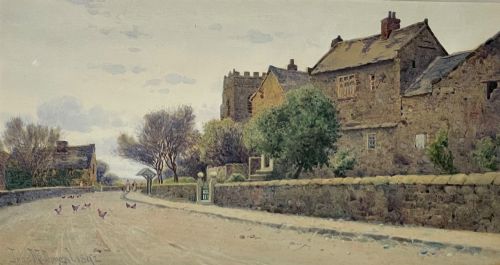
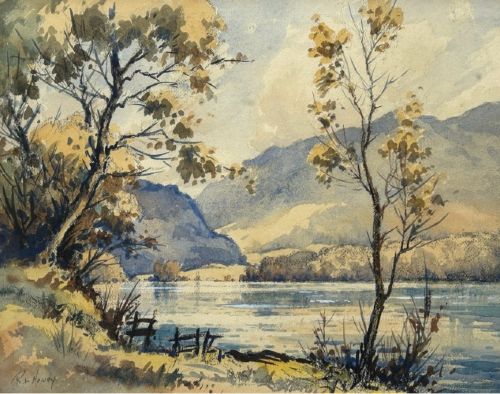
An antique English landscape brings the countryside, rivers and coastal views of Britain into an interior through traditional framed artworks. When exploring this phrase, buyers encounter original watercolours, oil paintings on canvas and wood panel, and charcoal drawings dating primarily from the Victorian and Edwardian eras. Common subjects range from quiet village streets and riverbanks to harvest fields and coastal harbours.
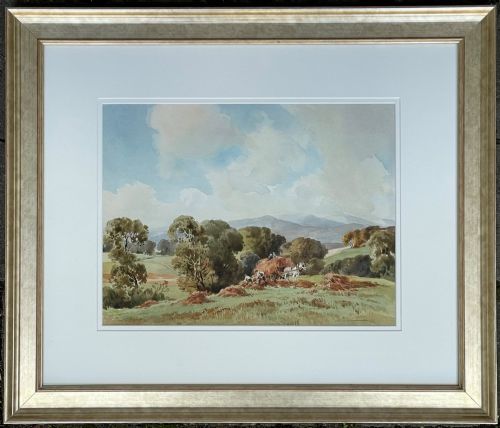
The works on this page span the nineteenth and early twentieth centuries, reflecting changing regional schools from Norwich to the Thames Valley. Painters recorded rural life, agricultural workers and industrial edges with varied levels of atmospheric detail. These pieces function as historical records of changing British terrain as well as decorative focal points for walls.
Most items are original hand-painted watercolours or oil works rather than mass-produced prints, though period engravings and plates also appear. Buyers frequently select these framed pieces to add traditional character, historical depth and natural colour to domestic interiors. Each canvas or paper sheet preserves the specific palette and light of an individual locality at a distinct point in time.
How They Were Made
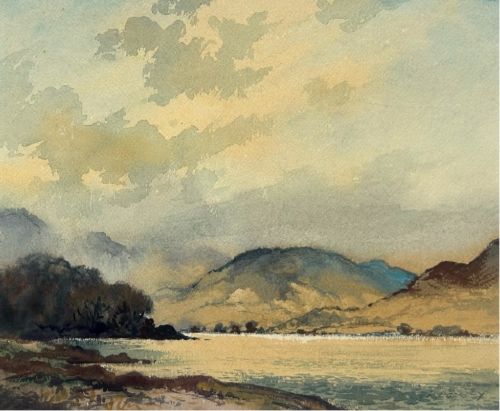
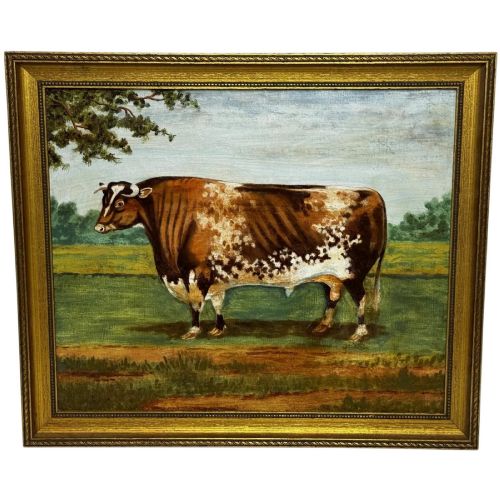
Artists applied oil paint to woven canvas, wooden panels, card or board, often building rich textures with layered pigments and visible brushstrokes. Watercolours relied on washes of translucent pigment applied to heavy paper, capturing the pale light of British skies and river valleys. Frames fashioned from gilt wood or dark timber enclosed these works, protecting the delicate paper and canvas surfaces.
Draftsmanship began with preliminary pencil or charcoal sketches drawn directly onto the ground before colour was applied. Panel paintings utilised seasoned wooden boards prepared with gesso grounds, while canvas supports were stretched across wooden frames and primed. Etchings and engravings employed metal plates inked by hand and pressed onto paper under pressure.
Antique English Landscape Retail Price Guide 2026
Typical asking prices for english landscape among the pieces listed under this phrase on Sellingantiques today, from the lower quarter to the upper quarter. They describe what is for sale here now, not the wider market.
Listings feature works in oil, watercolour and pastel on paper, canvas, card and wood panel across the nineteenth and twentieth centuries.
What Varies in Quality
The strength of the composition and the artist's ability to render natural light determine the distinction between standard and exceptional works. Master painters achieved atmospheric depth through subtle handling of weather, shadow and foliage, whereas lesser works remain rigid and formulaic. The sensitivity of brushwork in oil or the fluid transparency of watercolour dictates the visual impact of the scene.
Provenance and signature authenticity elevate certain pieces above anonymous works from the wider English School. Original period framing in matching gilt wood or carved timber preserves the historical integrity of the painting. The condition of the pigment, freedom from heavy restoration, and stability of the paper or canvas support further influence the standing of an individual artwork.
James Orrock·Arthur Wardle·Thomas Sidney Cooper·David Bates·Robert Thorne Waite
The Antique English Landscape Glossary
- Oil on Canvas
- A painting technique using pigments bound in a drying oil applied to a stretched cloth support. This method allowed artists to rework areas and build rich surface textures.
- Watercolour
- A medium consisting of water-soluble pigments applied to paper supports. It produces luminous, transparent washes ideal for capturing changing atmospheric light.
- English School
- A loose classification for artists working in Britain sharing stylistic traits rather than a formal academy. These painters focused heavily on topographical accuracy and rural life.
- Gilt Wood
- Timber carved and coated with a thin layer of gold leaf or metallic powder. Frames made this way were designed to reflect candlelight and enhance the artwork within.
- Provenance
- The documented history of ownership of an artwork from its creation to the present day. Clear records confirm authenticity and previous collections.
Antique English Landscape: Frequently Asked Questions
What subjects appear most often in these landscapes?
Artists focused heavily on rural rivers, agricultural harvests, coastal harbours and pastoral cottages across the British countryside. Scenes often included local figures, livestock or working boats.
Views from the Thames Valley, Yorkshire and Cornwall recur frequently in nineteenth-century works. These locations reflected contemporary affections for traditional rural life and accessible natural beauty.
How should these framed artworks be displayed at home?
Hang paintings away from direct sunlight and damp environments to protect fragile watercolours, paper and oil pigments. Stable indoor temperatures prevent warping in wooden panels and canvas stretching.
Pairing period frames with traditional interiors highlights their historical character. Proper wall placement ensures the delicate brushwork remains visible without glare.
How can I tell a watercolour from an oil painting?
Watercolour works utilise thin, translucent washes on paper under protective glass, showing the texture of the sheet beneath. Oil paintings feature heavier, opaque pigment layers applied to canvas, wood or board with visible brush relief.
Oils generally do not require glass framing because the bound pigment cures into a durable surface. Watercolours remain sensitive to moisture and light damage.
What periods do these landscape pieces come from?
Most examples date from the Victorian and Edwardian eras, spanning the nineteenth and early twentieth centuries. Georgian and late eighteenth-century works also appear among regional English School paintings.
Stylistic shifts reflect changing artistic approaches, moving from formal topographical views toward looser impressionistic brushwork. Signatures, dates and framing often help pinpoint the exact decade of creation.