


Pen and Ink Landscape
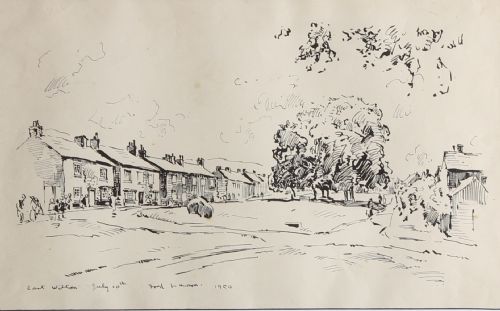
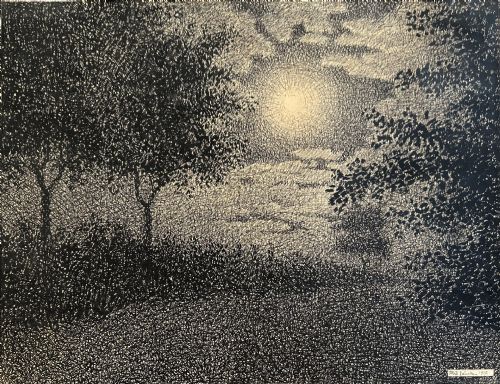
A pen and ink landscape captures the topography and rural scenery of Britain through direct line work on paper.
Pen and Ink Landscape
A pen and ink landscape is a framed work on paper depicting countryside scenes, village views, and architectural studies. Buyers seeking a pen and ink landscape will find works ranging from Georgian sheets to mid-century British drawings.
The pieces on this page include loose drawings, works on paper, and framed paintings executed across the eighteenth, nineteenth, and twentieth centuries. Artists record specific locations such as castles, mills, and Scottish highlands with descriptive line work.
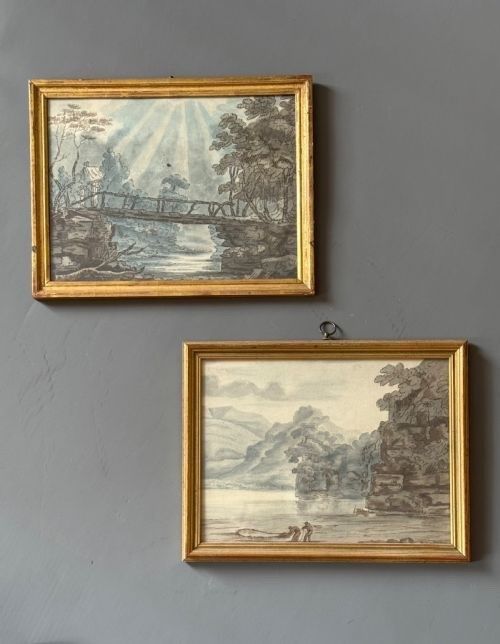
Many examples combine ink lines with watercolour, wash, pastel, or gouache to add tone and colour to the composition. These versatile mediums capture both quiet rural churches and dramatic moonlight scenes over water.
Assessing Quality
Quality rests in the confidence and precision of the line work, where assured pen strokes define foliage, masonry, and distance without hesitation. Strong draughtsmanship separates dynamic topographical studies from timid architectural records.
The preservation of the paper and the subtlety of the accompanying watercolour or wash tints influence the visual success of the piece. Intact period frames and clear documentation of the depicted location enhance the historical context of the drawing.
Several drawings preserve the precise names of remote farmhouses and forgotten hillside mills across Yorkshire and Scotland.
Fred Lawson·Richard Leech·Alfred Wainwright·William Paton Burton·Joseph Barber
The Pen and Ink Landscape Glossary
- Wash
- A thin, transparent layer of diluted ink or watercolour applied with a brush to create shadow and tonal depth in a drawing.
- Gouache
- An opaque water-based paint used alongside ink to add solid highlights and bright colour areas to works on paper.
- Panel
- A flat wooden board used as a rigid support for drawings and paintings instead of paper.
- Gilt wood
- Wood carved and covered with a thin layer of gold leaf, commonly used for period picture frames.
Pen and Ink Landscape: Frequently Asked Questions
How do I date a pen and ink landscape?
Dating relies on the paper type, framing style, costume details in figures, and the handwriting of titles or signatures on the sheet. Period labels on the reverse often provide additional clues to the exact decade.
stylistic shifts between Georgian topographical traditions and twentieth-century British modernism also help narrow the creation window.
Are these drawings usually framed?
Many examples are mounted behind glass within wood or gilt wood frames to protect the paper from dust and moisture. Unframed sheets also appear, allowing buyers to select their own conservation framing.
Original frames can add historical context, though later reframing is common for works of this age.
What subjects appear in these landscapes?
Common subjects include rural English countryside scenes, Scottish highlands, village streets, coastal waterways, and historic architecture like castles and churches. Artists frequently document specific named locations rather than purely imaginary vistas.
Some works incorporate figures, livestock, or boats to establish scale within the natural setting.
Can I mix ink with watercolour drawings?
Artists frequently combine pen and ink line work with watercolour, gouache, or pastel washes to introduce colour and atmospheric effects. This mixed technique allows the ink to define the crisp architectural and botanical details while the washes render skies and terrain.
Both monochrome ink drawings and tinted sheets exist within the same regional schools.