




Monochrome Ink Landscape Art
Monochrome ink landscape art captures topography through restrained tones of dark pigment upon paper, offering quiet views of hills, rivers, and historic architecture.
Monochrome Ink Landscape Art
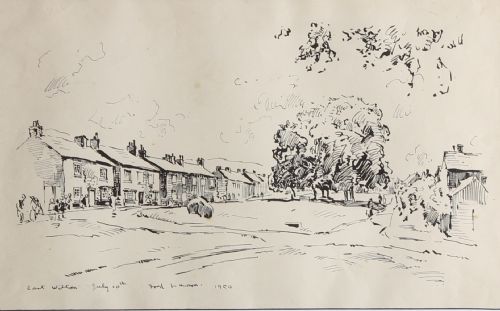
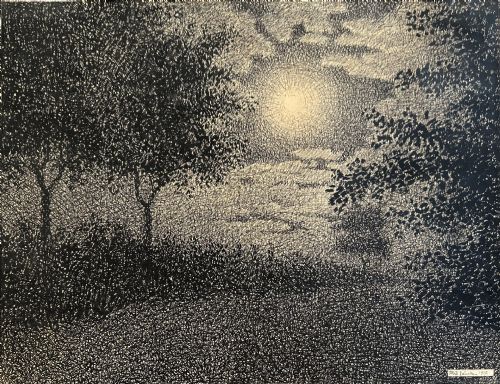
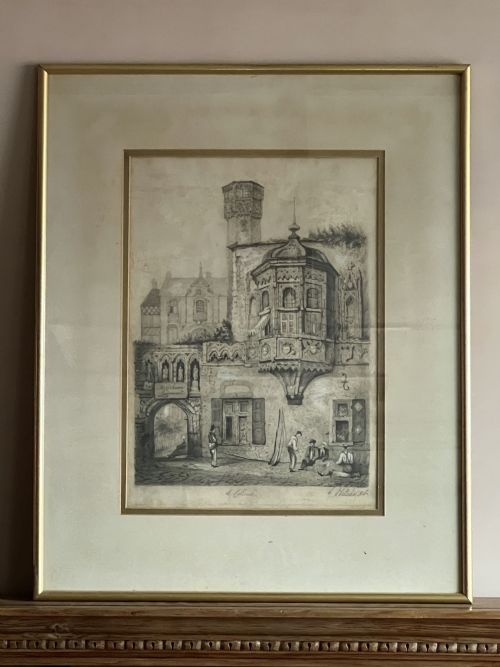
Monochrome ink landscape art comprises drawings and works on paper created across the eighteenth, nineteenth, and twentieth centuries. These pieces record rural scenes, town markets, and mountainous terrain using minimal palettes.
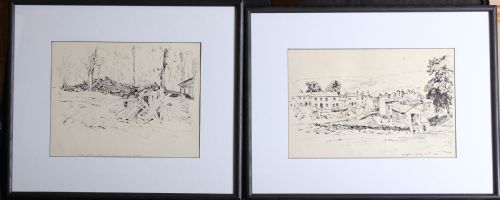
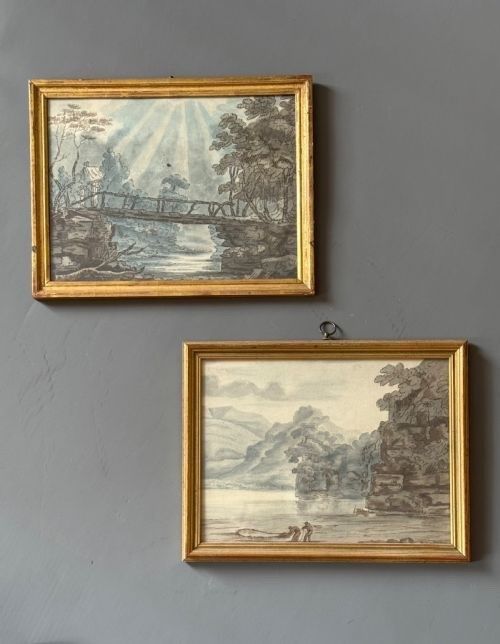
The selection ranges from eighteenth-century Georgian sketches to mid-century British works by named artists and anonymous schools. Most examples utilise pen, ink, and wash upon paper, frequently framed in wood or gilt wood.
Buyers encounter architectural studies, panoramic vistas, and intimate valley views produced by regional artists and European hands. These works reflect changing aesthetic approaches to topography and natural scenery over three centuries.
Materials and execution
Artists drew these landscapes directly onto paper using fine metal nibs or quills dipped in dark ink. They frequently added wash or watercolour to build tonal depth and shadow across hillsides and buildings.
Many works incorporate pencil underdrawings to map composition before applying permanent ink lines. Finished drawings often reside behind glass within wooden or gilt wood frames that protect the delicate paper surface.
Several drawings preserve nineteenth-century views of cows standing patiently in rural rivers.
Distinctions in quality
Quality rests upon the sureness of the draughtsmanship and the artist's ability to suggest atmosphere with minimal strokes. Superior works demonstrate confident line control and subtle manipulation of wash tones.
Condition of the paper and clarity of the ink significantly influence the standing of a piece. Stronger examples retain crisp contrast between dark lines and pale grounds without excessive fading or discoloration.
Fred Lawson·Stanley Orchart·Edward Dayes·Peter Tillemans·Thomas Monro·Thomas Lound
The Monochrome Ink Landscape Art Glossary
- Wash
- A technique where diluted ink or watercolour is brushed broadly across paper to create transparent shadows. It provides tonal depth behind sharper pen lines.
- Pen and ink
- A drawing method utilising fluid medium applied with a nib or quill. It forms the primary structural lines of topographical views.
- Gilt wood
- Timber frames covered in a thin layer of gold leaf or metallic gilt. They frequently encase eighteenth and nineteenth-century works on paper.
- Works on paper
- A broad category encompassing drawings, watercolours, and sketches executed on paper supports. This classification covers the majority of featured landscapes.
Monochrome Ink Landscape Art: Frequently Asked Questions
What is the difference between wash and watercolour?
Wash employs a single diluted pigment, usually black, brown, or sepia, to establish tonal contrast in monochrome works. Watercolour introduces multiple hues to describe natural colour.
Drawings catalogued under this search phrase typically favour monochrome wash over full polychrome painting. This restraint focuses attention entirely upon line and shadow.
How should I display works on paper?
Works on paper require protection from direct sunlight to prevent fading of both ink and paper. Maintaining stable indoor humidity prevents warping and foxing.
Framing behind glass with acid-free mounts safeguards the medium from atmospheric pollution and physical damage. Hanging pieces away from heat sources ensures long-term preservation.
Are these landscapes topographical records?
Many pieces document specific named locations, from Yorkshire castles to Coblentz waterways and Cumbrian lakes. Artists often inscribed exact titles beneath the image.
Other examples represent idealized pastoral compositions rather than exact views. Both approaches offer insight into historical perceptions of the countryside.